
Off-grid Solar Systems UK 2026: Costs & Setup
Going off-grid sounds simple until you start asking what happens on a dark January evening. Solar panels may generate plenty of power in summer, but a UK home needs reliable electricity all year round.
Off-grid solar can work, but it needs more than a few panels on the roof and a battery in the garage. The right setup depends on your electricity use, battery capacity, winter sunlight, backup power, available installation space and budget.
In this guide, we will explain how Off-grid Solar Systems work, what they can cost, who they suit best, what equipment you may need, and what to check carefully before investing.
Get Your Solar Panel Quote
Start with your address so we can check the best solar options for your home.
Quick Answer: Can I actually run my home without the grid in the UK?
Yes, you can run a UK home off-grid, but it needs careful setup: enough solar panels, large battery storage, backup power, efficient appliances and good energy management. It is possible, especially in rural areas, but costs, winter sunlight and planning requirements make it unsuitable for many homes.
Table of Contents
ToggleWhat Is an Off-grid Solar System?
An off-grid solar system is a solar setup that works without a connection to the electricity grid.
It uses solar panels to generate electricity from daylight, batteries to store unused power, and an inverter to turn that power into electricity your home can use.
A typical system includes:
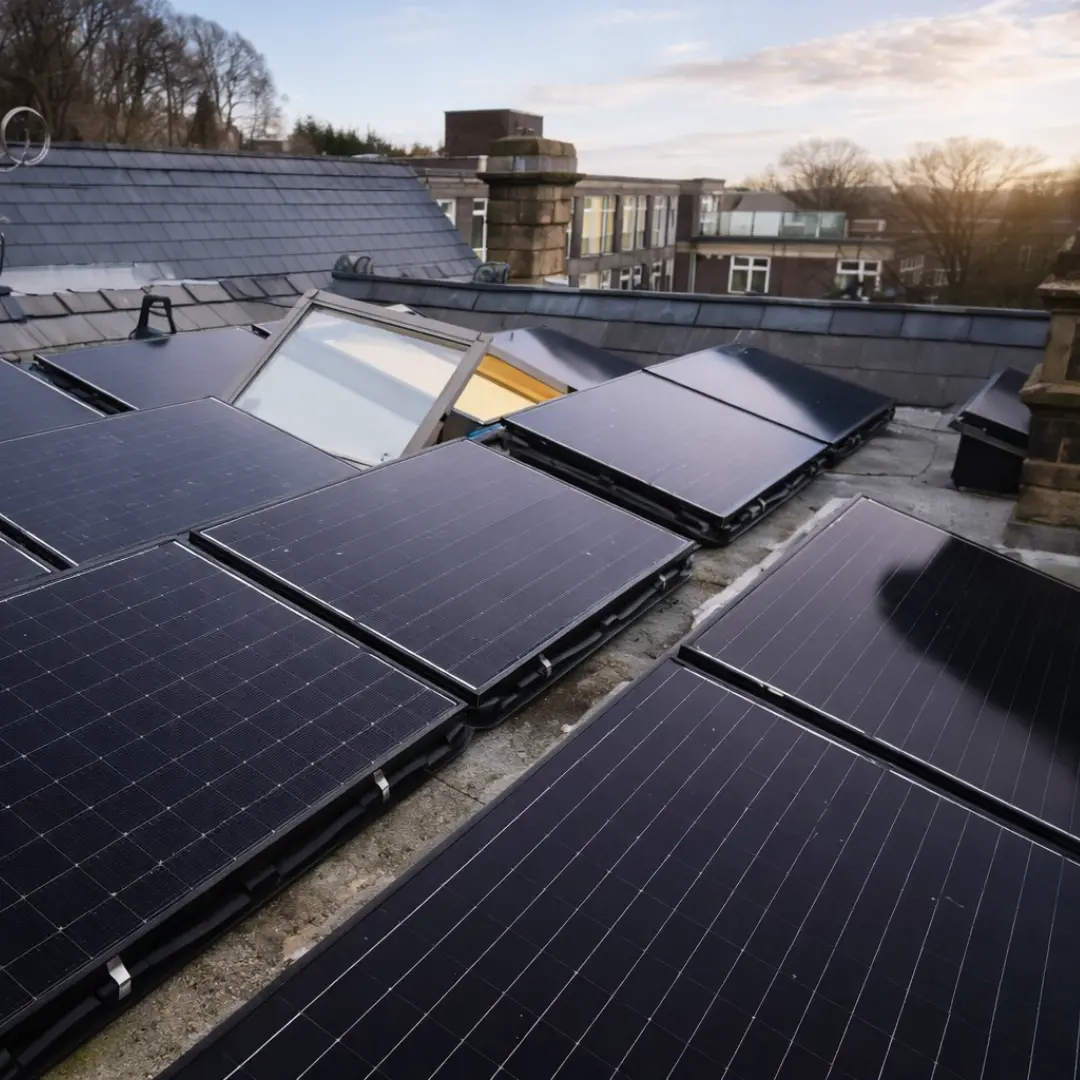
- Solar panels to generate electricity from daylight
- Battery storage to save power for evenings, nights and cloudy days
- An inverter to convert solar electricity into usable household power
- A charge controller to manage battery charging safely
- Safety equipment to protect the system and property
- Backup power, often a generator, for winter or high-demand periods
Unlike grid-tied solar, an off-grid system cannot rely on the mains when solar power is low, so it must be designed around your real energy use.
How Do Off-grid Solar Systems Work in the UK?
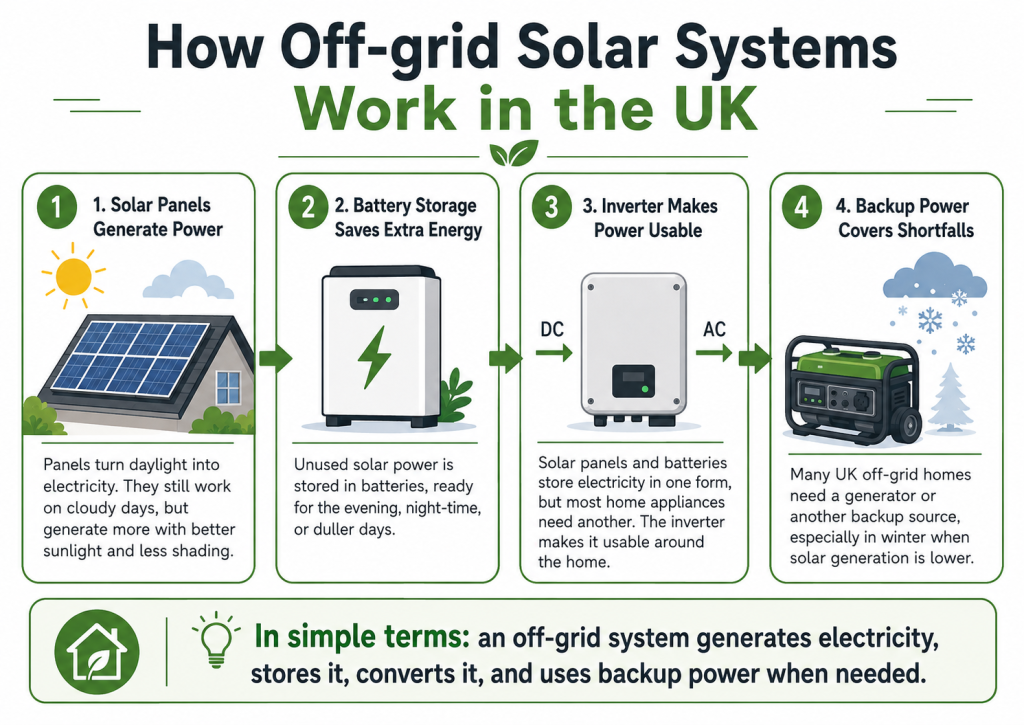
Off-grid solar systems work by generating electricity, storing it, converting it, and then supplying it to the home when needed. In the UK, the key challenge is not just making solar power — it is keeping enough power available during cloudy days, evenings and winter months.In simple terms, the system has to act like your own small electricity network — generating power when it can and storing enough for when it cannot.
What Equipment Do You Need for an Off-grid Solar System?
An off-grid solar system needs more than panels. It must generate power, store it, convert it safely and keep the property running when solar output drops.
Solar PV Panels
Generate electricity from daylight.
The number of panels depends on your energy use, roof or ground space, shading and how much power you want to generate.
Battery Storage
Stores unused solar power for later.
Battery size decides how long you can run the property when the sun is not generating enough power.
Off-grid Inverter
Converts stored DC electricity into usable AC power.
It must be designed for standalone use, not just standard grid-tied solar.
Charge Controller & Protection Equipment
Manages charging and helps protect the system.
It keeps the setup safer, more stable and better controlled.
Backup Generator or Secondary Power
Provides extra power when solar and batteries are low.
Useful in winter, during long cloudy spells or when demand is higher than expected.
Monitoring System
Tracks solar generation, battery level and energy use.
Helps you understand your usage and avoid running out of stored power.
What Affects the Cost of an Off-grid Solar System?
The cost of an off-grid solar system depends on how much power your property needs and how independent you want to be. A small setup for light use will cost much less than a full home system designed for winter backup.
Daily Electricity Usage
Your energy use should be calculated before choosing system size. Appliances, lighting, heating controls, hot water, cooking and seasonal habits all affect how much solar power you need.
Battery Capacity
Battery storage is often the biggest cost difference. A basic system may only cover short evening use, while a serious off-grid setup needs enough storage for night-time, cloudy days and essential loads.
Winter Backup Requirements
The more independence you want, the more backup planning you need. In the UK, winter solar generation is lower, so larger batteries or a backup generator can increase the overall cost.
Roof Space, Ground Space and Shading
Solar panels usually perform best on a south-facing roof with little or no shading from trees or nearby buildings. If roof space is limited, ground-mounted panels may be considered.
Installation Complexity
Costs can also rise if the job needs long cable runs, groundworks, trenching, outbuilding connections, extra mounting equipment, consumer unit work or additional safety protection.
The cheapest quote is not always the best. A good off-grid quote should clearly explain your expected usage, battery size, backup plan and what the system can realistically power.
Off-grid Solar System Pros and Cons
Off-grid solar can be a smart choice for the right property, but it is not a simple plug-and-play upgrade. It gives you more control over your power, but also needs more planning, storage and energy awareness.
Less reliance on the grid — useful if you want more energy independence.
Higher upfront cost — batteries, inverters and backup systems add to the price.
Good for remote properties — ideal where grid connection is difficult or expensive.
Larger battery requirement — you need enough stored power for evenings and cloudy days.
Can reduce diesel generator use — solar can lower fuel use and running costs.
Winter performance challenge — shorter days and dull weather reduce generation.
Supports energy resilience — backup power can help keep essential loads running.
Backup power often needed — many UK systems still need a generator or secondary source.
Works well for low-demand buildings — cabins, farms, workshops and efficient homes can be suitable.
More careful energy management — you need to watch usage, storage and peak demand.
Quick Overview: Potential Off-grid Solar Costs
Off-grid solar costs depend on property size, energy use, battery storage and backup power needs.
As a rough guide:
- Small cabin/workshop setup: around £4,000–£8,000
- Basic home off-grid setup: around £12,000–£25,000
- Larger full-home system: around £25,000–£40,000+
The biggest cost difference usually comes from battery capacity, backup generator requirements, inverter type and installation complexity.
Is an Off-grid Solar System Right for Your Property?
Yes, an off-grid solar system can be right for your property — but only if the setup matches your energy use, space and budget.
It may suit homes with manageable electricity demand, good roof or ground space, room for battery storage and a realistic backup plan for winter. It can also work well for rural homes, cabins, farms, workshops or properties where grid access is limited or expensive.
However, it may not be the best choice if your home uses a lot of electric heating, has limited space for panels or batteries, or needs heavy power during winter. In those cases, a grid-tied solar and battery system may be more practical.
The key question is simple: can your property generate and store enough power when you need it most?
FAQs
Frequently asked questions (FAQs)
Simple answers to common questions about off-grid solar systems in the UK, including battery storage, winter performance, backup power, planning permission, farms, cabins, workshops, and whether going fully off-grid is the right choice. Speak to Simple Green Energy.
Need off-grid solar advice?
Speak with Simple Green Energy to check your energy use, battery size, solar panel setup, backup power needs, installation options, and whether off-grid solar is suitable for your property.
Get solar quoteFinal Thoughts: Plan for Real Use, Not Just Sunny Days
Off-grid solar can work in the UK, but the design has to be realistic. It is not just about how much power your panels can make in summer; it is about how your home will run through dark evenings, cloudy weeks and winter demand.
Battery storage, backup power and careful energy planning are essential. For some properties, a full off-grid setup makes sense. For many homes, a hybrid solar and battery system may be more practical, affordable and easier to manage.
The best next step is a proper property and energy-use assessment. Once your usage, roof space, battery needs and backup options are clear, you can decide whether off-grid solar is truly the right move.