
Air Source Heat Pump Benefits in the UK (2026)
Air source heat pumps can help UK homeowners reduce carbon emissions, improve energy efficiency, and provide consistent home heating throughout the year.
The main air source heat pump benefits include lower running costs in suitable homes, compatibility with renewable energy systems, and reduced reliance on gas heating when properly designed and installed.
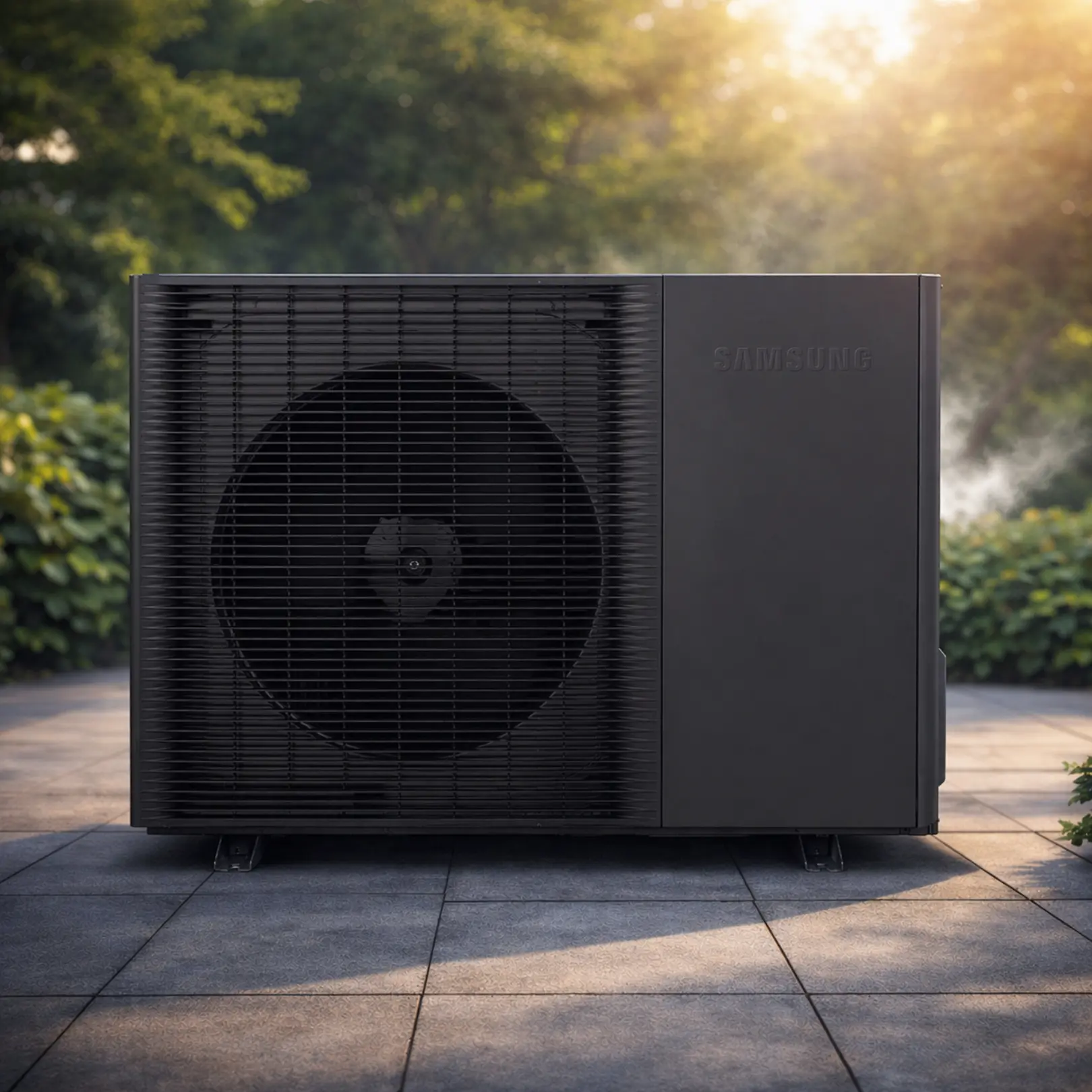
Quick Answer: What the benefits of Air source heat pumps?
Air source heat pumps provide efficient home heating by moving heat from the outside air into your property, rather than generating heat by burning fuel. This can make them far more efficient than traditional boilers, helping reduce energy waste and potentially lower running costs when the system is correctly designed, installed, and used with a suitable energy tariff.efits beyond lower carbon emissions?
Table of Contents
ToggleWhat Is an Air Source Heat Pump?
An air source heat pump is a renewable heating system that takes heat from the outside air and uses it to warm your home and hot water. Even in cold weather, there is still heat energy in the air that the system can capture and convert into usable heating.
Unlike a traditional gas boiler that creates heat by burning fuel, a heat pump moves existing heat from outside to inside your property. This makes it a more energy-efficient and lower-carbon way to heat many UK homes.
Air source heat pumps work best with low-temperature heating, meaning they provide steady and consistent warmth over longer periods rather than short bursts of very high heat. This helps create a comfortable indoor temperature while improving overall energy efficiency.
How Does an Air Source Heat Pump Work?
An air source heat pump absorbs heat from the outside air and transfers it into your home to provide heating and hot water.
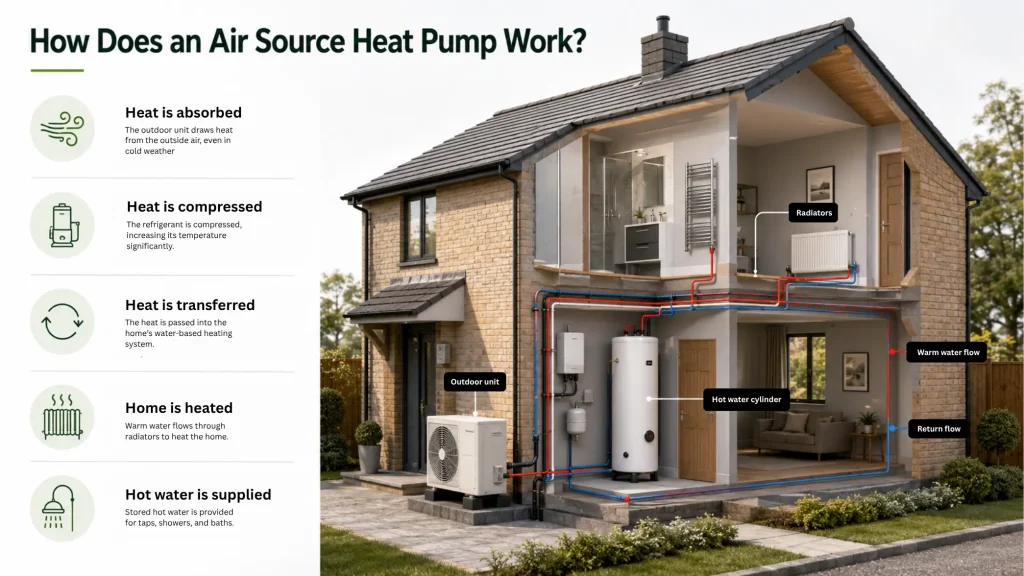
Why Heat Pumps Run More Gradually Than Boilers
Unlike gas boilers that quickly heat water to very high temperatures, heat pumps provide lower-temperature heating more steadily throughout the day, creating a more consistent, comfortable indoor temperature while using energy more efficiently. omes with higher heat loss may also require more powerful systems.
Do Heat Pumps Work in Cold UK Weather?
Yes, modern air source heat pumps are built to perform in UK winter conditions and can continue heating your home efficiently even when outdoor temperatures drop close to freezing.rk efficiently. Older heating systems are more likely to need these changes.
What Are the Main Air Source Heat Pump Benefits?
Air source heat pumps can help lower carbon emissions, improve energy efficiency, provide consistent heating, and reduce reliance on gas boilers. Many homeowners also benefit from lower running costs, government grant support, and a future-ready heating system designed for cleaner, more sustainable homes.
Lower Carbon Emissions
Potential Energy Savings
Consistent and Comfortable Heating
Works With Solar Panels
Reduced Reliance on Gas Heating
Long System Life
Smart Controls and Modern Heating Features
| Heat Pump Benefit | Why It Matters for UK Homes |
|---|---|
| Lower Carbon Emissions | Air source heat pumps use renewable heat from the outside air, helping reduce a home’s overall carbon footprint. |
| Potential Energy Savings | A well-designed system can improve heating efficiency and help lower long-term energy costs. |
| Consistent and Comfortable Heating | Heat pumps provide steady warmth throughout the day, creating a more balanced indoor temperature. |
| Works With Solar Panels | Heat pumps pair well with solar PV systems, helping homeowners use more of their own generated electricity. |
| Reduced Reliance on Gas Heating | Switching to a heat pump can reduce dependence on fossil fuels and protect against rising gas prices. |
| Long System Lifespan | Many modern heat pumps can last 15–20 years or more with proper servicing and maintenance. |
| Smart Controls and Modern Heating Features | Many systems include smart thermostats and app controls for easier temperature management and improved efficiency. |
Air Source Heat Pump Cost, Savings and Benefits Explained
Air source heat pumps can help improve energy efficiency, lower carbon emissions, and reduce reliance on gas heating. While installation costs are usually higher than traditional boilers, government grants and long-term energy savings can make them a more cost-effective option over time. Running costs depend on insulation, electricity tariffs, and overall system design.
m outside air and uses electricity to raise it to a useful temperature for heating and hot water.
Average Installation Costs in the UK (2026)
The average cost of an air source heat pump installation in the UK typically ranges from around £8,000 to £15,000 before any government grants. Final pricing can vary depending on property size, insulation levels, radiator upgrades, hot water cylinder requirements, and overall installation complexity.
| Property Type | Typical Installation Cost Range |
|---|---|
| Small Flat / 1–2 Bedroom Home | £8,000 – £10,000 |
| Semi-Detached Home | £10,000 – £13,000 |
| Detached 3–4 Bedroom Home | £12,000 – £15,000+ |
| Larger or Older Properties | Varies depending on heating upgrades |
Larger homes and older properties may require additional radiators, insulation improvements, or larger system sizes, which can increase overall installation costs.
Boiler Upgrade Scheme Explained
The Boiler Upgrade Scheme (BUS) currently offers eligible homeowners up to £7,500 towards the installation of an air source heat pump, helping make low-carbon heating more affordable across the UK.
Eligibility is usually based on factors such as property type, existing heating system, and having a valid EPC without major recommended insulation improvements still outstanding.
For many households, the grant can dramatically reduce the upfront installation cost, improving the overall long-term value of switching from a traditional gas boiler to a more energy-efficient heating system.
Are Heat Pumps Cheaper to Run Than Gas Boilers?
Heat pumps can be cheaper to run than gas boilers in some homes, but the results depend on insulation levels, electricity tariffs, system design, and heating habits. A well-installed heat pump in an energy-efficient property often delivers the best savings and long-term performance.
| Heating System | Typical Running Cost Factors | Main Benefit |
|---|---|---|
| Air Source Heat Pump | Electricity prices, insulation, system efficiency | Lower carbon emissions and improved energy efficiency |
| Gas Boiler | Gas prices, boiler efficiency, maintenance | Lower upfront installation cost in many cases |
While gas boilers may still cost less to install initially, heat pumps can offer better long-term value through reduced energy use and lower reliance on fossil fuels.
Are Air Source Heat Pumps Suitable for Every Home?
Air source heat pumps can work in many different UK property types, including older homes, new builds, semi-detached houses, bungalows, and some flats. The key factor is not the age of the property, but how well the home retains heat and whether the heating system is properly designed.
New builds are often ideal because they usually have better insulation, while older or rural properties may benefit from insulation or radiator upgrades. Many semi-detached homes and bungalows are also well suited to heat pumps. Even flats can sometimes support a heat pump system depending on available space and installation requirements.
Best Property Types for Heat Pumps
Heat pumps work especially well in well-insulated homes such as new builds, semi-detached houses, and bungalows with efficient heating systems.
Can Heat Pumps Work in Older UK Homes?
Yes, many older UK homes can still use heat pumps effectively with the right insulation and heating setup.
When a Heat Pump May Not Be the Best Option
A heat pump may be less suitable for homes with very poor insulation or properties where major heating upgrades are not practical.
Hybrid heat pump systems combine a heat pump with a gas boiler, but they are currently not eligible for the GOV.UK Boiler Upgrade Scheme support.
Common Myths:
Many common heat pump myths are based on outdated information, while modern systems are designed to provide efficient and reliable heating for a wide range of UK homes.
“Heat Pumps Don’t Work in Winter”
Myth: Heat pumps stop working in cold weather.
Reality: Modern air source heat pumps are designed to operate efficiently in UK winter conditions, even when temperatures drop close to freezing.
“You Need Underfloor Heating”
Myth: Heat pumps only work with underfloor heating.
Reality: Many heat pumps work perfectly well with suitable radiators, especially when the system is properly designed for the property.
Air Source Heat Pump Pros and Cons Summary
Heat pumps offer a cleaner and more energy-efficient alternative to traditional heating, but suitability can vary depending on the property and system design.
| Pros | Cons |
|---|---|
| Lower carbon emissions | Higher upfront cost |
| Improved energy efficiency | Some homes need upgrades |
| Consistent indoor comfort | Running costs vary |
| Works with solar panels | Requires outdoor space |
| Reduced reliance on gas | Installation suitability differs |
| Long system lifespan | Best performance needs good insulation |
Frequently asked questions (FAQs)
Simple answers to common questions about air source heat pumps, winter performance, running costs, older homes, radiators, solar panels, noise levels, and long-term efficiency. Speak to Simple Green Energy.
Want to check suitability?
Speak with Simple Green Energy to check your property, heat pump suitability, system design, insulation needs, and expected installation options.
Check suitability