
How Air Source Heat Pumps Work: A Simple Guide for UK Homes
As demand for air source heat pumps continues to rise across UK homes, many homeowners are asking the same question: how do air source heat pumps actually work?
This simple guide explains how the system takes heat from outdoor air, how it warms your home and hot water, what makes it different from a boiler, and whether it could be the right heating upgrade for your property.
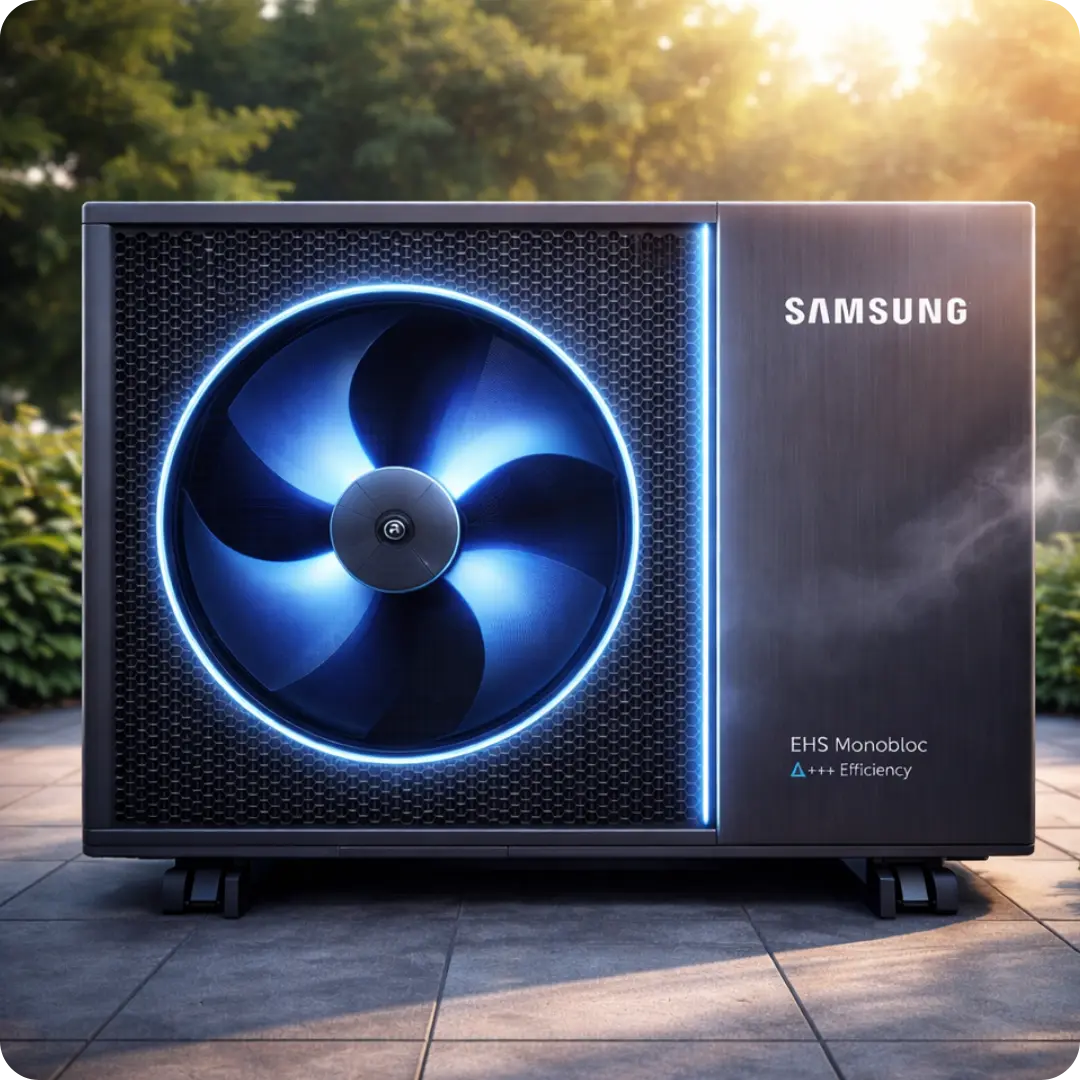
Quick Answer: How Air Source Heat Pumps Work?
An air source heat pump works by taking heat from the outside air, increasing its temperature using a compressor, and transferring that heat into your home for heating and hot water. Unlike a boiler, it moves heat instead of burning fuel to create heat.
Table of Contents
ToggleWhat Is an Air Source Heat Pump?
An air source heat pump is a heating system that uses heat from the outside air to warm your home and hot water. It may sound strange, but even cold air still has some heat in it. The heat pump collects that heat, makes it warmer, and sends it inside your home.
Unlike a gas boiler, it does not burn fuel to create heat. Instead, it uses electricity to move heat from outside to inside. This makes it much more efficient because it can give out more heat than the electricity it uses. In a UK home, it can work with radiators, underfloor heating, and a hot water cylinder, making it a smart choice for efficient heating and long-term energy savings.
How Does an Air Source Heat Pump Work Step by Step?
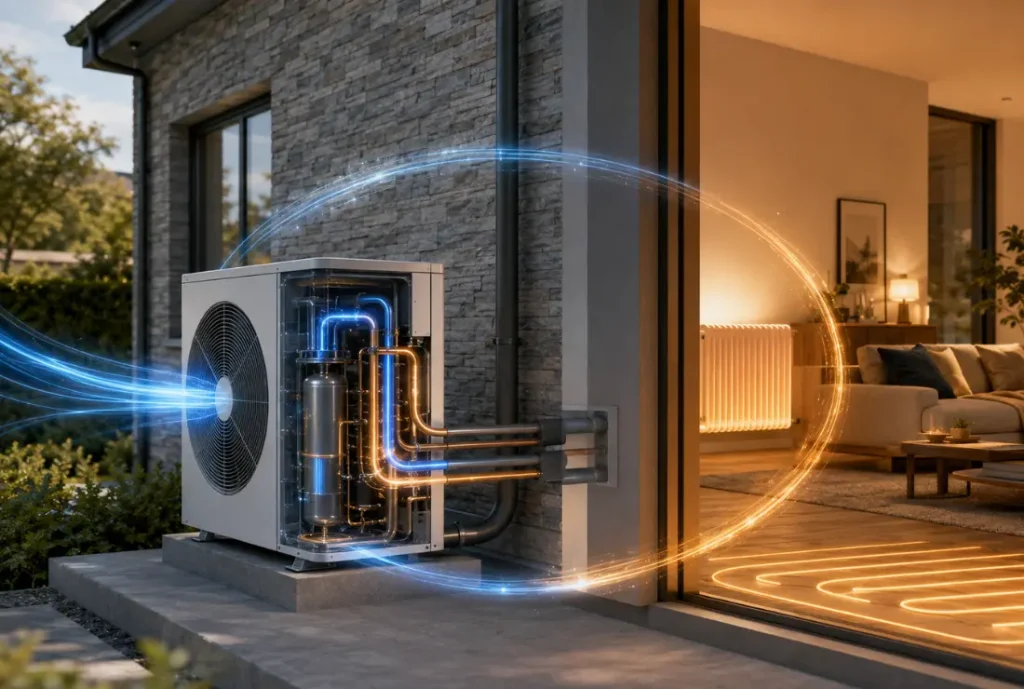
An air source heat pump works by collecting heat from outside air, increasing its temperature, and moving that heat into your home. It may sound technical, but the process is quite simple. The system works in a continuous cycle, helping to warm your rooms and hot water efficiently throughout the day.
Step 1: The Outdoor Unit Takes in Air
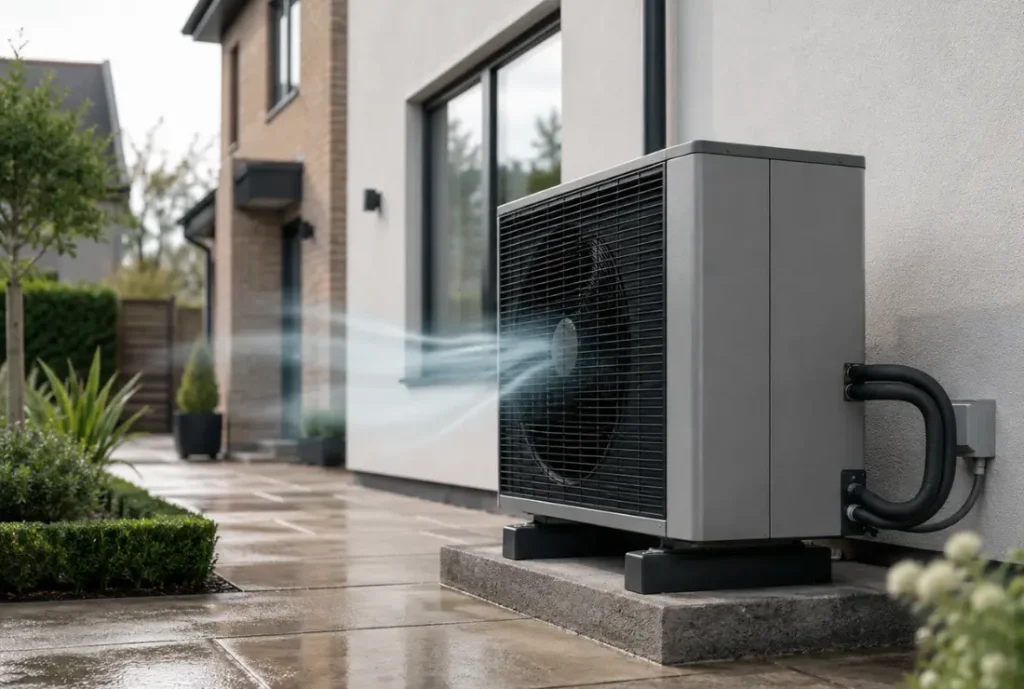
The process starts with the outdoor unit, which is usually installed outside your home on a wall or on the ground. This unit pulls in air from outside using a fan. Even when the weather is cold, the air still contains heat energy. The heat pump is designed to capture this energy and use it for your home. This is why air source heat pumps can still work during typical UK winter conditions.
Step 2: The Refrigerant Absorbs Heat
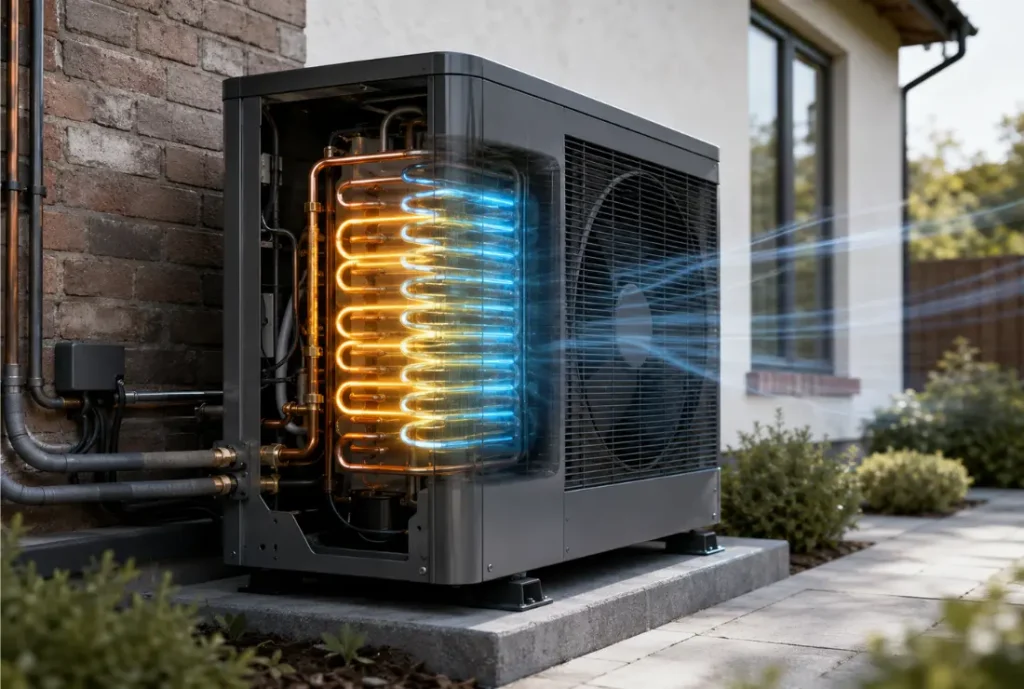
Inside the heat pump, there is a special liquid called refrigerant. This refrigerant is very good at absorbing heat, even from cool air. As the outside air passes through the system, the refrigerant collects the heat energy from it. When it absorbs enough heat, the refrigerant starts to change from a liquid into a gas. This gas then carries the heat to the next part of the system.
Step 3: The Compressor Raises the Temperature
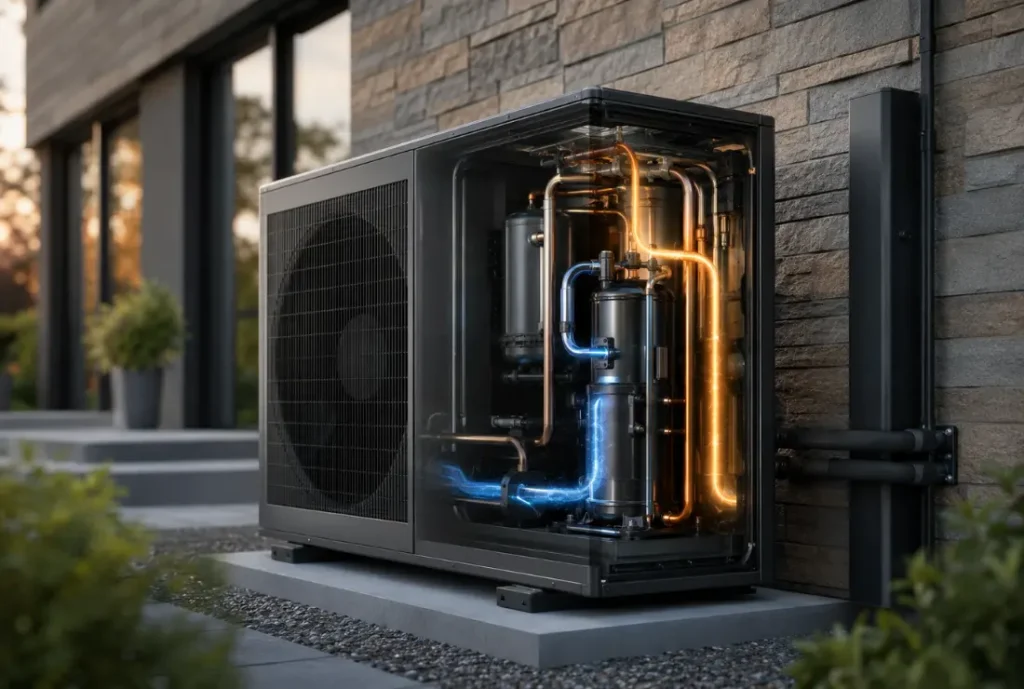
Once the refrigerant becomes a gas, it moves into the compressor. The compressor’s job is to squeeze the gas, which increases its temperature. Think of it like making the heat stronger before sending it into your home. This step is important because the heat collected from outside needs to be warm enough to heat your rooms and hot water properly.
Step 4: Heat Is Transferred into Your Heating System
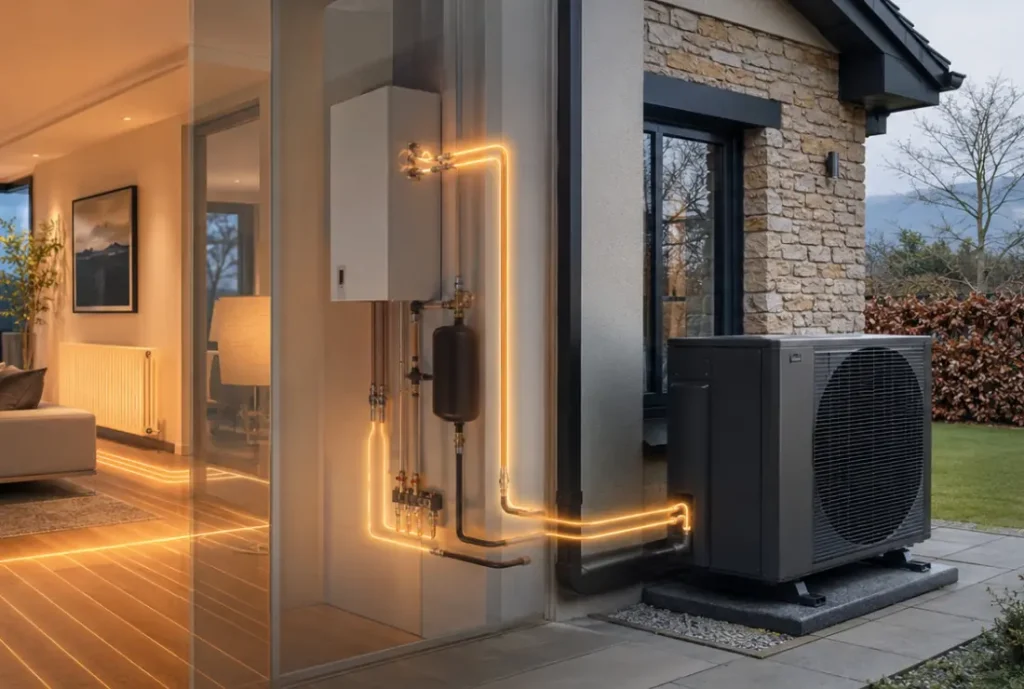
The hot refrigerant then passes through a heat exchanger, where its heat is transferred into your home’s heating system. This heat can warm the water that flows through your radiators, underfloor heating, or hot water cylinder. The refrigerant itself does not enter your radiators or taps. It simply passes its heat across, helping your home stay warm and comfortable.
Step 5: The Cycle Repeats
After giving away its heat, the refrigerant cools down and changes back into a liquid. It then returns to the outdoor unit to collect more heat from the outside air. This cycle keeps repeating while your heating or hot water is needed. Because the system moves heat instead of creating it by burning fuel, it can provide efficient heating for UK homes.
What Are the Main Parts of an Air Source Heat Pump?
| Component | Role in the system |
|---|---|
| Outdoor unit | Captures usable heat from the outside air, even during colder weather. |
| Fan | Draws outdoor air across the internal coil so the system can extract heat. |
| Refrigerant | Absorbs heat from the air and carries it through the heat pump cycle. |
| Compressor | Raises the refrigerant temperature, making the heat warm enough for your home. |
| Heat exchanger | Transfers heat into your central heating and hot water system. |
| Hot water cylinder | Stores heated water for taps, showers, and daily household use. |
| Controls | Help manage temperature, heating schedules, and overall efficiency. |
| Radiators or underfloor heating | Distribute the warmth evenly throughout your home. |
How Does a Heat Pump Heat Your Home?
A heat pump heats your home by moving heat from outside air into your indoor heating system. The outdoor unit collects heat energy from the air, even when it feels cold outside. This heat is absorbed by a refrigerant, which then passes through a compressor to increase its temperature.
Once the heat is warm enough, it is transferred into the water that flows around your home. This warm water can supply your radiators, underfloor heating, or hot water cylinder. Instead of burning gas like a boiler, a heat pump moves existing heat and makes it useful, helping your home stay warm more efficiently.
How Does an Air Source Heat Pump Heat Hot Water?
An air source heat pump heats hot water by sending heat into a hot water cylinder. Once the system has collected and increased heat from outside air, that heat is transferred to the stored water inside the cylinder through a coil or heat exchanger. The water is then kept ready for everyday use, such as showers, baths, washing up, and cleaning.
Unlike a combi boiler, a heat pump usually does not heat hot water instantly on demand. Instead, it stores heated water in a cylinder so your home has a reliable supply when needed. Many systems also include smart controls, allowing hot water to be heated at set times or when energy use is more efficient.
Do Air Source Heat Pumps Work in Cold Weather?
Yes, air source heat pumps work in cold weather, even when outdoor temperatures feel very low. This is because cold air still contains heat energy, and the heat pump is designed to capture that heat, boost its temperature, and use it to warm your home.
During colder months, the system may need to work harder because there is less heat available in the air. However, a correctly sized and well-installed air source heat pump can still provide steady heating for UK homes. Good insulation, suitable radiators or underfloor heating, and proper system settings also help it perform more efficiently in winter.
Why Are Air Source Heat Pumps Efficient?
Air source heat pumps are efficient because they move heat instead of creating it from scratch. A gas boiler has to burn fuel to produce heat, but a heat pump collects existing heat from the outside air and transfers it into your home. This means it can deliver more heat energy than the electricity it uses to run.
For example, many air source heat pumps can produce around 3 to 4 units of heat for every 1 unit of electricity used. This makes them a smart choice for homeowners who want steady heating, better energy performance, and long-term cost savings. Their efficiency is even better when the home is well insulated and the system is correctly designed.
What Makes a Heat Pump Work Well?
A heat pump works best when the whole home is set up to support efficient heating. Good insulation, double glazing, and draught control help keep warmth inside, so the system does not need to work harder than necessary. The heat pump also needs to be correctly sized for the property, based on the home’s heat loss, room sizes, and heating demand.
The heating system also plays an important role. Larger radiators, underfloor heating, a suitable hot water cylinder, and smart controls can help the heat pump run at lower flow temperatures, which improves efficiency. Regular servicing and the right settings also help the system deliver steady warmth, lower energy use, and better long-term performance.
1. Good Insulation
2. Correct System Size
3. Suitable Radiators
4. Good Insulation
5. Correct System Size
Is Your Home Suitable for an Air Source Heat Pump?
Insulation
Helps reduce heat loss, so your heat pump can warm your home more efficiently.
Outdoor Space
Needed for the outdoor unit, with enough airflow, clearance, and safe access.
Cylinder Space
Often needed for hot water storage, especially if you currently use a combi boiler.
Radiator Size
Affects heating performance, as suitable radiators help deliver steady warmth.
Heat Loss
Helps size the system correctly for your property and daily heating needs.
Hot Water Demand
Helps choose the right cylinder size for showers, taps, and everyday use.
Installation Location
Affects airflow, noise, access, and how neatly the unit can be installed.
Common Myths About Air Source Heat Pumps
“Heat Pumps Do Not Work in Winter”
This is a common myth. Air source heat pumps can still collect heat from outdoor air in cold weather. They may work harder in winter, but a correctly sized and well-installed system can keep a UK home warm and comfortable.
“Radiators Must Be Very Hot to Heat a Home”
Radiators do not always need to be extremely hot. Heat pumps are designed to provide steady warmth over a longer period. With the right radiator size and good insulation, lower flow temperatures can still heat the home effectively.
“A Heat Pump Is Just an Electric Heater”
A heat pump is not the same as a basic electric heater. An electric heater creates heat directly, while a heat pump moves heat from outside air into your home. This is why heat pumps can be much more efficient.
“Every Home Can Install One Without Changes”
Not every home is ready straight away. Some properties may need better insulation, larger radiators, a hot water cylinder, or a suitable outdoor space. A proper home survey helps check what changes are needed before installation.
FAQs
Frequently asked questions (FAQs)
Simple answers to common questions about how air source heat pumps work in UK homes, including electricity use, radiators, hot water, winter performance, and home suitability. Speak to Simple Green Energy.
Thinking about switching?
Speak with Simple Green Energy to check your property, heating setup, hot water needs, and whether an air source heat pump is suitable for your home.
Get heat pump adviceFinal Thoughts
Air source heat pumps may sound technical at first, but the idea is simple: they collect heat from outside air, make it warmer, and use it to heat your home and hot water. Instead of burning fuel like a traditional boiler, they move heat efficiently, which can make them a smart choice for UK homeowners looking for better performance and long-term energy savings.
The most important thing is making sure your home is suitable. Good insulation, the right radiator setup, enough outdoor space, and a properly sized system all play a big role in how well a heat pump performs. With the right design and installation, an air source heat pump can provide steady, comfortable heating through the year, including colder UK weather.