

Solar Panels Companies in the UK: How to Choose in 2026
Choosing the right solar company can feel confusing when every quote, warranty and savings estimate looks different. Solar Panels Companies in the UK: How to Choose in 2026 answers the key question homeowners ask before investing: how do you find a company you can trust? This guide covers what solar companies do, how to compare quotes, which certifications matter, what affects cost, and what to check before booking an installer.
Get Your Solar Panel Quote
Start with your address so we can check the best solar options for your home.
Quick Answer: How do you choose the right solar panels company in the UK?
Choose a solar panels company by checking MCS certification, customer reviews, quote details, equipment quality, warranties, aftercare and realistic savings estimates. A good installer should explain your roof suitability, system size, battery options and total installation cost clearly.
Table of Contents
ToggleWhat Do Solar Panels Companies Actually Do?
Solar panels companies do more than just fit panels on a roof. A good company checks your property, designs the right system, installs the equipment safely, and explains how everything works after installation. The aim is simple: to make sure your solar setup suits your home, your energy use, and your long-term savings goals.
Solar Survey and Property Assessment
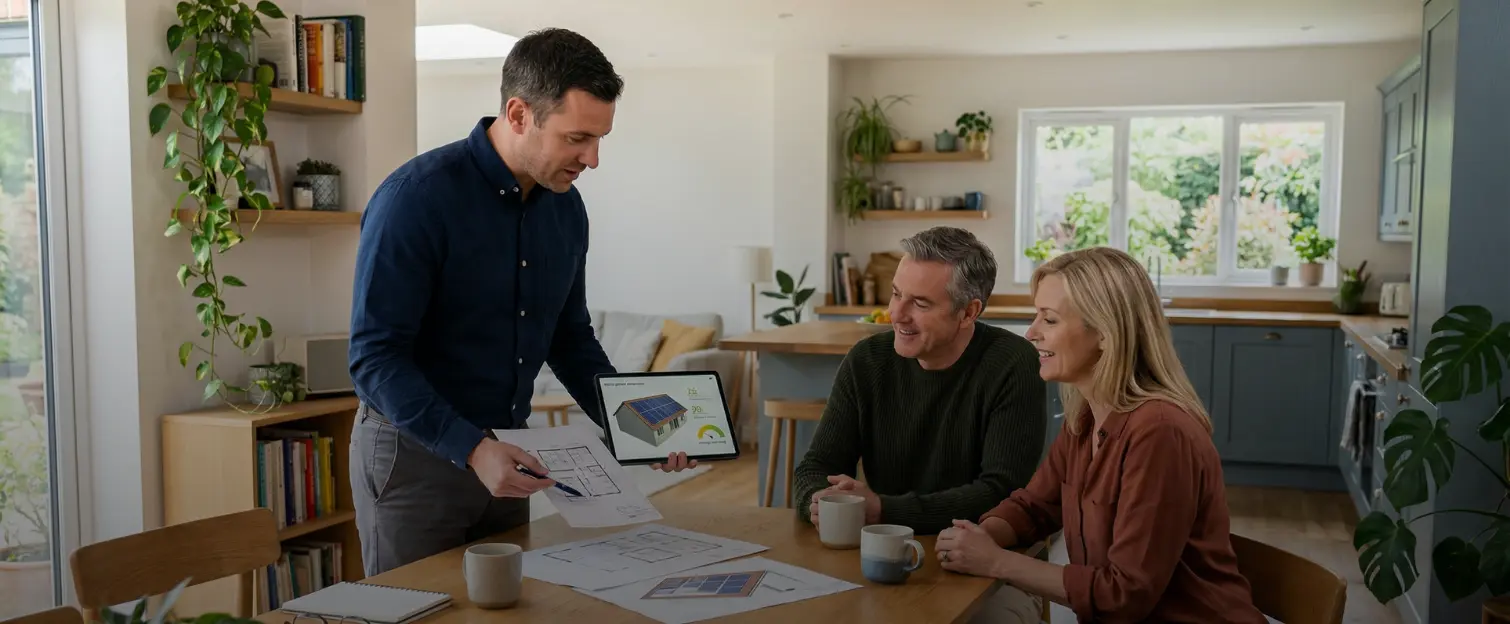
This is where a proper solar project starts. The company checks your roof size, direction, shading, condition, electricity usage, and access for scaffolding. This helps them understand whether your home is suitable and what type of system will work best.
Solar PV System Design
Once the survey is complete, the company designs a system around your home. This includes the number of panels, inverter size, battery option, expected generation, and how much electricity you may use or export. A good design is based on real needs, not just filling the roof.
Installation, Testing and Handover
After design approval, the team installs the panels, inverter, cables, and battery if included. They then test the system, set up monitoring, complete key paperwork, and show you how to use it. A good handover should leave you confident, not confused.
Why Choosing the Right Solar Panel Company Matters
Choosing the right solar panel company can make the difference between a system that performs well for years and one that causes stress later. The right installer will design carefully, explain costs clearly, use quality equipment, and make sure your home gets a system that actually suits your needs.
A Good Company Designs Around Your Home
Every home is different. A good solar company looks at your roof, shading, electricity usage, battery needs and future plans before recommending a system. The best design is not always the biggest — it is the one your home can use properly.
Poor Installation Can Reduce Performance
Even good panels can underperform if they are fitted badly. Poor placement, weak wiring, wrong inverter sizing or ignored shading can reduce generation and lead to faults. A proper installation protects your savings, safety and system lifespan.
Trust Matters Because Solar Is a Long-Term Investment
Solar panels are not a quick purchase; they are a long-term home upgrade. That is why reviews, warranties, certification, aftercare and clear communication matter. A trustworthy company will not rush you — they will help you make a confident decision.
How to Compare Solar Panels Companies in the UK
To compare solar panels companies, look beyond the headline price. Check certification, reviews, equipment, warranty, aftercare, quote detail and how they calculate savings. A reliable company should explain the system clearly, show what is included, and give realistic expectations instead of making big promises.
Check MCS Certification
MCS certification is one of the first things to check. It shows the installer and products meet recognised UK standards for small-scale renewables. It can also be important for paperwork, handover documents and access to export tariffs like the Smart Export Guarantee.
Check Reviews and Real Customer Feedback
Reviews are not a guarantee, but they are a useful trust signal. Look at Google reviews, Trustpilot, Checkatrade, photos of completed work, case studies and local customer examples. A strong company should have proof of real installations, not just polished sales claims.
Compare the Full Quote, Not Just the Final Price
A cheap quote may not include everything. Check the panel brand, inverter, battery storage, scaffolding, bird protection, monitoring app, electrical work, warranty, DNO paperwork and aftercare. The best quote is clear, itemised and easy to understand.
Ask About Warranty and Aftercare
Solar panels are a long-term investment, so aftercare matters. Ask about panel warranty, inverter warranty, battery warranty, workmanship cover and monitoring support. You should also know exactly who to contact if something stops working after installation.
Check How They Explain Savings
Be careful with companies that promise huge savings without asking about your home. A good installer should consider your daytime usage, battery storage, export tariff, energy tariff, roof direction, shading and system size. Honest savings estimates are better than impressive but unrealistic numbers
What Certifications Should a Solar Company Have?
A solar company should ideally be MCS certified and use qualified electricians for all electrical work. Insurance, workmanship warranties, clear contracts and consumer protection also matter. These checks help you separate a professional installer from a company that only looks good on paper.
MCS Certification
MCS is a recognised UK quality standard for small-scale renewable installations. For solar PV, it shows the installer and products meet set standards. Customers can check an installer through the official MCS database, which helps build confidence before booking.
Electrical Qualifications and Safety
Solar panels involve more than roof work. The system needs safe DC and AC wiring, consumer unit checks, inverter connection and proper commissioning. A competent electrician should handle the electrical side so the system is safe, compliant and ready to use.
Insurance and Consumer Protection
Before paying a deposit, check the company has public liability insurance, workmanship warranty, clear written terms and deposit protection where available. Avoid large bank-transfer payments without proper paperwork. A trustworthy company should make protection clear, not leave you guessing.
How Much Do Solar Panels Companies Charge in the UK?
Solar panel prices can vary because every home is different. The final cost usually depends on system size, roof access, equipment quality, battery storage and any extra electrical work. A good solar company should explain the full price clearly, not just give you a headline figure.
What Affects Solar Installation Cost?
The main cost factors include the number of panels, inverter type, scaffolding, roof condition, wiring, monitoring setup and whether a battery is included. Homes with difficult access, shading issues or extra electrical upgrades may cost more than a straightforward installation.
Solar Panels With Battery vs Without Battery
A solar system without a battery usually costs less upfront. Adding a battery increases the price, but it can help you store unused solar electricity for evening use. The right choice depends on your budget, energy habits and how much power you use when the sun is not shining.
Why the Cheapest Solar Quote Is Not Always Best
The cheapest quote may leave out important items like scaffolding, warranties, monitoring, bird protection or aftercare. A slightly higher quote can offer better equipment, safer installation and stronger long-term support. Always compare what is included, not just the final number.
Best Solar Panels Companies in the UK: What Should “Best” Mean?
The best solar panels company is not always the cheapest or the biggest name. “Best” should mean the company gives clear advice, designs around your home, uses reliable equipment, explains savings honestly, and supports you after installation. A good installer helps you choose wisely, not quickly.
Best for Homeowners Who Want Clear Advice
A good company should make solar simple. They should explain your roof suitability, panel options, battery choices, expected generation and costs in plain English. You should feel informed before making a decision, not pushed into one.
Best for Solar Panels and Battery Storage
If you are considering a battery, the company should check your electricity habits first. Battery storage can be useful, but it should match your usage, system size and budget. It should never feel like an automatic upsell.
Best for Solar Panels and EV Chargers
For homes with an electric vehicle, solar and EV charging can work well together. The right company should explain smart charging, solar-compatible chargers, tariff options and whether your system can support future energy needs.
Best for Local Installation and Aftercare
Local support can make a big difference. A company that knows your area can often offer faster surveys, clearer communication and easier aftercare. Real local reviews, case studies and installation photos can help show they are genuinely trusted.
What Questions Should You Ask a Solar Company Before Booking?
Before booking a solar company, ask clear questions about the quote, equipment, savings and aftercare. A good installer should answer confidently and explain everything in plain English. If the answers feel vague, rushed or too good to be true, that is a warning sign.
Questions About the Quote
Ask exactly what is included before comparing prices. Check whether scaffolding, VAT, bird guards, monitoring, electrical upgrades and paperwork are included. A clear quote should show the full picture, not surprise you with extra costs later.
Questions About Equipment
Ask which panel brand, inverter and battery system will be used. Check the warranties, product quality and whether the equipment is MCS certified. Good equipment should match your home’s needs, not just look impressive on the quote.
Questions About Savings
Ask how the savings estimate has been calculated. A reliable company should consider your energy tariff, daytime usage, export income, roof direction, shading and system size. If your usage changes, your savings may change too, so the estimate should be realistic.
Questions About Aftercare
Ask who you contact after installation, whether monitoring support is included, what happens if the inverter has a fault, and how long the workmanship is covered. Solar is a long-term investment, so aftercare should be clear from day one.
Common Mistakes to Avoid When Choosing a Solar Company
Choosing a solar company is easier when you know what to avoid. A low price, polished sales pitch or nice logo does not always mean quality. The safest choice is a company that proves its certification, explains the quote clearly and gives realistic advice.
Choosing Only on Price
The cheapest quote can be tempting, but it may leave out scaffolding, bird protection, monitoring, warranties or electrical upgrades. Always compare what is included, not just the final price.
Not Checking MCS Certification
Do not rely on a logo alone. Check the installer through the official MCS search tool to make sure they are genuinely certified for solar PV work.
Ignoring Roof Suitability
Not every roof is ready for solar. Shading, direction, roof age, structure and available space can all affect performance. A good company should check these before recommending a system.
Accepting Unrealistic Savings Claims
Solar savings depend on your system size, electricity usage, tariff, export rate and how much power you use at home. Be careful if a company promises huge savings without explaining the assumptions.
Paying a Large Deposit Without Protection
Before paying, check the contract, payment method and deposit protection. Avoid large bank transfers without clear paperwork. A professional company should make payment terms simple, safe and transparent.
How to Choose the Right Solar Company for Your Home
The right solar company should make the process feel clear, not complicated. Before you book, check their certification, compare the quote properly, understand the equipment, read real customer feedback and make sure aftercare is included. A good installer will help you feel confident before any work starts.
Step 1: Check Certification
Start with MCS certification and electrical competence. Solar PV involves both roof work and electrical work, so the company should be properly qualified to design, install and commission the system safely.
Step 2: Compare Detailed Quotes
Do not compare quotes by price alone. Look line by line at panels, inverter, battery, scaffolding, monitoring, electrical upgrades, paperwork and warranties. A clear quote should show exactly what you are paying for.
Step 3: Review Equipment and Warranty
Check the panel brand, inverter, battery option and warranty terms. Also ask about workmanship cover, because good equipment still needs proper installation to perform well over time.
Step 4: Check Reviews and Local Proof
Look for genuine reviews, local case studies and photos of completed installations. Local proof helps you see whether the company has experience with homes like yours.
Step 5: Ask for a Clear Handover Process
A proper handover should include system documents, monitoring app setup, warranty details and aftercare contact information. You should know how to use the system and who to call after installation.
Final Thoughts: Choosing Solar Panels Companies in 2026
Choosing the right solar panels company in 2026 is about more than finding the lowest price. Look for clear advice, MCS certification, quality equipment, realistic savings estimates, strong warranties and proper aftercare. A good company will check your home first, explain your options simply, and help you choose a solar system that makes sense for your roof, budget and energy use.
Frequently asked questions (FAQs)
Simple answers to common questions about solar panel costs, yearly savings, battery storage, cloudy-day performance, roof suitability, lifespan, and selling unused electricity back to the grid. Speak to Simple Green Energy.
Want to check your roof?
Speak with Simple Green Energy to check whether your property is suitable for solar panels, including roof direction, shading, available space, battery options, expected savings, and installation requirements.
Check solar suitability