





10 Practical Ways to Reduce Your Energy Bills This Winter
When the heating goes on and your energy use suddenly jumps, it is not always obvious what is driving the cost. The tariff may play a part, but so can heat loss, outdated controls, inefficient appliances and everyday habits.
Reducing your energy bills does not mean living in an uncomfortably cold home; it means using energy more carefully and preventing unnecessary waste. Some households can start with simple, no-cost changes, while others may benefit from small improvements or larger upgrades.
The most suitable steps depend on your property, heating system and usage, so the table below compares ten practical options at a glance.
Check your ECO4 eligibility
Answer a few quick questions to see whether your household may qualify for ECO4 support.

Table of Contents
Toggle10 Ways to Reduce Your Winter Energy Bills at a Glance
Some energy-saving steps can be started today, while others need a small budget, professional advice or a property assessment. The table below compares ten practical actions by cost, speed and purpose, helping you identify which options may suit your home before exploring each one in more detail.
| Action | Typical cost level | How quickly? | Main purpose | Important condition |
|---|---|---|---|---|
| Adjust heating schedules | No cost | Immediately | Avoid heating an empty home | Timings should reflect your daily routine |
| Lower the thermostat slightly | No cost | Immediately | Reduce unnecessary heating demand | Maintain a safe and comfortable temperature |
| Heat only the rooms you use | No cost | Immediately | Limit wasted heat | Avoid allowing unused rooms to become damp |
| Reduce hot-water waste | No cost | Immediately | Cut water-heating demand | Do not compromise hygiene or cylinder safety |
| Draught-proof doors and windows | Low cost | A few hours | Prevent unwanted cold air | Do not block required ventilation |
| Use heating controls correctly | Low cost | Same day | Improve temperature control | Controls must be compatible with the heating system |
| Fit LED lighting | Low cost | Same day | Reduce electricity use | Replace suitable bulbs as needed |
| Improve loft insulation | Medium cost | Usually one day | Slow heat loss through the roof | Loft access, ventilation and existing insulation require checking |
| Upgrade windows or wall insulation | Higher cost | Several days or longer | Reduce property-wide heat loss | Suitability, moisture risk and planning requirements may need assessment |
| Upgrade the heating system | Higher cost | Requires survey and installation | Improve heating efficiency | The property and existing heating system must be assessed first |
What Does Reducing Your Energy Bills Actually Involve?
Reducing an energy bill usually means using less energy, stopping heat from being wasted, paying a suitable tariff and improving how efficiently the home or heating system operates. The best place to start depends on where your property is using or losing the most energy.
Your bill can be affected by:
- How much gas and electricity your household uses.
- Your unit rates, standing charges and tariff.
- Colder weather and longer heating periods.
- The size, age and construction of the property.
- Poor insulation, draughts or uncontrolled ventilation.
- The efficiency and condition of the heating system.
- How heating controls, appliances and hot water are used.
- Whether the bill is based on actual or estimated meter readings.
A high bill is not always caused by one issue. It may result from several smaller factors working together.
The first step is to identify which of these factors is having the greatest effect in your home.
1. Check Where Your Energy Is Going
Costs can increase even when usage falls because tariffs, standing charges or billing periods may have changed. Check:
- Gas and electricity use in kWh.
- Actual versus estimated readings.
- The same period last year.
- Changes in weather or occupancy.
Example: Usage falls from 1,500 kWh to 1,400 kWh, but the bill rises. This may be caused by higher prices rather than higher consumption.
2. Use Your Heating Controls More Effectively
Heating controls help your system warm the right rooms at the right times without running longer than necessary. A programmer, room thermostat and thermostatic radiator valves each have a different purpose and work best together where suitable.
Set the heating schedule around your current routine rather than relying on settings left by a previous occupant. Review weekday and weekend timings, adjust them during holidays and consider how quickly your particular heating system warms the property.
Poor schedule: Heating runs from 6am to 10pm, even when the home is empty.
Better schedule: Heating comes on before the household wakes, switches off during empty periods and returns before people arrive home.
| Control | Main purpose |
|---|---|
| Programmer or timer | Sets when heating operates |
| Room thermostat | Controls the overall target temperature |
| Radiator valve | Adjusts heat in individual rooms |
| Smart controls | Allow remote or more flexible scheduling |
Turning the thermostat to its highest setting does not normally heat the home faster. It simply tells the system to continue heating until a higher temperature is reached. Focus on avoiding wasted heating while maintaining safe, reasonable comfort.
3. Review Your Boiler Flow Temperature Safely
Boiler flow temperature is the temperature of the water leaving the boiler and circulating through the radiators. It is different from the room thermostat, which controls the temperature inside the home.
Some condensing boilers can operate more efficiently at a lower flow temperature because this may help them recover more heat from the system. However, reducing it too far can leave rooms slow to warm or unable to reach a comfortable temperature, particularly during colder weather. Any change should therefore be gradual.
Boiler type matters. A combi boiler usually provides heating and hot water directly, while system and regular boilers may be connected to a separate hot-water cylinder. These systems have different controls and safety requirements. Weather-compensated systems may adjust automatically, while heat pumps require separate operating guidance.
4. Stop Uncontrolled Draughts
Cold air entering through small gaps can make a room feel uncomfortable even when the heating is on. Sealing these unwanted draughts can reduce heat loss and help the property retain warmth for longer. The key is to distinguish accidental gaps from ventilation that has been installed for safety or moisture control.
Where to Check
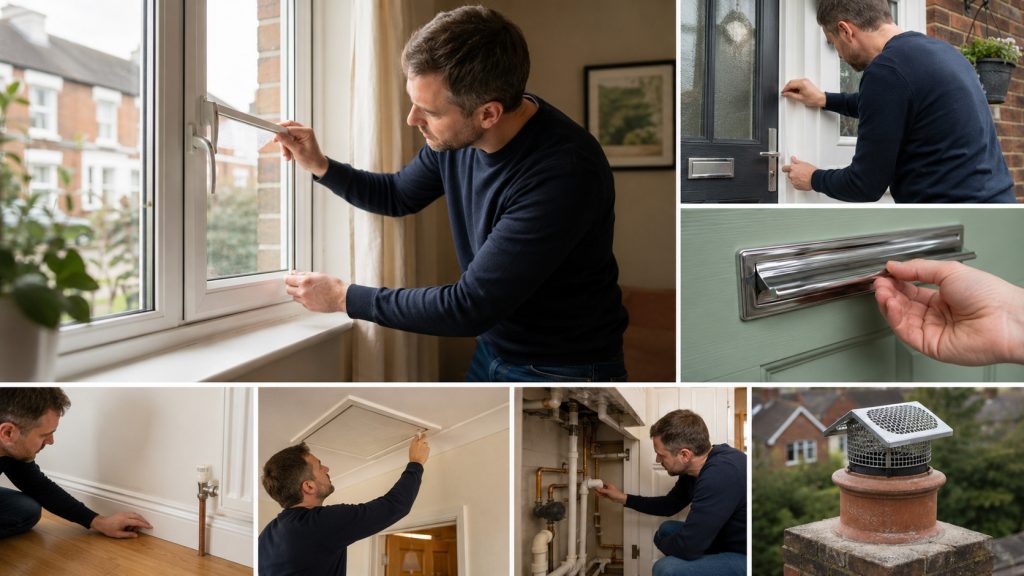
Look for draughts around:
- Window and external door frames.
- Letterboxes and keyholes.
- Skirting boards and suspended timber floors.
- Loft hatches.
- Gaps around pipes and cables.
- Unused chimneys, using a suitable ventilating product where appropriate.
Simple draught-proofing strips, sealants or covers may be suitable for some areas, provided they are fitted correctly.
What Should Not Be Blocked
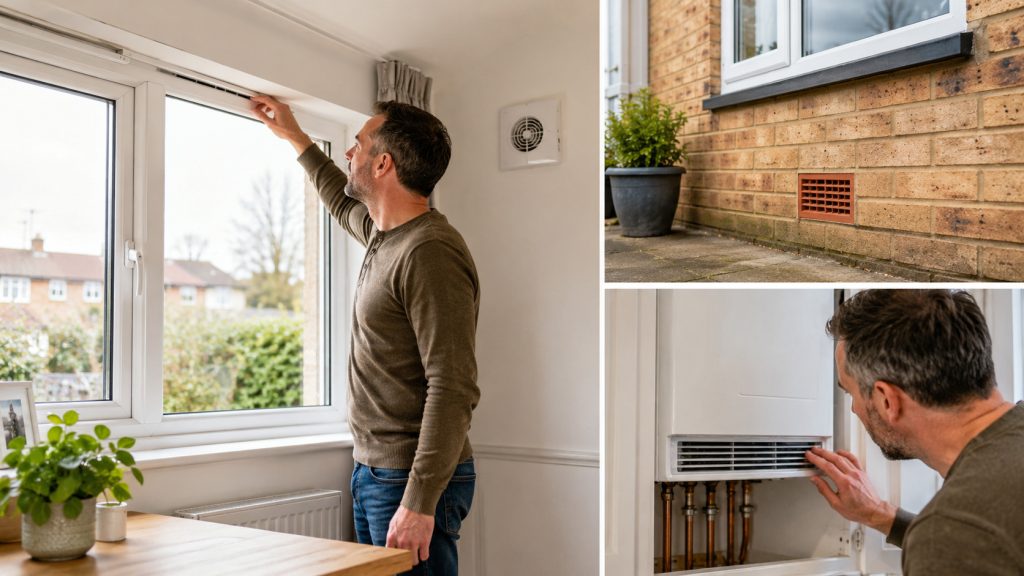
Do not seal:
- Air bricks or purpose-provided vents.
- Extractor fan outlets.
- Boiler or appliance ventilation.
- Trickle vents without checking why they are required.
- Openings included in a professional ventilation design.
Important: A draught is uncontrolled air leakage; ventilation is planned airflow. Blocking required ventilation can increase condensation, damp, poor indoor air quality or combustion risks. Ask a competent professional for advice when an opening’s purpose is unclear.
5. Make Better Use of Curtains, Blinds and Natural Heat
During the Day
Open curtains and blinds when sunlight reaches the room. Natural heat can warm floors, furniture and other surfaces, particularly around south-facing windows. Make sure sofas, cabinets and other large items are not blocking radiators or restricting warm air from circulating.
After Dark
Close curtains and blinds as outdoor temperatures fall to create an extra barrier between the room and the glass. Avoid letting long curtains hang over radiators, as this can trap heat behind the fabric and direct it towards the window instead of the room.
Thermal curtains may improve comfort, especially around older glazing, but they are not a substitute for suitable insulation or energy-efficient windows.
If condensation regularly forms on the glass, do not assume the window is the only problem. It may indicate excess moisture or insufficient ventilation, which should be addressed rather than simply covered.
6. Reduce Hot-Water Waste
Water heating can use a significant amount of energy, but reducing waste does not mean compromising hygiene.
- Take shorter showers
Reducing unnecessary shower time can lower hot-water use. Flow rate matters too, so a water-efficient showerhead may help if it still provides suitable performance. - Repair dripping taps
A leaking hot-water tap wastes both water and the energy used to heat it. Simple faults may need a replacement washer, while larger leaks should be checked by a plumber. - Check hot-water controls
Set cylinder timings around your normal routine rather than heating water continuously when it is not needed. Do not reduce stored-water temperatures without checking the manufacturer’s instructions or seeking professional advice, as safe hygienic temperatures must be maintained.
7. Cut Unnecessary Electricity Use
Small amounts of electricity can add up when lights and appliances run unnecessarily.
Check first
- Turn off lights in empty rooms.
- Use LEDs in frequently used fittings.
- Run full washing-machine and dishwasher loads.
- Use eco modes where suitable.
- Reduce tumble-dryer use when safe alternatives are available.
- Identify high-use devices with a smart meter or plug-in monitor.
Smaller savings
Switch off equipment that does not need to remain on standby, especially devices that stay warm, lit or active. Off-peak use only saves money if your tariff offers cheaper rates.
Check before switching off
Routers, alarms, medical equipment and refrigeration may need continuous power. Always check first.
8. Improve Loft Insulation Where It Is Suitable
Loft insulation can reduce heat loss through the roof, but adding more material without checking the loft first may create problems.
Suitability Checklist
Before installation, check:
✓ The depth and coverage of existing insulation.
✓ Compressed, disturbed or missing areas.
✓ Gaps around the loft hatch.
✓ Insulation beneath boarded storage areas.
✓ Signs of leaks, damp or condensation.
✓ Whether the loft can be accessed safely.
Ventilation must remain clear, particularly around the eaves. Blocking airflow can increase condensation risk in a cold loft. Kitchen and bathroom extractor fans should also discharge outside rather than into the roof space.
Professional advice is recommended where there is spray foam, vermin contamination, damaged wiring, roof defects, unsafe access or uncertain ventilation. Converted lofts and room-in-roof spaces also need a different assessment from a standard open loft.
9. Investigate Wall, Floor and Window Heat Loss
Heat can escape through several parts of a home, but the right solution depends on the property’s construction, condition and ventilation.
| Area | What to consider |
|---|---|
| Cavity walls | Not every cavity is suitable for insulation. Construction, exposure, dampness and existing material should be checked through a survey. |
| Solid walls | Internal or external insulation can reduce heat loss but may affect room size, appearance, moisture movement and cost. Planning or building-control requirements may apply. |
| Floors | Suspended timber and solid floors need different methods. Access, ventilation, pipework, wiring and moisture must be considered. Rugs can improve comfort but are not insulation. |
| Windows | Repairing seals or adjusting frames may be enough in some homes. Secondary glazing, curtains and draught-proofing can offer lower-cost alternatives to replacement. |
Avoid assuming every wall, floor or window needs upgrading. Prioritise the areas causing the greatest heat loss and arrange a professional assessment before starting major work.
10. Consider Larger Energy-Efficiency Upgrades
Larger upgrades can reduce long-term energy use, but the right option depends on the property, budget and existing heating system.
Which Larger Upgrade Addresses Which Problem?
| Upgrade | Best suited to | Important checks |
|---|---|---|
| Air source heat pump | Replacing fossil-fuel heating | Heat loss, radiators, hot-water demand, outdoor space, electrical supply and full system design |
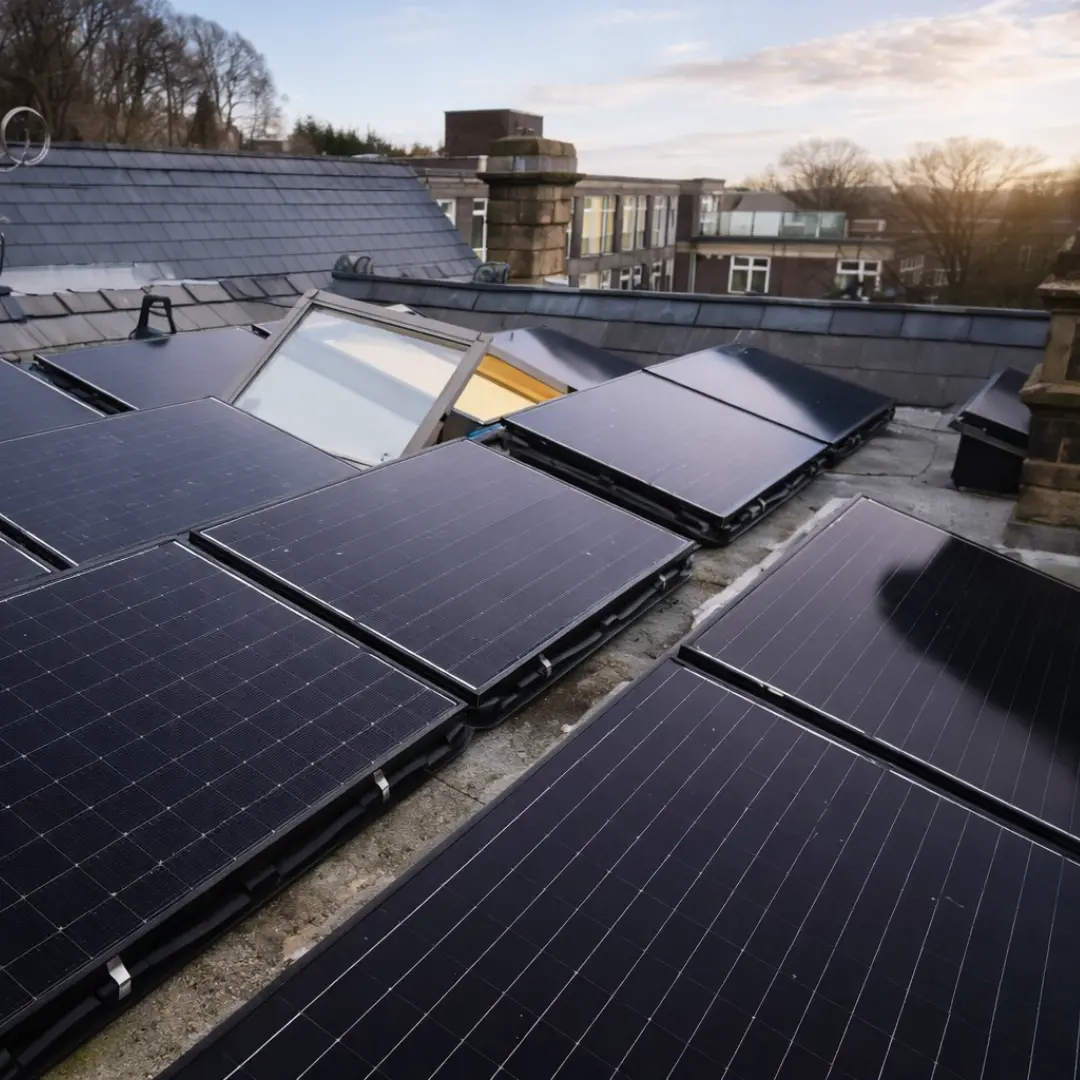
| Solar panels | Reducing grid-electricity use | Roof condition, orientation, shading, system size and daytime electricity consumption |
| Battery storage | Using more self-generated or off-peak electricity | Battery capacity, electricity tariff, household demand and charging pattern |
| Boiler replacement | Replacing an unreliable or costly-to-repair boiler | Correct sizing, suitable heating controls and future heating plans |
| Smart heating controls | Improving poor heating schedules or room control | System compatibility, ease of use and the underlying cause of heat loss |
These technologies should be assessed rather than chosen from floor area, property age or headline savings alone. Installation and running costs vary, and grants may be available under current eligibility rules.
Common Energy-Saving Mistakes to Avoid This Winter
Some popular shortcuts waste energy, create safety risks or cause problems elsewhere in the home.
| Mistake | Better approach |
|---|---|
| Turning the thermostat much higher to heat rooms faster | Set a comfortable target temperature; a higher setting usually only keeps the heating on longer. |
| Using an oven or unsuitable appliance for heating | Use approved heating equipment and follow safety guidance. |
| Blocking vents, air bricks or trickle vents | Seal unwanted draughts, not essential ventilation. |
| Leaving unused rooms cold and damp | Maintain suitable background warmth and ventilation. |
| Buying portable heaters without checking costs | Compare power ratings, running time and safety features first. |
| Insulating over damp or roof defects | Repair the underlying problem before installation. |
| Assuming smart controls guarantee savings | Use them to improve schedules and avoid waste. |
| Comparing quotes by price alone | Check scope, quality, guarantees and exclusions. |
| Expecting identical savings in every home | Base decisions on the property and household. |
| Altering gas, electrical or hot-water systems yourself | Use competent professionals where required. |
| Relying on old grant information | Check current eligibility rules before applying. |
Frequently asked questions (FAQs)
Clear answers to common questions about heating, insulation, appliances, smart meters and practical ways to reduce household energy use during winter. Speak to Simple Green Energy .
Need help reducing your energy bills?
Speak with Simple Green Energy about insulation, heating controls, boiler replacements, heat pumps, solar panels and other suitable energy-saving improvements for your property.
Discuss your energy optionsFinal Thoughts on Reducing Your Energy Bills This Winter
Start with the changes you can control now: review heating schedules, reduce avoidable waste and check where energy use is rising. These steps should improve efficiency without leaving the home uncomfortably cold or blocking ventilation needed for health and safety.
If rooms remain cold, damp or expensive to heat, investigate the cause rather than relying on temporary fixes. Before paying for insulation, new heating or renewable technology, arrange a property-specific assessment and compare the likely benefit, cost and disruption. Results will vary between homes, so focus on measures that suit your building, heating system and household routine. A careful assessment can help you prioritise the upgrades most likely to make a meaningful difference.