





EV Home Charger UK 2026: Cost, Savings & Benefits
Public chargers can be helpful, but they are not always convenient, cheap or easy to rely on. Prices vary, queues happen, and planning your week around charging stops can quickly become frustrating. For many UK drivers, an EV Home Charger offers a simpler way to charge overnight, use cheaper off-peak electricity and start each day with more range.
In this guide, we’ll explain EV home charger cost, savings, benefits, grants, installation steps, charger types, common mistakes to avoid and how to decide whether a home charger is the right choice for your property.
Get your free EV charger quote
Secure, GDPR-protected EV charger enquiry.
Find your property
No spam. No third-party sharing.
Choose your EV charger brand
Contact details
Your details stay private and protected.
Thank you
Your request has been received. Our team will contact you shortly.
Quick answer: Is an EV home charger worth it in the UK?
Yes, for many EV drivers, an EV home charger is worth it because it makes charging easier, more convenient and often cheaper than public charging, especially if you use off-peak electricity tariffs and regularly park at home overnight.
Table of Contents
ToggleWhat Is an EV Home Charger?
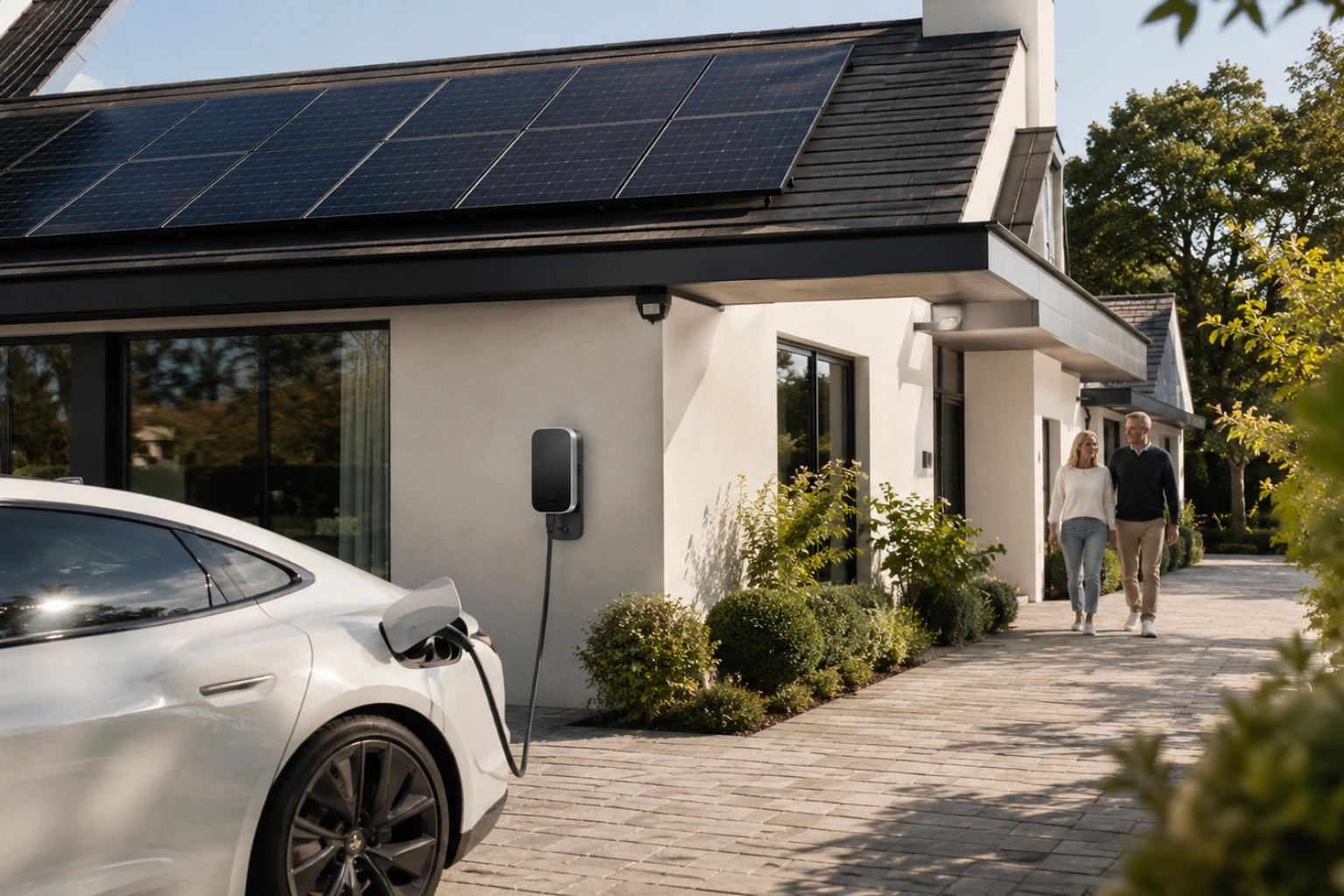
An EV home charger is a dedicated charging point installed at your property so you can charge your electric car from home. It is usually fitted on an outside wall, garage, driveway or suitable parking area and is faster, safer and more convenient than using a normal 3-pin plug.
A 3-pin plug can charge an EV, but it is slow and not designed for regular long-term charging. A wallbox is built specifically for EV charging, with better safety features, faster charging speeds and smart controls.
Most UK homes use a 7kW EV charger because it works well with a standard single-phase electricity supply and can usually charge most EVs overnight.
Smart chargers matter in 2026 because they let you schedule charging, track energy use and make better use of off-peak tariffs. UK private chargepoints must also meet smart charging rules, which GOV.UK says are designed to support charging when grid demand is lower or when more renewable electricity is available.
How Much Does an EV Home Charger Cost in the UK in 2026?
A typical EV home charger installation in the UK usually costs around £800–£1,200, including the charger and standard fitting. Loveelectric gives this same typical range and notes that extra costs can apply for long cable runs, consumer unit upgrades or groundworks.
Charger unit
£400–£800
The wallbox, smart features, app control and cable option.
Standard installation labour
£300–£600
Mounting, wiring, connection, testing and setup.
Extra cabling
Varies
Longer distance from fuse box to charger.
Consumer unit work
Varies
Upgrades if the fuse box is old or unsuitable.
Groundworks
Varies
Trenching, cable protection or work to detached garages.
Solar integration
Varies
Charger setup to work with solar panels or battery storage.
Standard Installation Cost
A standard EV charger installation usually includes the charger unit, wall mounting, cabling from the consumer unit, electrical connection, safety testing, commissioning and certification. This is the simplest setup, usually when the charger is close to the fuse box and the property electrics are suitable.
What Can Increase the Cost?
The final price can rise if the charger is far from the consumer unit, the fuse box needs upgrading, or cables need to run underground. A detached garage, awkward parking position, load management, three-phase supply work, solar integration, listed building rules or conservation area limits can also add cost.
Is a Cheap EV Charger Always a Good Idea?
Not always. A cheap charger may save money upfront, but it might have a poor app, awkward cable setup, limited smart features or no easy solar/tariff integration. The best charger is not always the cheapest one — it is the one that suits your car, home and daily routine.
How Much Can You Save With an EV Home Charger?
An EV home charger can help reduce charging costs, especially if you use an off-peak smart tariff. Savings depend on your electricity rate, mileage, battery size and charging habits.
Example saving calculation:
If your EV needs 40kWh to recharge and your off-peak tariff is much cheaper than your daytime rate, charging overnight could reduce the cost of a full charge compared with using standard home rates or public charging.
This is only an example, not a guaranteed saving. Your actual cost will depend on your tariff, car, charger settings and driving habits.
Which Type of EV Home Charger Should You Choose?
The best EV charger depends on your car, home electrics, parking setup and how you want to charge. Most UK homes suit a smart 7kW charger, but features like cable type, solar compatibility and app control can make a big difference.
Tethered charger
Easy daily charging
Cable length and plug type
Untethered charger
Tidy, flexible setup
Separate charging cable needed
7kW charger
Most UK homes
Works with standard single-phase supply
22kW charger
Faster charging
Usually needs three-phase supply
Smart app
Better control
Scheduling, reports and tariff settings
Solar compatible
Homes with solar panels
Solar charging mode
Load balancing
Busy households
Helps prevent overloading electrics
Warranty/support
Long-term reliability
Brand support and installer backup
Tethered vs Untethered EV Charger
A tethered charger has the cable attached, so it is quicker and easier for everyday charging. An untethered charger has a socket only, which looks tidier and gives more flexibility if you change car or cable type later.
7kW vs 22kW Charger
A 7kW charger is suitable for most UK homes and can usually charge an EV overnight. A 22kW charger is faster, but it normally needs a three-phase electricity supply. Most homeowners do not need to pay extra for 22kW unless both the property and car support it.
Smart Features Worth Checking
Look for scheduling, app control, solar modes, load balancing, tariff integration, locking/security and usage reports. These features help you charge at cheaper times, manage electricity safely and get more value from your charger.
Best EV Home Charger Brands to Compare in the UK
The best EV charger depends on how you use your car, whether you have solar panels, and which electricity tariff you plan to use. Some brands are better for solar charging, while others focus on smart tariffs, design or simple everyday use.
Myenergi Zappi
Solar panel homes
Solar charging modes and energy monitoring
Ohme
Smart tariff users
Tariff integration and app control
Hypervolt
Modern smart charging
App features, design and cable options
Pod Point
Simple home charging
Ease of use and installer support
Andersen
Premium home design
Hidden cable design and finish options
Wallbox
Compact smart charging
Size, app features and load balancing
Quick tip:
Do not choose by brand name alone. Compare the app, warranty, cable length, solar compatibility, tariff support and aftercare before deciding. A charger that suits your home setup will usually be better than simply picking the cheapest or most popular option.
Practical Tips Before You Request a Quote
Before asking for an EV charger quote, a few simple checks can help you get a faster and more accurate price. It also helps the installer recommend the right charger for your home, car and daily routine.
Where your car usually parks
Helps plan charger position and cable length.
Where your consumer unit is
Affects cabling route and installation cost.
Tethered or untethered charger
Decides whether you want a fixed cable or socket-only unit.
Solar panels
Helps choose a solar-compatible charger.
Renter or flat owner
You may need permission or grant checks.
Grant eligibility
Some homes may qualify for support.
Wi-Fi signal outside
Smart chargers need a reliable connection.
Smart tariff compatibility
Helps you charge at cheaper times.
A good quote should not just give a price. It should check your parking setup, electrics, charger choice and future charging needs.
FAQs
Frequently asked questions (FAQs)
Simple answers to common questions about EV home chargers in the UK, including installation cost, grants, 7kW chargers, driveway access, tethered chargers, solar charging, and smart charger rules. Speak to Simple Green Energy.
Want an EV charger quote?
Speak with Simple Green Energy to check your property, charger type, cable route, consumer unit, grant eligibility, solar setup, and expected EV charger installation cost.
Get EV charger quoteFinal Thoughts: Is an EV Home Charger Worth It in 2026?
An EV home charger is worth it for many regular EV drivers, especially if you have suitable parking and charge at home often. It can make charging easier, more convenient and better controlled through smart tariffs.
The final cost depends on your property setup, cable route, consumer unit condition and charger choice. Grants may also help renters, flat owners and some drivers with specific parking situations.
The best next step is to get a suitability check or quote so you know what will work safely and realistically for your home.