





What Is an EPC Certificate and Why Do You Need One?
Understanding an EPC certificate can make a real difference when selling, renting, buying or improving a property. With energy efficiency, running costs, landlord rules and home upgrade grants becoming more important in 2026, it helps to know what an EPC shows, when you need one and how the rating can affect your plans.
In this guide, we explain what an Energy Performance Certificate is, why it matters, how EPC ratings work and the key checks to make before arranging an assessment. Whether you are a homeowner, landlord, buyer or tenant, this guide will help you understand EPC certificates with more confidence before making your next decision.
Quick answer: What is an EPC certificate?
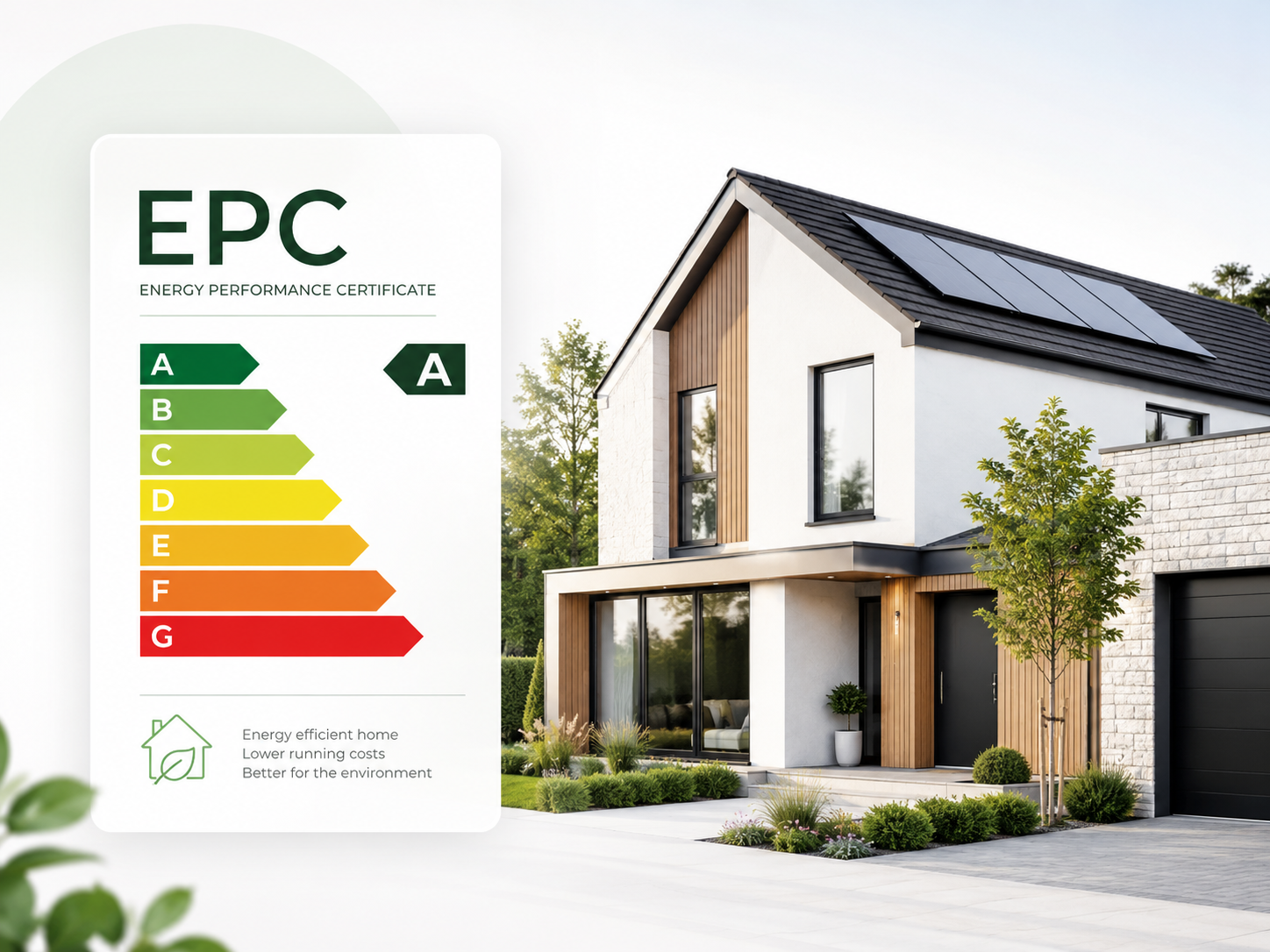
An EPC certificate, officially called an Energy Performance Certificate, shows how energy efficient a property is. It gives the property a rating from A to G, where A is the most efficient and G is the least efficient. The certificate also includes typical energy use, estimated energy costs and recommendations for improving the property’s energy performance.
In simple terms, an EPC tells buyers, tenants, landlords and homeowners how expensive a property may be to heat, light and run.
It is one of those documents people often ignore until they need it. But if you are selling, renting, buying, letting or planning energy upgrades, your EPC rating can quickly become very important.
Table of Contents
ToggleWhat does EPC stand for?
EPC stands for Energy Performance Certificate.
People often say “EPC certificate”, even though the word “certificate” is already included in EPC. It is not technically perfect, but it is the phrase many homeowners, landlords and tenants search for, so we will use both terms in this guide.
What does an EPC certificate show?
An EPC is designed to give a clear picture of a property’s energy performance. It usually includes:
| EPC section | What it tells you |
|---|---|
| Current energy rating | The property’s present EPC band from A to G |
| Potential energy rating | The rating the property could reach with improvements |
| Typical energy costs | Estimated costs for heating, hot water and lighting |
| Energy use | How much energy the property is expected to use |
| Improvement recommendations | Suggested upgrades to improve efficiency |
| Environmental impact | The property’s expected carbon performance |
Government guidance says an EPC is based on the performance potential of the building itself, including the fabric of the property and its services, such as heating, insulation, ventilation and fuels used. It uses standard occupancy assumptions, so the rating may not exactly match how a specific household uses the home.
That means an EPC is not a personalised energy bill forecast. It is a standardised assessment that allows one property to be compared with another.
When do you need an EPC certificate?
You usually need an EPC when a property is:
- Sold
- Rented out
- Built
- Marketed for sale
- Marketed for rent
For homes in England and Wales, government guidance says an EPC must be commissioned before a building is put on the market if there is no valid EPC already in place. The EPC must be produced by an accredited energy assessor and given free of charge to the person who becomes the buyer or tenant.
If you are selling a home, the person selling the house, landlord or letting agent must show the EPC when required, and GOV.UK says you can be fined if you do not get an EPC when you need one.
How long does an EPC last?
An EPC is valid for 10 years and can be reused as many times as needed during that period, as long as a newer EPC has not been produced for the same property.
That means if you had an EPC completed five years ago and you are now selling or renting the property, it may still be valid.
However, if you have made major upgrades, such as adding insulation, solar panels, a new heating system or better glazing, it may be worth getting a new EPC sooner. A newer rating could better reflect the property’s current performance.
How do EPC ratings work?
EPC ratings run from A to G:
| EPC rating | EPC colour | Score range | Meaning |
|---|---|---|---|
| A | A | 92+ | Very energy efficient; usually the lowest predicted running costs and carbon impact |
| B | B | 81–91 | Highly efficient; strong insulation, heating performance and overall energy use |
| C | C | 69–80 | Good energy efficiency; often a practical target for improved homes |
| D | D | 55–68 | Average or moderate efficiency; common in existing UK housing stock |
| E | E | 39–54 | Lower efficiency; likely to benefit from insulation, heating or controls upgrades |
| F | F | 21–38 | Poor efficiency; higher running costs and significant improvement potential |
| G | G | 1–20 | Very poor efficiency; usually needs major energy performance improvements |
A higher EPC rating usually means the home should be cheaper to run, easier to heat and more attractive to energy-conscious buyers or tenants.
A lower EPC rating does not always mean a home is “bad”, but it does suggest there may be more heat loss, higher running costs or improvement work to consider.
Why do you need an EPC certificate?
An EPC matters because it affects more than paperwork. It can influence legal compliance, rental eligibility, property appeal and future upgrade decisions.
1. You need it to sell or rent a property
If you are selling or renting out a property, an EPC is normally part of the marketing process. Buyers and tenants should be able to see the property’s energy rating before making a decision. Government guidance says commercial media adverts must clearly show the building’s energy rating where it is available.
2. It helps buyers compare homes
A buyer may love the kitchen, garden or location, but they will also want to know how efficient the home is.
A property with a better EPC rating may suggest:
- Lower expected running costs
- Better insulation
- More efficient heating
- Fewer urgent energy upgrades
- Better comfort in winter
In a market where energy bills matter, the EPC rating can become part of the buying decision.
3. It helps tenants understand running costs
For tenants, an EPC can give an early warning about whether a home may be expensive to heat.
A low-rated rental property may mean colder rooms, more energy use and higher bills. That is why EPCs are especially important in the rental market.
Heatable is an online home installation platform covering boilers, solar panels and batteries. It describes itself as a Which? accredited installer platform focused on faster, better-value home installations.
Warm Homes fit
Heatable is useful for homeowners who want quick comparisons and a simple online process before committing to an upgrade.
Check before booking
Make sure the quote includes the full installation scope, warranty, scaffolding, electrical work and post-installation paperwork.
4. Landlords need it for minimum energy rules
In England and Wales, domestic private rented properties are covered by Minimum Energy Efficiency Standard rules where the property is legally required to have an EPC. Current government guidance says landlords of covered properties must take action if the property has an EPC rating of F or G, unless an exemption applies.
Government documents also confirm that since 2020, privately rented homes in England and Wales have been required to meet a minimum standard of EPC E, unless a valid exemption applies.
5. It helps plan home improvements
An EPC is a useful starting point if you want to make your home warmer, cheaper to run or more attractive to buyers.
Energy Saving Trust says EPCs include recommendations to improve energy efficiency, and making suggested improvements can help cut energy bills, improve comfort and reduce carbon footprint.
How do you get an EPC certificate?
To get a new EPC, you need to arrange a property assessment with an accredited assessor. GOV.UK says the cost of an assessment varies by assessor and property size, and you should check that the assessor is part of an accredited scheme.
A typical process looks like this:
- Search for an accredited EPC assessor.
- Book a property assessment.
- The assessor visits the property.
- They check key energy-related features.
- The EPC is produced and lodged on the official register.
- You receive the certificate and recommendations.
You can also use the GOV.UK service to find an existing energy certificate for a property in England, Wales or Northern Ireland. The service lets you search by postcode, street name and town, or certificate number.
What does an EPC assessor check?
Yes. You can search for an existing EPC through the official GOV.UK energy certificate service for properties in England, Wales and Northern Ireland.
This is useful if you are:
- Buying a home
- Renting a property
- Selling a house
- Letting a property
- Checking whether your existing EPC has expired
- Comparing ratings before planning upgrades
For Scotland, there is a separate Scottish EPC Register.
How much does an EPC certificate cost?
The cost of an EPC assessment varies. GOV.UK says the cost depends on the assessor and the size of the property.
In practice, the price can also depend on location, property type and how quickly you need the certificate. A small flat may cost less to assess than a large detached house or a complex property.
The best approach is to compare a few accredited assessors, check reviews and confirm that the final EPC will be lodged on the official register.
Do all properties need an EPC?
Most properties need an EPC when they are sold, rented or built, but some exemptions can apply.
Government consultation documents explain that buildings officially protected because of special architectural or historical merit may not require an EPC where meeting minimum energy performance requirements would unacceptably alter their character or appearance.
Examples where you may need further advice include:
- Listed buildings
- Certain protected buildings
- Some temporary buildings
- Some places of worship
- Some very low-energy-use buildings
- Certain holiday lets or short-term lets, depending on the circumstances
If you are unsure, check official guidance or speak to a qualified assessor, solicitor or local authority before assuming your property is exempt.
EPC rules for landlords
If you are a landlord, the EPC is not just a marketing document. It can affect whether you can legally let the property.
For domestic private rented homes in England and Wales, the current minimum standard is generally EPC E, unless a valid exemption applies. Government guidance explains that properties rated F or G must take appropriate steps to comply where the regulations apply.
Landlords should also keep an eye on future changes. The government has been consulting on reforms to the EPC regime, including changes to EPC validity periods, when EPCs are required and the role of updated EPC metrics.
For landlords, the safest approach is to:
- Check the current EPC rating
- Review the recommendation report
- Keep evidence of improvement work
- Register valid exemptions where applicable
- Avoid leaving upgrades until the last minute
How can you improve your EPC rating?
There is no single upgrade that works for every home. The best improvements depend on the property’s age, construction, heating system and current rating.
Common EPC improvements include:
| Upgrade | How it can help |
|---|---|
| Loft insulation | Reduces heat loss through the roof |
| Cavity wall insulation | Helps stop heat escaping through external walls |
| Solid wall insulation | Improves older homes with solid walls |
| Double or triple glazing | Reduces heat loss through windows |
| Heating controls | Helps manage heating more efficiently |
| Efficient boiler or heat pump | Improves heating performance |
| Solar panels | Can improve electricity efficiency and reduce grid use |
| Low-energy lighting | Simple upgrade that can support a better score |
| Draught-proofing | Reduces unwanted heat loss |
| Hot water cylinder insulation | Helps keep stored hot water warmer for longer |
Energy Saving Trust recommends using your EPC as a starting point for energy-efficient home improvements and says some suggestions are quick and easy while others require more planning.
What is a good EPC rating?
A rating of C or above is generally seen as a stronger EPC rating for many homes. It suggests the property is performing better than many older, less efficient properties.
However, “good” depends on the home. A modern flat may be expected to perform better than an older solid-wall cottage. The key is to understand both the current rating and the realistic potential rating.
If your property is already close to its potential rating, there may be limited low-cost improvements left. If your home has a low rating but high potential, targeted upgrades could make a meaningful difference.
EPC certificate vs home survey: what is the difference?
An EPC is not the same as a homebuyer survey.
| EPC certificate | Home survey |
|---|---|
| Focuses on energy efficiency | Focuses on property condition |
| Gives A to G energy rating | Highlights defects and structural concerns |
| Includes energy improvement suggestions | May identify repairs, damp, roof issues and risks |
| Required when selling or renting in many cases | Usually optional but recommended for buyers |
| Completed by an energy assessor | Completed by a surveyor |
An EPC can tell you whether a property is likely to be efficient. It will not tell you whether the roof needs replacing, the wiring is safe or the walls have hidden damp.
Helpful official EPC links
Use these official resources when checking or arranging an EPC:
- Find an existing energy certificate for England, Wales or Northern Ireland.
- Get a new energy certificate and find an accredited assessor.
- Read GOV.UK guidance on EPCs for selling a home.
- Read landlord guidance on minimum energy efficiency standards in England and Wales.
- Search the Scottish EPC Register for properties in Scotland.
Frequently asked questions (FAQs)
Simple answers to common questions about Energy Performance Certificates, including selling, renting, EPC ratings, online checks, validity, assessor requirements and home energy improvements. Speak to Simple Green Energy.
Need help understanding your EPC?
Speak with Simple Green Energy about EPC ratings, recommended improvements, insulation, heating upgrades and wider home energy-efficiency measures.
Get EPC adviceFinal takeaway
An EPC certificate is more than a simple rating. It helps buyers, tenants, landlords and homeowners understand how efficiently a property uses energy.
You may need one to sell, rent or build a property. You may also use one to plan upgrades, improve comfort, support compliance or make your home more attractive in a competitive market.
The best way to treat an EPC is as a starting point. Check the rating, read the recommendations, compare the potential improvement and then decide which upgrades make sense for your home, budget and long-term plans.
A better EPC rating can mean a warmer home, lower running costs and a property that is easier to sell, rent or improve.