
Solar Panels for a 3 Bedroom House UK: Costs, System Size and Savings in 2026
For most three-bedroom houses in the UK, the right solar installation is usually 8–12 modern panels, producing roughly 3.5–5kWp. A panels-only system commonly costs £6,000–£8,000, while adding a battery often takes the package to £10,000–£14,000.
These are starting points, not a finished design. Bedroom count does not determine system size: annual electricity use, roof orientation, shade, usable roof area and future plans matter more. A low-use couple may need eight panels; a family charging an EV or planning a heat pump may benefit from twelve or more.
This guide covers panel numbers, roof space, costs, savings, batteries, winter output, payback, permissions and installer selection. It is for homeowners, landlords, renovators and EV owners who want a realistic buying decision.
Get Your Solar Panel Quote
Start with your address so we can check the best solar options for your home.
Quick answer
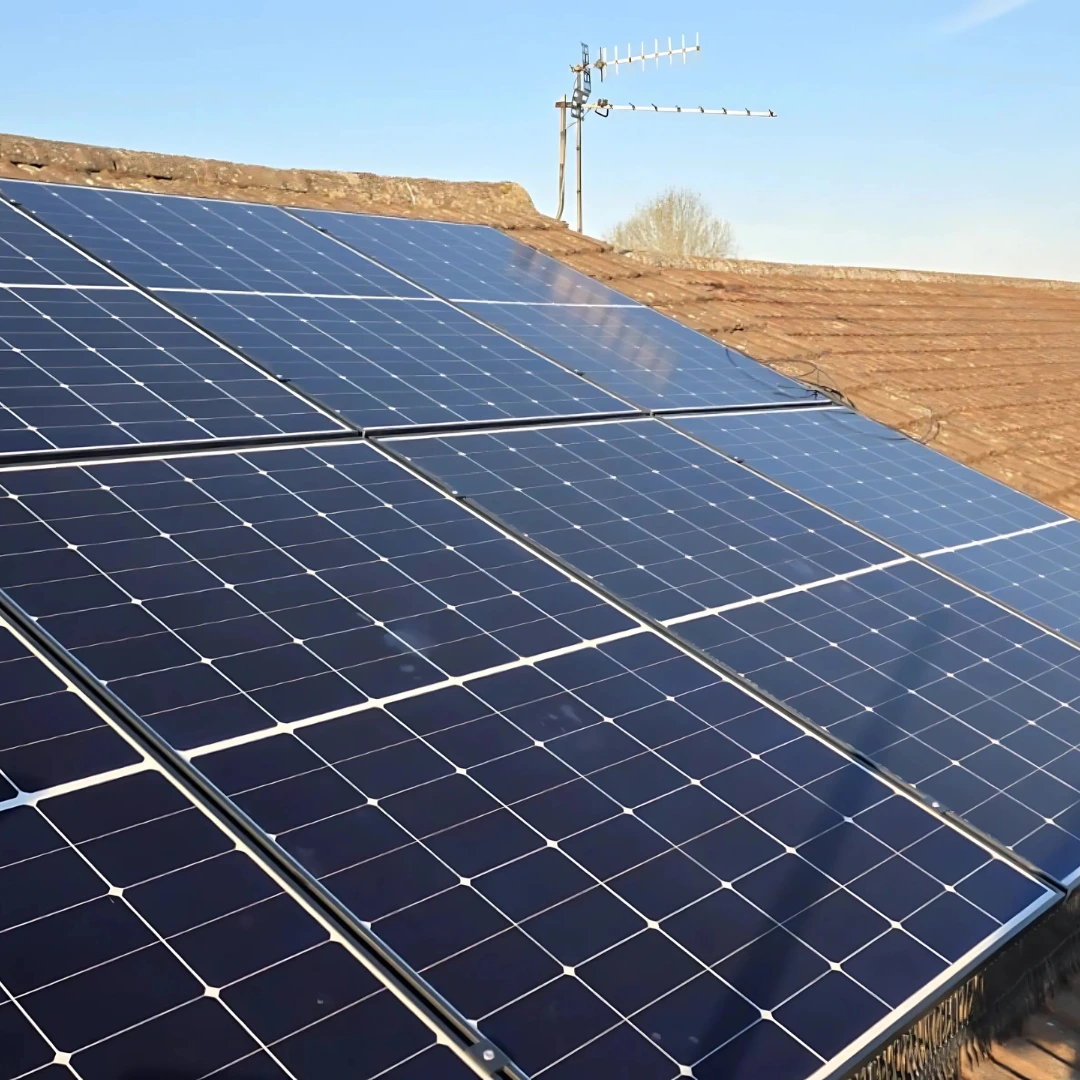
A typical three-bedroom UK house will suit a 3.5–5kWp solar PV system, normally 8–12 panels rated at around 400–460W each. Allow roughly 20–30m² of suitable roof space as an initial guide. Panels alone commonly cost £6,000–£8,000 installed; a battery may add £3,000–£6,500. Solar works on cloudy days, but winter generation is much lower than summer output. Energy Saving Trust modelling currently suggests a typical payback of around 9–12 years, depending on location and usage. A site survey is essential before relying on a quotation.
Table of Contents
ToggleQuick comparison: likely system sizes
| Household profile | Likely array | Approximate panels | Best fit |
|---|---|---|---|
| Lower use, no EV | 3.2–3.8kWp | 8–9 | Couples and efficient homes |
| Typical family | 4–4.6kWp | 9–11 | Most three-bedroom houses |
| High use, EV or future heat pump | 5–6kWp+ | 12–14+ | Electrified homes with enough roof |
How many solar panels does a three-bedroom house need?
Start with your last 12 months of electricity use. Ofgem’s current medium-consumption benchmark is 2,500kWh a year, although many three-bedroom homes use more because of home working, electric cooking, an EV or immersion heating.
For annual use of around 2,700–3,500kWh, 8–12 panels is a sensible survey range. The installer should model output using your postcode, roof pitch, orientation and shading. A south-facing, unshaded roof gives the highest annual yield. East- and west-facing arrays usually produce less overall but can spread generation across the morning and afternoon.
Do not size solar simply to equal annual consumption. Production peaks during daylight and summer, while household demand often peaks after sunset and in winter. The best design balances roof capacity, daytime use, export value and future demand.
Example UK use case: a family using 3,200kWh annually might choose ten 440W panels, creating a 4.4kWp array. If adults work from home, panels alone may suit them. If the property is empty until evening, battery storage deserves separate modelling.
Recommended visual: annotated roof plan showing ten panels, chimney shading and usable roof area.
Panels only or solar with a battery?
Panels only
Overview and best for: the lowest-cost route, particularly for homes occupied during daylight or able to shift appliances and EV charging into sunny hours.
Key features and pros: panels, mounting, inverter and monitoring; lower upfront cost, fewer components and relatively little maintenance.
Things to consider: unused electricity is exported and evening power is bought from the grid. Export rates and contract terms vary between suppliers.
Suitable property: home offices, retired households and homes with controllable daytime loads.
Expert recommendation: maximise the useful roof layout. Select battery-ready equipment only when future storage is genuinely likely.
Solar panels with battery storage
Overview and best for: storage moves daytime generation into the evening and may also charge on a cheaper overnight tariff. It suits high evening demand, EVs, heat pumps and time-of-use tariffs.
Key features and pros: compare usable capacity, charge and discharge power, cycle warranty, backup capability and tariff compatibility. Storage can raise self-consumption and reduce peak-rate imports.
Things to consider: a battery raises the upfront cost and does not automatically shorten payback. Include conversion losses, tariff changes and possible battery replacement in the calculation. Homeowner discussions regularly identify changing import and export tariffs as one of the biggest uncertainties.
Suitable property and recommendation: strongest for homes that are empty during the day or use substantial electricity after sunset. Size storage from smart-meter data, not a standard sales bundle.
How to compare solar panel systems
Compare complete designs, not headline panel wattage:
- Annual generation based on your roof and shading.
- Expected self-consumption and export.
- Panel, inverter and battery warranties, including labour.
- String inverter, optimisers or microinverters selected for the roof.
- Battery usable capacity in kWh and output in kW.
- Monitoring, fault alerts and aftercare.
- Roof fixings, cable routes, scaffolding and bird protection.
- Assumptions covering electricity prices, degradation and replacement.
Optimisers can reduce the impact of partial shading, but they do not automatically improve an unshaded system. Ask the installer to explain why each component is needed.
For noise, check inverter and battery data and avoid mounting fan-cooled equipment against a bedroom wall.
Solar panel cost, savings and payback
| Typical three-bed system | Indicative installed cost | Best financial fit | Payback guidance |
|---|---|---|---|
| 3.5–5kWp panels only | £6,000–£8,000 | Daytime use or good export value | Typical modelling: about 9–12 years |
| 3.5–5kWp plus 5–10kWh battery | £10,000–£14,000 | High evening use and smart tariffs | Model separately; not always faster |
| 5–6kWp+ array | From about £8,000 | EV, heat pump or high use | Depends on roof, DNO and consumption |
Prices change with scaffolding, roof type, access, equipment, electrical upgrades, bird protection and roof repairs. Installed residential solar and qualifying batteries currently benefit from 0% VAT until 31 March 2027. A survey is required for an accurate quotation.
Savings come from avoiding imported electricity and receiving export payments. Under the Smart Export Guarantee in Great Britain, eligible generators are paid for metered exports, but suppliers set their own rates and terms. A suitable export meter and evidence of an eligible certified installation are normally required.
Energy Saving Trust’s July 2026 modelling places typical payback at about nine years in London, ten to eleven in Manchester, nine to ten in Aberystwyth and eleven to twelve in Stirling. Treat returns as forecasts. Ask for conservative, central and optimistic scenarios rather than one guaranteed figure.
Recommended visual: 25-year cash-flow graphic separating bill savings, export income and component replacement.
Does solar work in winter?
Yes. Panels generate on cloudy winter days, but output is much lower because days are shorter and the sun is lower. Performance should be assessed across a full year. You will normally remain grid-connected rather than producing all your electricity in every season.
Low winter sun also makes shade from chimneys, trees and neighbouring buildings more important. A good survey models seasonal shading rather than relying on a single roof photograph.
Can a battery be added later?
Usually. Retrofitting may use an AC-coupled battery or require changes to the inverter and consumer unit. Installing storage initially can avoid duplicated labour; waiting allows you to collect real consumption and export data first.
Before choosing panels only, ask whether the inverter is battery-ready, where storage could safely be installed and whether the electrical design leaves enough capacity. Battery compatibility is not universal.
How to choose the right system: seven steps
- Collect 12 months of bills or smart-meter data.
- Check roof orientation, pitch, shade, condition and usable dimensions.
- Compare at least two system sizes.
- Decide whether to use, store or export surplus electricity.
- Check warranty claim routes, labour cover and aftercare.
- Compare finance using total repayable, not the monthly payment.
- Insist on an on-site survey before signing.
Why the installer matters
Installation quality can matter more than a small difference in panel efficiency. Weak surveying creates avoidable shading; poor roof detailing risks leaks; unsuitable cable or equipment choices can reduce safety, reliability and performance.
Confirm who handles design, scaffolding, electrics, Distribution Network Operator registration, commissioning and handover. MCS certification is commonly needed for Smart Export Guarantee eligibility, and the installer should issue an MCS certificate after commissioning.
Keep the system design, warranties, electrical certificates, DNO documents and monitoring login. Ask for recent local examples, customer references, installation photographs and a sample handover pack. Evidence is more useful than unsupported “best installer” claims.
Planning permission, grid registration and grants
Roof-mounted solar is usually permitted development in England, subject to limits and special rules for listed buildings, conservation areas and some flat roofs. Building Regulations still apply, and requirements differ across the UK.
The installation must be registered with the local Distribution Network Operator; installers normally manage this. Larger systems or higher export levels may need prior approval.
There is no universal cash grant for every homeowner. In England, the Warm Homes: Local Grant can fund measures including solar for eligible low-income households in privately owned or rented homes with qualifying EPCs. Check official eligibility rather than assuming support is available.
Final recommendation
For most three-bedroom UK houses, compare quotations for roughly 4–5kWp, or 9–12 panels, then test each recommendation against real usage and roof constraints.
Choose panels only where daytime use and export economics work. Add a battery when evening demand and tariffs justify the extra cost—not because it appears in a standard package.
Book a free home survey with Simple Green Energy for a tailored design, generation estimate and itemised quotation.
Frequently asked questions (FAQs)
Clear answers about panel numbers, installation costs, battery size, roof space, expected savings, payback and cloudy-weather performance for a three-bedroom home. Speak to Simple Green Energy .
Planning solar for a three-bedroom home?
Speak with Simple Green Energy about panel layout, system capacity, battery storage, likely costs, expected generation and the roof space available at your property.
Discuss my home solar systemConclusion
The strongest solar quotation will show a credible roof layout, annual generation, self-consumption, export assumptions, warranties, grid process and long-term costs.
National averages can help you prepare, but only a proper property survey can determine the right number of panels, likely savings and whether battery storage represents good value for your three-bedroom home.