Smart Export Guarantee Explained: Eligibility, MCS and How to Apply
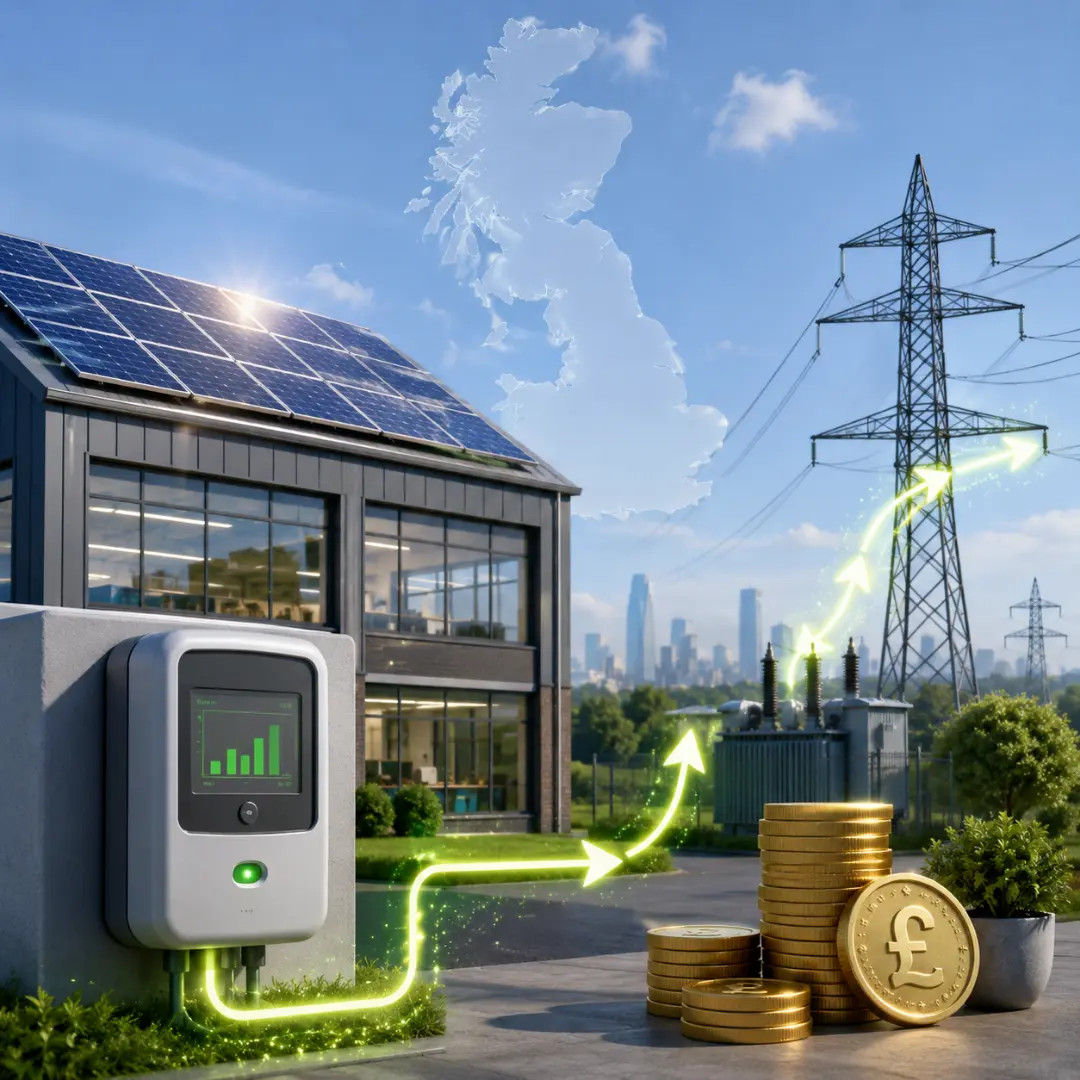
The Smart Export Guarantee (SEG) pays eligible homes and businesses in Great Britain for renewable electricity exported to the grid. It is not an automatic government grant: you must choose an export tariff, apply to a participating supplier and prove that your system, meter and grid connection meet the relevant requirements.
This guide explains who qualifies, what an MCS certificate proves, why you need an export-capable meter and MPAN, how to apply, how payments work and what to compare before choosing a tariff. It is written mainly for solar panel owners, but the same core rules cover eligible wind, hydro, anaerobic digestion and micro-CHP systems.
Get a free solar and battery assessment from Simple Green Energy to estimate your likely generation, self-consumption and export income.
Get Your Solar Panel Quote
Start with your address so we can check the best solar options for your home.
Quick Answer
The Smart Export Guarantee requires participating electricity suppliers to offer at least one tariff paying eligible small-scale generators for electricity exported to the grid. Most domestic solar owners need an MCS certificate or recognised equivalent, a meter capable of recording half-hourly export, an export MPAN and confirmation that they are not also receiving Feed-in Tariff export payments. Apply directly to a SEG licensee; it does not have to be your import supplier. Rates and terms vary, so compare the export price, import costs, battery rules, payment frequency and any conditions linking the tariff to a supplier, installer or product.
Table of Contents
ToggleQuick comparison: SEG tariff types
SEG tariffs may be fixed or variable, while some higher-paying offers are “tied” to an import tariff, installer, battery or other product
| Tariff type | How it works | Best for | Main consideration |
|---|---|---|---|
| Fixed | One set rate for each exported kWh | Owners wanting predictability | Check contract length and rate-change terms |
| Variable or dynamic | Price changes by time or market conditions | Battery owners able to shift export | Returns are less predictable |
| Tied | May require the same import supplier, installer, battery or product | Customers whose whole package is competitive | Compare the complete import-and-export deal |
| Untied | Available without linked products or import supply | Owners wanting flexibility | The headline export rate may be lower |
What is the Smart Export Guarantee?
SEG began on 1 January 2020 after the Feed-in Tariff closed to most new applicants. It lets small-scale generators sell measured surplus electricity to a licensed supplier. The supplier sets the rate, contract length and payment arrangements, but a compliant SEG rate must remain above zero.
The scheme is market-led rather than a single national tariff. Ofgem’s latest completed annual reporting period recorded 50 tariffs, 270,395 installations registered at year end, 443.1GWh exported and £56.97 million paid. Solar PV represented 99.98% of registered installations.
For 1 April 2026 to 31 March 2027, Ofgem lists 12 mandatory and four voluntary SEG licensees. Your export supplier can be different from your household electricity supplier.
Who is eligible?
You may qualify when:
- the installation is in England, Scotland or Wales; SEG does not operate in Northern Ireland
- electricity comes from solar PV, onshore wind, hydro, anaerobic digestion or micro-CHP
- capacity is no more than 5MW, except micro-CHP, which is limited to 50kW
- the installation and, where required, the installer are suitably certified
- export is measured by a meter capable of half-hourly readings
- the installation has an export Meter Point Administration Number
- you are not receiving FIT export payments for the same electricity
- you receive SEG payments from only one supplier
These requirements are set out in Ofgem’s generator guidance and supporting government information.
Most domestic solar arrays are well below the capacity limit. Eligibility depends on the installed system and metered export, not simply on owning panels.
Do you need an MCS certificate?
For most homeowners, MCS is the simplest route. An MCS certificate shows that a qualifying small-scale renewable installation was designed, installed and commissioned to recognised standards by a certified contractor.
The rules also recognise schemes equivalent to MCS. Ofgem says solar PV, wind and micro-CHP systems of 50kW or less must demonstrate suitable certification for both the installation and installer. Government guidance identifies Flexi-Orb as one example of an accredited equivalent route. Supplier processes differ, so check what evidence is accepted before selecting a tariff.
Without suitable certification, a SEG licensee is not obliged to pay you. Retrospective evidence may require inspections, electrical records or supplier-specific checks. Choosing a properly certified installer at the start therefore reduces risk and delay.
Metering and the export MPAN
SEG pays for actual exported electricity, not an estimate. Your meter must record export in half-hourly periods. A compatible smart meter is the usual solution, although another compliant export meter may be accepted.
The export MPAN is a unique 13-digit reference for the export connection. It differs from the import MPAN on your electricity bill. Your SEG supplier will normally help register it using Distribution Network Operator and installation information.
Seeing an export figure on a meter does not mean payments have started. The supplier must approve your application and contract. Take a dated opening reading and keep confirmation emails because supplier backdating policies can vary.
How to apply for SEG
- Collect your documents. Find the MCS or equivalent certificate, commissioning paperwork, system specification, proof of ownership and DNO documents such as G98 or G99 confirmation.
- Check the meter. Confirm half-hourly export capability and record the meter serial number and opening export reading.
- Review your FIT status. If you receive FIT export payments, contact your FIT licensee before switching. You may continue receiving FIT generation payments.
- Compare suppliers. Check Ofgem’s current licensee list, live rates, payment schedule, linked conditions and battery policy.
- Apply directly. Your export supplier does not have to be your import supplier.
- Complete MPAN registration. The supplier may request an export MPAN from the DNO.
- Wait for written acceptance. Exporting electricity alone does not create an entitlement to payment.
Ofgem sets the overarching requirements, but each supplier operates its own application process. Suppliers commonly request certification, DNO documents, ownership evidence and meter information.
| Requirement | Typical evidence | Common delay |
|---|---|---|
| Certification | MCS or accepted equivalent certificate | Incorrect or unmatched address details |
| Grid connection | G98/G99 or DNO confirmation | Notification or approval is incomplete |
| Export metering | Meter details and opening reading | Meter cannot provide half-hourly export data |
| Export MPAN | Existing number or registration request | DNO and supplier records differ |
| Ownership | Invoice, address, identity and bank details | Applicant name differs from installation records |
| FIT status | FIT declaration or export opt-out | FIT export remains active |
How much can you earn?
Annual SEG income equals exported electricity multiplied by the tariff rate. Exporting 1,500kWh a year would produce:
- £75 at 5p/kWh
- £150 at 10p/kWh
- £225 at 15p/kWh
These are illustrations, not forecasts. There is no national SEG rate, and suppliers can change offers or attach additional conditions.
Export depends on system size, orientation, shading, household demand, EV charging and battery use. Electricity consumed at home is not paid under SEG, but it reduces grid imports. Because avoided import may be worth more per kWh than export, maximum export is not always the best financial strategy.
A proper solar survey should model annual generation, realistic self-consumption and export under several tariffs. SEG can improve payback, but it should not justify an unsuitable or oversized system.
Which SEG tariff is best?
Choose the tariff giving the strongest overall household result, not simply the highest export rate. Compare:
- export price
- import tariff and standing charge
- exit fees
- linked-product conditions
- battery charging and export rules
- payment frequency
- contract length
- switching arrangements
- customer service
Ofgem’s annual data shows that tied tariffs have often paid more on average, but some untied tariffs outperform lower-paying tied deals. The best choice therefore depends on the complete tariff package.
A tied tariff can suit customers who already want the linked battery or import tariff. An untied tariff may be better when flexibility matters or when a high export rate is offset by costly imported electricity.
Does SEG work in winter?
Yes. Every qualifying exported kWh is measured throughout the year. Solar output is lower in winter because days are shorter and sunlight is weaker, so payments are usually seasonal. A correctly designed system will still generate electricity during bright winter conditions.
Can SEG be used with a battery, FIT or grant?
Battery storage can sit alongside SEG. A supplier may pay only for renewable generation or may accept grid-charged battery export under its own terms. Check the conditions before programming automated export.
You cannot receive FIT export and SEG payments for the same electricity, although you can retain FIT generation payments after opting out of FIT export. SEG can generally be combined with grants because it rewards exported electricity rather than funding the installation.
Why the installer matters
Installation quality affects generation, safety, grid compliance, warranties and whether your application evidence is accepted. A good installer sizes the system properly, completes DNO paperwork, commissions compatible equipment and supplies a complete handover pack.
Before signing, confirm who will issue the MCS certificate, handle G98 or G99 requirements, support export MPAN registration and correct paperwork errors.
Frequently asked questions (FAQs)
Clear answers about Smart Export Guarantee applications, MCS certification, export meters, MPANs, supplier choice, regional availability and payment start dates. Speak to Simple Green Energy .
Need help preparing for SEG?
Speak with Simple Green Energy about export-ready solar installations, certification, smart-meter requirements and the information suppliers may request when you apply.
Discuss my SEG applicationConclusion
SEG is the standard route for earning from surplus renewable electricity in Great Britain. Most homeowners need an eligible system, MCS or equivalent certification, compliant export metering, an export MPAN and a supplier-approved contract.
Compare the whole tariff, keep accurate installation records and design solar and battery storage around real household use. Treat export income as an additional return, not the only reason to install.
Book a free home survey with Simple Green Energy for a property-specific generation, savings and export estimate.