Boiler Replacement Cost UK: What Should You Pay in 2026?
Replacing a boiler in the UK usually costs £2,000–£4,000 supplied and fitted, although a straightforward combi-for-combi swap may cost less and a relocation or system conversion can exceed £4,500. Energy Saving Trust currently uses an average figure of about £3,500 for replacing a G-rated gas boiler with an A-rated model and thermostatic radiator valves. The final price depends on labour, flue changes, controls, cleaning, pipework and compliance work as well as the boiler itself.
This guide is for UK homeowners, landlords and renovators comparing quotes. It explains realistic costs, the factors behind them, suitable boiler types, likely savings, available support and how to avoid a poor-value installation.
Check your ECO4 eligibility
Answer a few quick questions to see whether your household may qualify for ECO4 support.
Quick answer
A typical UK boiler replacement costs £2,000–£4,000, including installation. Budget around £2,000–£3,500 for a like-for-like gas combi, £2,500–£4,500 for a system or regular boiler, and £3,000–£5,500+ when changing type, moving the boiler or upgrading substantial pipework. A proper quotation should cover the flue, controls, system cleaning, magnetic filter, condensate drainage, commissioning, waste removal and Building Regulations notification. Prices vary by property, location, output and complexity, so a survey is required for an accurate figure.
Table of Contents
ToggleTypical boiler replacement costs
| Replacement type | Typical supplied-and-fitted cost | Best for | Main consideration |
|---|---|---|---|
| Like-for-like gas combi | £2,000–£3,500 | Flats and small-to-medium homes | Water pressure and demand |
| Gas system boiler | £2,500–£4,500 | Homes using a cylinder | Cylinder condition and size |
| Regular/heat-only boiler | £2,500–£4,500 | Traditional systems | Tanks and older pipework |
| Convert to a combi | £3,000–£5,500+ | Homes removing tanks | More labour and alterations |
| Oil boiler replacement | £3,300–£5,000+ | Off-grid properties | Tank, flue and fuel line |
These are planning ranges, not fixed prices. Current market guides put a like-for-like combi broadly around £2,500–£4,000, while Energy Saving Trust’s gas-boiler benchmark averages £3,500. Oil replacements are commonly dearer.
A low headline price may cover only basic fitting. Confirm whether VAT, controls, filters, flushing, scaffolding, electrical work, disposal and certification are included.
What affects the final boiler replacement cost?
Boiler type and output
Combi boilers heat water on demand and avoid a separate cylinder, making them compact and often simpler to replace. They are not automatically best for every home: a family using several showers or taps at once may be better served by a correctly sized system boiler and cylinder.
Output should reflect heat loss, radiator load and hot-water demand—not bedroom count alone. Oversizing can increase cycling and reduce real-world efficiency; undersizing can compromise comfort.
Conversion, relocation and flue work
Keeping the same boiler type in the same position is normally cheapest. Moving it may require new gas, water, condensate and electrical routes, repairs and a more complex flue. Converting from a traditional system to a combi may also involve removing tanks and a cylinder.
A replacement must meet current requirements even where the old installation did not. Restricted flue positions, roof terminals, plume management, scaffolding and upgraded condensate drainage can materially increase cost. Homeowner discussions show these secondary works often explain large differences between apparently similar quotes.
Heating-system condition
Sludge, corrosion, weak radiators, undersized pipework or a failing cylinder should be identified before installation. Energy Saving Trust notes that scale and sludge reduce heating effectiveness, recommends refreshing inhibitor whenever a system is drained and advises fitting a magnetic filter near a replacement boiler where one is not already present.
Brand, warranty and controls
The best-value boiler has suitable modulation, controls, local parts availability and dependable support. Warranty length matters only when its conditions are met. Manufacturers may require prompt registration, a compatible filter and annual servicing to maintain full cover.
Which boiler type is best for your home?
| Customer or property | Recommended starting point | Why |
|---|---|---|
| Flat or one-bathroom home | Combi boiler | Compact; hot water on demand |
| Family with multiple bathrooms | System boiler and cylinder | Better simultaneous hot-water supply |
| Older home with traditional pipework | Regular boiler or designed conversion | May avoid unnecessary disruption |
| Landlord | Mainstream model with simple controls | Straightforward servicing and tenant use |
| Renovator with high hot-water demand | System boiler with suitable cylinder | Flexible stored-hot-water arrangement |
| Homeowner focused on decarbonisation | Heat-pump assessment first | Avoids locking in the wrong long-term system |
A combi is often the lowest-cost answer for a small home, while a system boiler can give families better comfort. In an older property, retaining the arrangement may cost less than a conversion with limited practical benefit.
How to choose the right boiler replacement
- Start with heat loss and hot-water demand. Ask the surveyor to explain the recommended output and whether existing radiators, cylinder and pipework are suitable.
- Compare the full scope. Obtain at least three itemised quotes on the same basis; Energy Saving Trust also recommends three.
- Check efficiency and controls. In England, Boiler Plus sets a minimum 92% ErP standard for domestic gas boilers. Correct controls, lower flow temperatures and hydraulic balancing improve real-world performance.
- Review warranty conditions. Confirm registration, annual servicing and whether parts, labour and call-outs are covered.
- Plan ahead. Mention extensions, extra bathrooms, insulation, solar panels or a possible heat pump.
- Verify the installer. Gas and LPG work must be completed by a suitably qualified Gas Safe registered engineer.
Will replacing an old boiler save money?
Savings depend on the old boiler’s efficiency, controls, usage and the home’s fabric. Energy Saving Trust estimates that upgrading a G-rated boiler to an A-rated boiler with full controls could save around £420 a year in Great Britain. Replacing a reasonably efficient condensing model will usually save much less.
At a £3,000 cost and £420 annual saving, simple payback is just over seven years. At £150 annual saving, it is 20 years. Replacing a functioning modern boiler purely for savings may therefore offer a weak return; reliability, repair risk and comfort also matter.
Modern condensing boilers work in winter. They perform best when designed to run at the lowest practical flow temperature while still heating the home comfortably. Government guidance confirms that lower flow and return temperatures help boilers operate more efficiently and condense more consistently.
What should a boiler quotation include?
The quote should state the exact model and output, controls, flue, condensate route, filter, cleaning method, inhibitor, pipe changes, electrical work, radiator or cylinder work, making good, disposal, warranty, commissioning and VAT.
It should confirm who completes the Building Regulations notification. Gas Safe says a new gas heat-producing appliance must be notified to the local authority within 30 days; retain the compliance certificate because it may be needed when the property is sold.
A cheap quote may omit essential work. A high quote is not automatically excessive when it includes difficult flue work, scaffolding, conversion or substantial remedial work.
Why the installer matters as much as the boiler
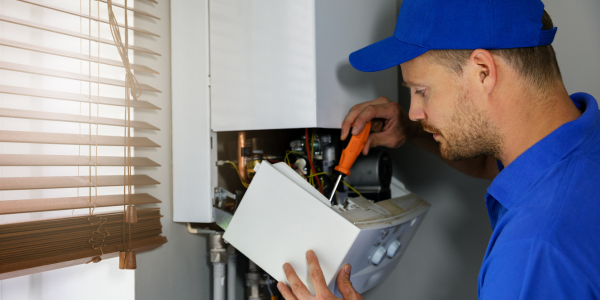
Installation quality affects safety, efficiency, noise, comfort, warranty validity and service life. A skilled engineer will clean and protect the system, size the appliance correctly, set controls, balance radiators, test combustion and explain operation.
Poor installation can leave a premium boiler cycling excessively or running at unnecessarily high temperatures. Verify registration, qualifications, insurance, written scope, commissioning records, reviews and aftercare.
Grants and lower-carbon alternatives
The Boiler Upgrade Scheme does not subsidise a replacement gas boiler. In England and Wales it currently offers £7,500 towards eligible air-to-water, ground-source or water-source heat pumps, with a temporary £9,000 grant for qualifying off-gas-grid properties until 31 March 2027. The installer must be MCS certified.
ECO4 may support qualifying low-income, fuel-poor or vulnerable households with measures that reduce heating costs; it currently runs to 31 December 2026. Eligibility and measures are not guaranteed, so check before signing a contract.
Before spending £3,000–£5,000 on another fossil-fuel system, compare boiler replacement with a whole-home heat-pump assessment, especially if improving insulation, radiators or solar generation.
Get a tailored boiler replacement quote
A useful survey should explain what your home needs, what can be retained and what each upgrade achieves.
Book a free home survey with Simple Green Energy for an itemised recommendation covering boiler replacement, controls and suitable low-carbon alternatives.
Frequently asked questions (FAQs)
Clear answers about UK boiler-replacement costs, like-for-like combi installations, repair versus replacement, installation time, energy savings, boiler types and relocation costs. Speak to Simple Green Energy .
Considering a boiler replacement?
Speak with Simple Green Energy about boiler type, installation complexity, energy savings, repair costs, hot-water demand, controls and whether relocation is suitable for your property.
Review my boiler replacement optionsConclusion: optimisers or microinverters?
For most UK homes, a realistic boiler replacement budget is £2,000–£4,000, with £3,500 a sensible central benchmark. Straight swaps sit at the lower end; conversions, relocations and corrective work sit higher. The best result comes from correct sizing, a complete written scope and a qualified installer—not simply the cheapest boiler.
Compare like-for-like quotes, check the paperwork and consider how long you expect to stay in the property. That gives the strongest balance of cost, comfort, reliability and long-term value.