


Are Solar Panels Worth It in the UK?
Choosing between Bosch and Mitsubishi Electric air conditioning can make a real difference to comfort, running costs and long-term performance in your home. Both brands offer efficient heating and cooling, quiet operation, smart controls and strong product reputations, but the better choice depends on your rooms, budget, design preferences and installation needs.
In this guide, we compare Bosch and Mitsubishi Electric air conditioning for UK homes, covering efficiency, noise levels, smart features, air quality, design, warranty and multi-room flexibility. Whether you are cooling one bedroom, a home office or several spaces, this comparison will help you choose the right brand with more confidence.
Quick Answer: Are Solar Panels Worth It in the UK?
Yes, solar panels are worth it for many UK households, especially if you own your home, use a good amount of electricity during the day, have a suitable roof, and plan to stay in the property long enough to benefit from long-term savings.
Solar panels can reduce electricity bills, protect your home from future energy price rises, and allow you to earn export payments through the Smart Export Guarantee (SEG). The Energy Saving Trust says an average home solar panel system costs around £6,100 to install, and Ofgem explains that the SEG requires certain electricity suppliers to pay eligible small-scale generators for electricity exported back to the grid.
Solar is not perfect for every home. Payback depends on your roof direction, shading, electricity use, installation cost, export tariff, and whether you add battery storage. For homes with a strong roof layout and daytime electricity usage, solar panels can be a sensible long-term investment.
Solar Panels in the UK at a Glance
| Factor | Answer |
|---|---|
| Worth it for many homes? | Yes, especially suitable owner-occupied homes |
| Best roof direction | South-facing is usually best, but east/west can still work |
| Works on cloudy days? | Yes, solar panels still generate electricity in daylight |
| Typical system cost | Around £6,100 for an average home system |
| Main saving | Lower electricity bills |
| Extra income route | Smart Export Guarantee export payments |
| VAT position | Residential solar panel installations are zero-rated for VAT until 31 March 2027 |
| Best suited to | Homes with good roof space, limited shading, and regular electricity use |
| Less suitable for | Heavily shaded roofs, short-term ownership, or very low electricity use |
Table of Contents
ToggleThe Main Reason Solar Panels Make Sense
Solar panels generate electricity during daylight hours. The more of that electricity you use in your home, the less electricity you need to buy from your supplier.
This is where the biggest financial benefit usually comes from. Using your own solar electricity is normally more valuable than exporting it because import electricity prices are usually higher than export rates.
For example, solar panels can help power:
- Washing machines
- Dishwashers
- Fridges and freezers
- Home office equipment
- Heat pump systems
- EV chargers
- Smart appliances
- Battery storage systems
Households that can shift more electricity use into daylight hours often get stronger value from solar.
Cost of Solar Panels in the UK
The cost of solar panels depends on system size, roof complexity, scaffolding, inverter type, battery storage, installation quality, and brand choice.
The Energy Saving Trust says an average home solar panel system costs around £6,100 to install. Larger systems, premium panels, bird protection, battery storage, or more complex roof work can increase the total cost.
| System type | Typical use case | Cost impact |
|---|---|---|
| Small solar PV system | Lower electricity use or smaller roof | Lower upfront cost |
| Standard home solar PV system | Typical family home | Mid-range cost |
| Larger solar PV system | Higher electricity use, EV, heat pump or larger roof | Higher upfront cost |
| Solar with battery | Stores unused solar for later use | Higher cost, but better self-use |
| Solar with bird protection | Useful in areas with nesting birds | Adds extra installation cost |
The right system size should be based on electricity usage, roof space and budget. Oversizing a system without considering usage and export rates may reduce financial efficiency.
Savings and Payback
Solar panel payback varies from home to home. A household that uses more electricity during the day will usually see stronger returns than a household that exports most of its generation.
The main things that affect payback are:
| Factor | How it affects payback |
|---|---|
| Daytime electricity use | More daytime use usually improves savings |
| Roof direction | South-facing roofs often generate more |
| Shading | Shading can reduce generation |
| System cost | Lower installation cost improves payback |
| Export tariff | Higher SEG rates improve returns |
| Battery storage | Can increase self-use but adds upfront cost |
| Energy prices | Higher electricity prices can improve savings |
| Maintenance | Solar panels usually have low maintenance needs |
A well-designed system can continue generating electricity for many years, so the value is not limited to the payback period alone.
Smart Export Guarantee Payments
The Smart Export Guarantee (SEG) allows eligible solar panel owners to get paid for surplus electricity exported to the grid. Ofgem states that the SEG is a government-backed initiative requiring certain suppliers to pay eligible small-scale low-carbon generators for exported electricity.
Export rates vary by supplier and tariff. Some suppliers offer fixed export tariffs, while others may offer smart or time-based rates. Customers should compare export tariffs before choosing where to sell their exported electricity.
| Export option | How it works |
|---|---|
| Fixed SEG tariff | Pays a set rate per exported kWh |
| Smart export tariff | May require a smart meter and eligible setup |
| Supplier-linked tariff | May require you to buy electricity from the same supplier |
| Battery-linked tariff | May work best when paired with solar and battery storage |
SEG income should usually be treated as a bonus rather than the only reason to install solar panels. The biggest benefit often comes from using solar electricity inside the home.
Are Batteries Worth Adding?
A solar battery stores unused solar electricity so you can use it later, usually in the evening or overnight. This can increase the amount of solar electricity your household uses.
A battery may be worth considering if:
- You are out during the day
- You use more electricity in the evening
- You have high electricity demand
- You have an EV or heat pump
- You want to reduce grid reliance
- You are on a suitable smart tariff
A battery may be less attractive if your daytime electricity use is already high or if the battery cost makes the payback period too long.
| Solar only | Solar with battery |
|---|---|
| Lower upfront cost | Higher upfront cost |
| Best for daytime electricity users | Better for evening electricity users |
| More surplus may be exported | More solar can be used at home |
| Simpler system | More flexible energy management |
| Faster payback in some homes | Better long-term control in some homes |
VAT on Solar Panels
Residential installations of qualifying energy-saving materials, including solar panels, are zero-rated for VAT until 31 March 2027. GOV.UK states that from 1 April 2027, installations of energy-saving materials will revert to the reduced VAT rate of 5%.
This makes 2026 a good time for eligible households to consider installation, especially if they are already planning home energy upgrades.
Property Types That Benefit Most
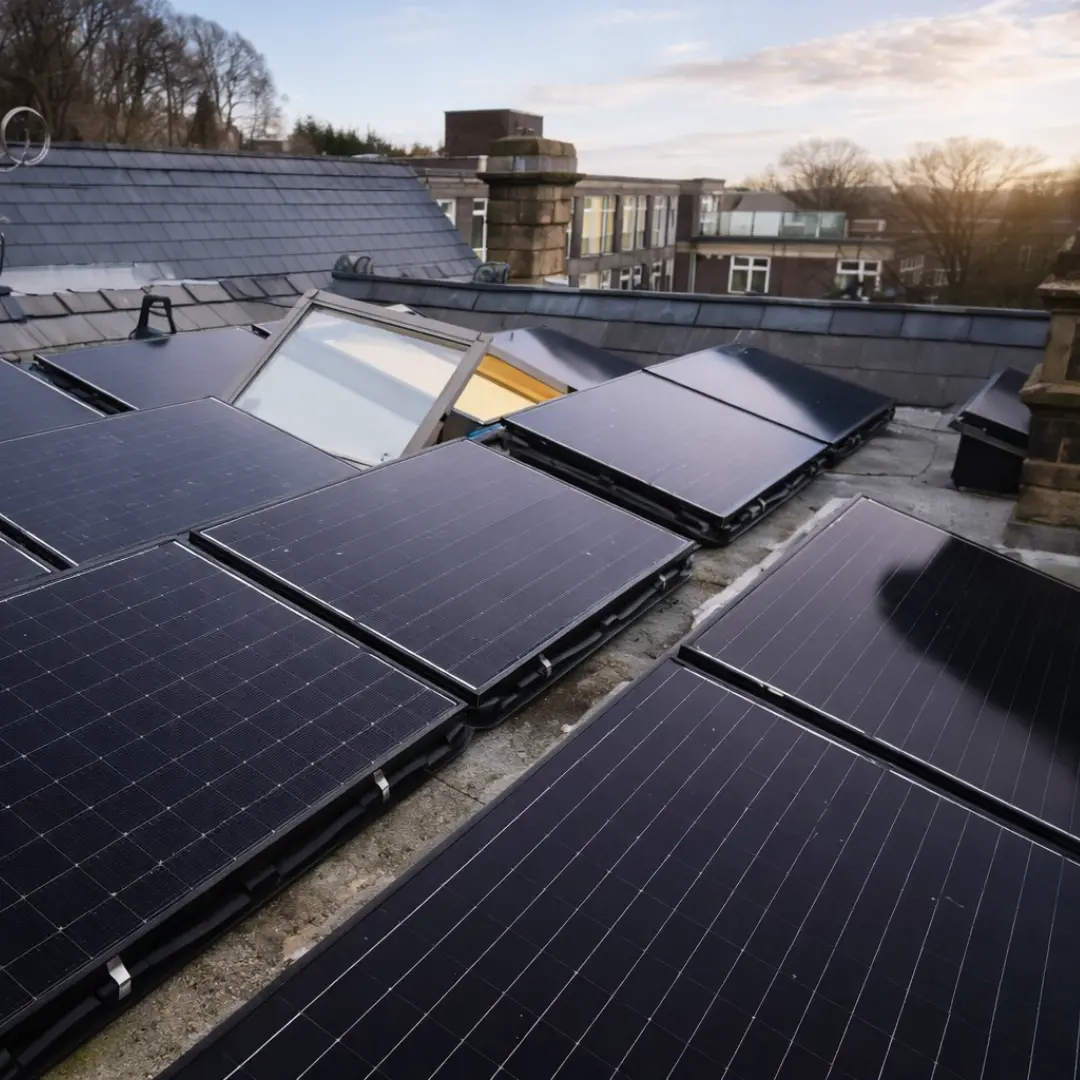
Solar panels are usually most worthwhile for homes with good roof space, limited shading, and steady electricity use.
| Property situation | Solar suitability |
|---|---|
| South-facing roof with little shading | Excellent |
| East/west-facing roof | Often good |
| Flat roof | Can work with suitable mounting |
| Heavily shaded roof | Lower suitability |
| Listed building | May need extra permissions |
| Rented property | Landlord approval required |
| Home with EV | Often stronger benefit |
| Home with heat pump | Often stronger benefit |
| Low daytime electricity use | Battery may improve value |
Planning Permission and Installation
Many domestic solar panel installations in the UK fall under permitted development, but this depends on the property type, location and installation design. Homes in conservation areas, listed buildings, flats or unusual roof settings may need extra checks before installation.
A good installer should review:
- Roof direction
- Roof condition
- Shading
- Available roof space
- Electricity usage
- Inverter location
- Meter and consumer unit setup
- Scaffolding requirements
- Battery location if included
- Export meter requirements
Customers should use a qualified installer and check warranties, product guarantees, aftercare and workmanship standards before agreeing to installation.
When Solar Panels Are Worth It
Solar panels are usually worth considering if:
- You own your home
- You have a suitable roof
- You plan to stay in the property for several years
- You use electricity during the day
- You want to reduce electricity bills
- You have or plan to install an EV charger
- You have or plan to install a heat pump
- You want to improve your home’s energy performance
- You can access a good export tariff
Solar panels are especially attractive for households that can use generated electricity directly instead of exporting most of it.
When Solar Panels May Not Be Worth It
Solar panels may be less suitable if:
- Your roof is heavily shaded
- Your roof is in poor condition
- You plan to move very soon
- Your electricity usage is very low
- Installation costs are unusually high
- You cannot access a suitable export tariff
- Your property has planning restrictions
- You cannot fit enough panels to make the system worthwhile
A proper survey is the best way to confirm whether the numbers work for your home.
Pros and Cons of Solar Panels in the UK
| Pros | Cons |
|---|---|
| Lower electricity bills | Upfront installation cost |
| Potential SEG export income | Savings vary by property |
| Works in UK daylight conditions | Shading can reduce output |
| Low maintenance | Battery storage adds cost |
| Can support EVs and heat pumps | Not ideal for every roof |
| May improve home energy performance | Payback takes time |
| 0% VAT until 31 March 2027 | Export rates vary |
Frequently asked questions (FAQs)
Simple answers to common questions about Bosch and Mitsubishi Electric air conditioning, including cooling, heating, noise levels, smart controls, air purification, multi-room systems and F-Gas installation. Speak to Simple Green Energy.
Need help choosing air conditioning?
Speak with Simple Green Energy about Bosch, Mitsubishi Electric and other air conditioning options, including cooling, heating, home comfort and wider energy-efficiency upgrades.
Get air conditioning adviceFinal verdict: Are Solar Panels Worth It in the UK?
For many UK households, solar panels are worth it in 2026. They can reduce electricity bills, provide long-term protection against energy price rises, and allow homeowners to earn money from exported electricity through the Smart Export Guarantee.
They are most worthwhile when the property has a suitable roof, low shading, good electricity usage, and a well-sized system. Adding a battery can improve value for households that use more electricity in the evening, but it should be assessed carefully because it increases upfront cost.
The best starting point is a home survey and savings estimate based on your actual roof, electricity use and tariff options.
Speak with Simple Green Energy to check whether solar panels are suitable for your home and to compare solar PV and battery storage options.