
Best Boiler Type for a Small House: UK Guide
For most small UK houses and flats, a modern combi boiler is the best boiler type. It supplies heating and hot water from one compact unit, needs no separate cylinder and suits homes with one bathroom and modest hot-water demand. However, “small house” does not automatically mean “smallest boiler”. The correct choice depends on heat loss, mains-water flow and whether several outlets will be used at once.
This guide is for owners of one- and two-bedroom houses, terraces, bungalows and flats. It compares boiler types, sizing, costs, controls and low-carbon alternatives so you can choose a system that fits the property rather than simply buying the highest-output model.
Check your ECO4 eligibility
Answer a few quick questions to see whether your household may qualify for ECO4 support.
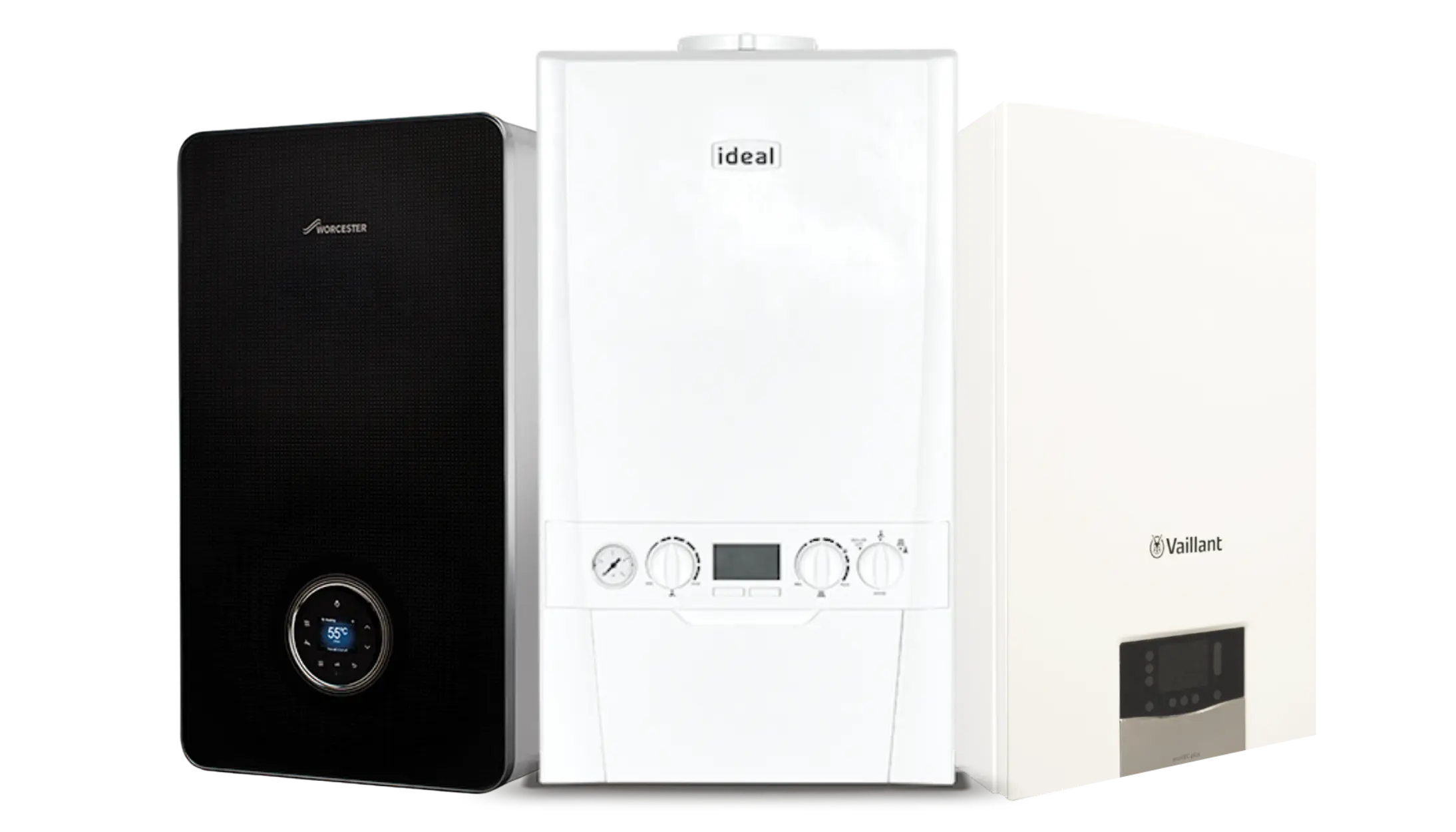
Quick answer
A 24–27kW combi boiler is often the right starting point for a small one- or two-bedroom home with one bathroom and up to roughly ten radiators. The headline output is mainly needed to produce instantaneous hot water; the home’s space-heating requirement may be much lower.
A combi is compact, usually economical to install and removes the need for a hot-water cylinder. Choose a system or heat-only boiler instead when the property already has a suitable cylinder, has weak mains-water performance or needs stored hot water for simultaneous outlets.
Final sizing should follow a heat-loss calculation and water-flow test, not bedroom count alone.
Table of Contents
ToggleQuick comparison: boiler types for a small house
| Boiler type | Best for | Main strength | Things to consider |
|---|---|---|---|
| Combi | Most one- or two-bedroom homes with one bathroom | Compact; instant hot water; no cylinder | Relies on mains flow; limited simultaneous use |
| System | Small homes with high hot-water demand or two bathrooms | Stored water can serve several outlets | Requires cylinder space |
| Heat-only | Homes retaining an existing traditional cylinder and tanks | Can be a practical like-for-like replacement | Most components and space |
| Electric | Very small off-gas homes with low demand | Compact and no flue | Usually costly to run |
| Heat pump | Planned low-carbon upgrades | Highly efficient; grant support may apply | Higher upfront cost and detailed design |
Why a combi boiler usually suits a small house
A combi combines central heating and domestic hot water in one appliance. Energy Saving Trust describes combis as space-saving and particularly suitable for smaller households because they do not require a hot-water cylinder.
Best for
Choose a combi when the home has:
- One bathroom.
- One or two regular occupants.
- Reasonable mains-water flow.
- No requirement for two showers at once.
- Limited space for a cylinder.
- An existing combi that can be replaced without major relocation.
Features that matter
Do not judge a model by maximum kilowatts alone. Prioritise:
- Low minimum heating output: This helps reduce repeated on-off cycling during mild weather.
- Hot-water flow rate: This influences shower performance and bath-filling time.
- Compatible controls: Load or weather compensation can adjust the boiler’s flow temperature.
- Warranty conditions: Check the servicing, filter, controls and installer requirements.
- Local support: Access to engineers and spare parts may matter more than a tiny difference in quoted efficiency.
A combi frees cupboard space and generally provides unlimited hot water one outlet at a time. However, it cannot overcome a poor incoming water supply. A larger boiler may heat more litres per minute, but it cannot create additional water flow.
A combi also prioritises hot water, so central heating pauses briefly while a tap or shower runs. This is normally unnoticeable in a small house but can become a limitation where several people use hot water simultaneously.
For a two-bedroom terrace with seven radiators, one bathroom and satisfactory incoming water flow, a compact 24–27kW combi will often be appropriate. Manufacturer guidance commonly places this output range in small one- or two-bedroom properties with one bathroom.
Expert recommendation
Ask the surveyor to record:
- The calculated heat loss.
- Incoming water flow and pressure.
- Expected hot-water flow from the proposed boiler.
- Minimum and maximum heating outputs.
- The proposed control strategy.
This information provides a much stronger basis for choosing a boiler than radiator or bedroom count alone.
When a system or heat-only boiler is better
A system boiler heats water stored in a separate cylinder. It may be better when a compact home has two bathrooms, a large bath or regular simultaneous hot-water use.
Stored water can supply several outlets, although cylinder capacity and reheating time still need to be considered. A system boiler also requires enough space for the cylinder.
A heat-only boiler can make sense where an older property already has a sound cylinder, storage tanks and suitable pipework. Retaining a working layout may reduce disruption and preserve good hot-water performance.
Converting automatically to a combi is not always an upgrade. You may lose stored-water capacity and discover that the incoming mains supply is weaker than the old tank-fed system.
An electric boiler is compact but is rarely the default choice for heating an entire house. Although efficient at the appliance, electricity normally costs more per unit than gas. Electric boilers are mainly relevant where gas is unavailable, installation constraints are severe or annual heating demand is exceptionally low.
What boiler size does a small house need?
For combi boilers, 24–27kW is a starting range, not a final specification.
Hot-water demand generally drives the headline output, while the central-heating output should be adjusted to match the property’s calculated heat loss. Government analysis has noted that typical space-heating demand can be far below the maximum output of commonly installed combi boilers, making correct sizing important.
An oversized boiler may cycle excessively. It fires, reaches the required temperature quickly, switches off and then restarts. Choosing a boiler with good modulation and commissioning it correctly can reduce this behaviour.
An undersized hot-water output can mean a weak shower or slow-running bath. An undersized heating system may struggle to keep the house warm during cold weather.
A professional assessment should consider:
- Total floor area.
- Wall, floor and loft insulation.
- Window type and glazing.
- Exposed external walls.
- Draughts and air leakage.
- Radiator outputs.
- Local winter design temperature.
- Planned extensions or additional radiators.
The engineer should also test mains-water flow and pressure rather than assuming they are adequate.
How to choose the right boiler: seven steps
- Confirm your fuel options.
Establish whether mains gas is available and whether a heat pump could be suitable. - Calculate the property’s heat loss.
Request room-by-room calculations rather than a recommendation based only on bedrooms. - Test mains-water performance.
Record the available flow and pressure at a suitable outlet. - Map your hot-water demand.
Identify the showers, baths and taps that may be used at the same time. - Compare boiler modulation.
Prefer a model capable of reducing its heating output sufficiently during milder weather. - Choose effective controls.
Use a programmer, room thermostat and radiator controls. Compatible load or weather compensation can improve operation by adjusting boiler temperature according to indoor or outdoor conditions. - Compare the complete installation.
Include system cleaning, a magnetic filter, controls, flue work, condensate drainage, commissioning, warranty registration and certification.
Boiler costs for a small house
| Option | Indicative installed cost | Best-value situation |
|---|---|---|
| Combi-to-combi replacement | About £1,800–£3,500 | Usually the strongest conventional choice |
| System boiler replacement | About £1,800–£3,500, excluding major cylinder work | Stored hot water is required |
| Heat-only replacement | About £2,300–£4,500 | Retaining a suitable traditional system |
| Typical gas-boiler benchmark | Around £3,500 | General budgeting figure |
| Air-source heat pump | Around £12,000 before grants | Planned low-carbon upgrade |
Current market guidance places a straightforward combi replacement broadly within this range, while Energy Saving Trust uses approximately £3,500 as a typical gas-boiler replacement cost.
Prices vary according to:
- Boiler location.
- Flue length and access.
- Scaffolding requirements.
- Gas-pipe upgrades.
- Condensate drainage.
- Electrical work.
- Heating-system condition.
- Boiler relocation.
- Controls and accessories.
A property survey is required for an accurate quotation.
Running costs depend more on the home’s heat demand, energy tariff, controls and settings than on choosing a boiler with a slightly higher maximum output.
Lowering a suitable combi boiler’s radiator flow temperature to around 60°C can improve boiler efficiency by nearly 4%, provided the house still heats comfortably.
Why the installer matters
A reputable boiler can still perform poorly if it is oversized, incorrectly commissioned or connected to a dirty heating system.
Installation quality affects:
- Efficiency.
- Boiler cycling.
- Noise.
- Reliability.
- Warranty validity.
- Safety.
- Expected lifespan.
Gas work must be completed by an appropriately qualified Gas Safe registered engineer. Anyone fitting, repairing or servicing a gas boiler must be registered.
A strong quotation should specify:
- How the system will be cleaned.
- Whether inhibitor will be added.
- Whether a magnetic filter is included.
- The proposed heating controls.
- Flue and condensate arrangements.
- Commissioning checks.
- Warranty registration.
- Building-regulations notification.
- Customer handover and operating instructions.
Annual servicing is normally recommended. A one-off gas-boiler service commonly costs approximately £80–£120.
Landlords also have legal duties to arrange annual gas-safety checks for gas appliances and flues supplied with a rented property.
Should you consider a heat pump?
A heat pump is not technically a boiler, but it is worth comparing before buying another long-life fossil-fuel heating system.
Small, reasonably insulated homes can be good heat-pump candidates because they have lower overall heating demand. However, suitability depends on more than house size.
A heat-pump survey should examine:
- Room-by-room heat loss.
- Existing radiator outputs.
- Required flow temperatures.
- Hot-water-cylinder space.
- Outdoor-unit position.
- Noise and planning considerations.
- Electrical supply.
- Insulation improvements.
Energy Saving Trust estimates that an air-source heat pump installation costs around £12,000 before financial support. In England and Wales, the Boiler Upgrade Scheme currently provides £7,500 towards eligible air-to-water or ground-source heat pumps installed through an MCS-certified installer.
A heat pump is particularly worth considering during a renovation or where radiators, pipework and a cylinder already need replacing.
A combi boiler may remain more practical where available space, initial budget or installation disruption is the overriding concern.
Frequently asked questions (FAQs)
Clear answers about boiler types for small houses, 24kW and 30kW combis, boiler sizing, heating speed, simultaneous showers, hot-water cylinders, water pressure, radiators and installation costs. Speak to Simple Green Energy .
Choosing a boiler for a small house?
Speak with Simple Green Energy about calculated heat loss, mains-water performance, bathroom demand, boiler output, controls and the most suitable compact heating setup for your home.
Compare my small-home boiler optionsConclusion
For a typical one- or two-bedroom UK home with one bathroom, good mains-water performance and modest simultaneous demand, choose a compact 24–27kW combi boiler with a low minimum heating output and compatible compensation controls.
Choose a system boiler when stored hot water is genuinely required. Retain or replace a heat-only boiler where the existing cylinder-and-tank arrangement remains suitable and provides the performance the household needs.
The decisive step is a proper property assessment. Simple Green Energy should examine heat loss, mains-water performance, existing pipework, controls and low-carbon alternatives before recommending a particular boiler.
Book a free home survey with Simple Green Energy for a property-specific comparison and an accurate quotation.
Important links:
Solar panels: https://www.simplegreenenergy.org/solar-panels/
Air source heat pump: https://www.simplegreenenergy.org/air-source-heat-pump/
EV charger: https://www.simplegreenenergy.org/ev-charger/
Air conditioning: https://www.simplegreenenergy.org/air-conditioning/