What Is the Best Boiler Type for Multiple Bathrooms?
The best boiler type for multiple bathrooms depends less on the number of rooms than on how many showers, baths and taps are used together. A three-bathroom home may manage with a combi when only one shower runs at a time; a busy two-bathroom family home may need stored hot water.
For most UK homes with two or more bathrooms and regular simultaneous demand, the strongest all-round choice is a system boiler with a correctly sized unvented hot-water cylinder. It can serve several outlets without the sharp flow reduction that often occurs when a combi supplies two showers. Energy Saving Trust and major manufacturers also identify cylinder-based systems as better suited to homes with multiple bathrooms or higher hot-water demand.
This guide compares the main options, explains what affects performance and covers typical costs, sizing and installation questions.
Check your ECO4 eligibility
Answer a few quick questions to see whether your household may qualify for ECO4 support.
Quick answer
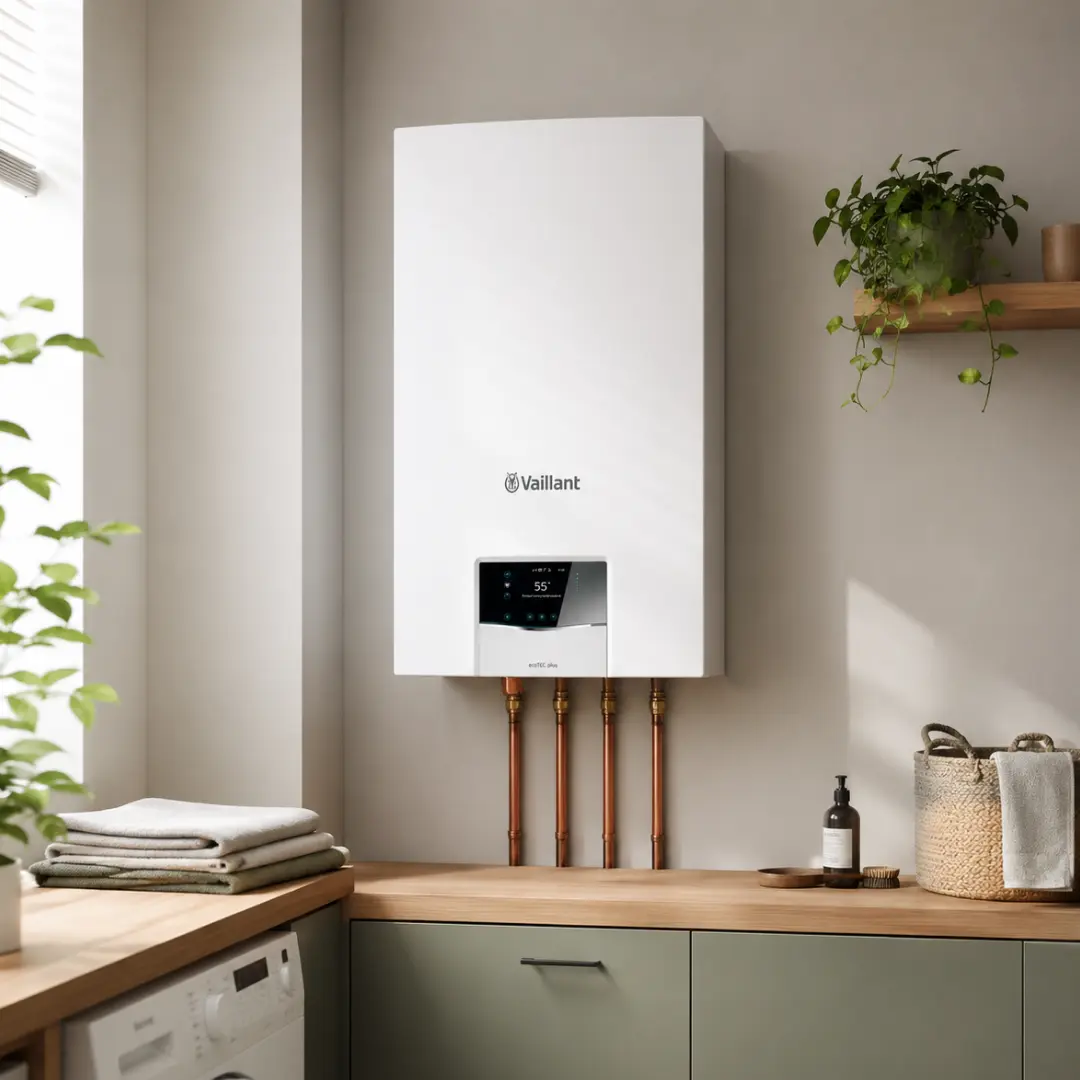
The best boiler for multiple bathrooms is usually a system boiler paired with an unvented hot-water cylinder. It stores hot water and can supply more than one shower or tap at once, provided the incoming main and pipework can deliver enough water. A powerful combi may suit two bathrooms when simultaneous use is rare, while a storage combi offers a compact compromise. A regular or heat-only boiler can remain appropriate where a property already has traditional tanks and pipework. Choose using measured dynamic pressure, flow rate, peak usage, cylinder recovery and heat loss—not bathroom count or boiler kilowatts alone.
Table of Contents
ToggleQuick boiler comparison
| Boiler type | Hot-water arrangement | Best for | Main limitation |
|---|---|---|---|
| Combi | Heats water on demand; no cylinder | Flats and smaller homes with one bathroom | Flow can reduce when several outlets run together |
| System | Stores hot water in a cylinder | Larger families and multiple bathrooms | Needs cylinder space and loses some stored heat |
| Regular/heat-only | Cylinder plus cold-water tanks | Traditional properties and some low-pressure systems | Uses the most space and has more components |
Best overall: system boiler with an unvented cylinder
A system boiler heats the radiators and a separate hot-water cylinder. Because the cylinder stores hot water, the boiler does not have to heat every litre instantly. Vaillant states that cylinder systems can provide a higher level of hot water than combination boilers and are suitable for larger properties with multiple bathrooms.
Best for: families, en-suites, large baths, rainfall showers and homes where two people often shower at once.
Key advantages: strong peak-time performance, electric immersion backup and flexibility if another bathroom is added. The main drawback is the space required for the cylinder, while the amount of stored hot water is finite.
Cylinder size must reflect real usage. As a broad manufacturer guide, Vaillant suggests approximately 175–200 litres for a household of three to four people and 210–300 litres for five or more. Shower flow, bath capacity and cylinder recovery rate can change the calculation, so these figures should not replace a survey.
Example UK use case: in a four-bedroom home with a family bathroom and two en-suites, a properly surveyed system boiler and high-recovery cylinder will usually be more dependable than a standard wall-hung combi when two showers run each morning.
Expert recommendation: choose this arrangement when simultaneous bathroom use is routine rather than occasional.
Can a combi boiler serve two bathrooms?
Yes, but “two bathrooms” does not necessarily mean “two showers at full flow”. A combi heats water on demand and has no separate cylinder, making it compact and usually simpler to install.
When a second outlet opens, however, the available hot-water flow is shared. Baxi confirms that opening two outlets on a combi reduces the flow available at each. Worcester Bosch also notes that fitting a boiler with a higher quoted flow rate cannot increase the amount of water entering the property through the main.
A high-output combi can work where:
- simultaneous use is unusual;
- the incoming mains supply is strong;
- cylinder space is unavailable;
- one bathroom has an electric shower; or
- the household accepts reduced flow during occasional overlap.
Do not choose a combi by its kW rating alone. For bathroom performance, compare its domestic hot-water flow in litres per minute at the stated temperature rise. Some larger combis can produce around 18 litres per minute, but two high-flow showers may still demand more water than the appliance and incoming main can supply.
Storage combi: a compact compromise
A storage combi includes a small internal hot-water store. Which? identifies this boiler type as a potential solution for households with higher hot-water demand but insufficient space for the separate cylinder required by a system or heat-only boiler.
It can provide a short burst of stronger hot-water performance and may suit a two-bathroom property with occasional overlapping demand.
Its reserve is considerably smaller than a full-size cylinder, however. Storage combis can also be larger, heavier and more expensive than standard combis. They should be treated as a carefully specified compromise rather than the default answer for a high-demand family.
When a regular boiler still makes sense
A regular boiler—also called a conventional, open-vent or heat-only boiler—normally works with a hot-water cylinder and water storage tanks in the loft.
It can remain suitable for an older or larger property with established traditional pipework, lower mains pressure or pumped showers. Regular boilers are commonly used where demand must be met across several taps and shower heads.
Replacing a sound traditional system with a combi may reduce peak hot-water performance and create unnecessary disruption. On the other hand, retaining loft tanks means more components, more occupied space and additional maintenance considerations.
How to compare boiler systems
Compare the complete heating and hot-water system, not only the boiler brand.
- Simultaneous demand: Identify which showers, baths and taps genuinely overlap.
- Mains performance: Measure water flow and dynamic pressure while outlets are running.
- Hot-water delivery: Compare combi flow rates or cylinder capacity and recovery time.
- Heat loss: Size the central-heating output separately from hot-water demand.
- Controls and modulation: Effective controls help a condensing boiler operate efficiently.
- Warranty: Check annual servicing, filter and approved-control conditions.
- Serviceability: Consider access, engineer familiarity and spare-parts availability.
- Future plans: Allow for extensions, new bathrooms and a possible low-carbon heating upgrade.
Seven steps to choosing correctly
- Record peak usage. Note what happens during the busiest morning and evening periods.
- Test the incoming water supply. An engineer should measure static pressure, dynamic pressure and flow at a suitable point.
- Check individual outlets. Rainfall showers, body jets and fast-fill baths can require substantially more water than standard fittings.
- Obtain a heat-loss calculation. The building’s heating requirement should not be estimated from bathroom or radiator count alone.
- Select the cylinder carefully. Balance occupancy, bathing habits, recovery rate, available space and standing heat loss.
- Review the pipework. Restrictive cold-main or hot-water pipes can undermine an otherwise capable boiler and cylinder.
- Compare complete quotations. Check that controls, system cleaning, magnetic filtration, flue work, condensate drainage, commissioning, certification and warranty registration are included.
An unvented cylinder cannot correct a weak incoming water main by itself. The property must still receive enough water to support the intended simultaneous demand.
Typical UK boiler costs
| Installation type | Typical UK guide cost | Main price factors |
|---|---|---|
| Replace an existing combi in the same position | £2,500–£4,000 | Model, warranty, controls, flue and labour |
| Convert a system or regular boiler to a combi | Around £4,000, sometimes more | Tank removal, pipe alterations, gas supply, drainage and relocation |
| Annual gas boiler service | About £80–£120 | Region, engineer and any repairs |
The figures above are budgeting guidance rather than quotations. Boiler location, cylinder capacity, gas-pipe upgrades, flue access, water treatment, scaffolding and regional labour rates can materially affect the final cost.
Will the right boiler save money?
Choosing the correct boiler type primarily protects comfort and performance; it does not guarantee a quick financial payback.
Heating costs depend on boiler efficiency, controls, insulation, fuel prices and household behaviour. Replacing an old inefficient boiler may reduce consumption, but converting a functioning modern combi to stored hot water purely to save money may not recover the conversion cost.
The strongest reason to install a cylinder-based system is usually improved hot-water availability rather than lower bills.
Does it work well in winter?
A correctly designed system boiler and cylinder will work effectively throughout winter.
Colder incoming mains water requires more energy to reach the desired temperature, while the home’s space-heating demand is also higher. Boiler output, cylinder recovery rate and control settings therefore become particularly important during cold periods.
Which option is quietest?
No boiler type is automatically the quietest.
Noise depends on the individual model, mounting position, fan, pump, pipework and installation quality. Compare published sound information, avoid locating the appliance beside a bedroom where practical and make sure the pipework is correctly clipped, balanced and commissioned.
What maintenance is required?
A gas boiler should be serviced regularly by an appropriately qualified Gas Safe registered engineer. Cylinder systems also require checks of their safety controls, expansion arrangements, valves and discharge components.
Keep servicing records because warranty cover may depend on them. Landlords must also arrange legally required annual gas-safety checks for relevant gas appliances and flues.
Why the installer matters
A good installer measures the water supply, calculates the heat loss, sizes the cylinder, checks the gas pipe, reviews the controls and cleans, balances and commissions the system.
Skipping these steps can leave an expensive boiler unable to deliver the promised bathroom performance. Installation quality also affects reliability, efficiency, safety, warranty compliance and system lifespan.
New and replacement heating systems are covered by Building Regulations requirements. Gas work must be completed by a suitably competent professional in accordance with the relevant gas-safety regulations. Ask who will notify the installation, which certificates you will receive and how the manufacturer’s warranty will be registered.
Book a free survey: Simple Green Energy can compare the available options against your real water use before you commit.
Frequently asked questions (FAQs)
Clear answers about how combi boilers work, their main advantages, hot-water flow, simultaneous showers, suitability for families, shower pressure, winter performance and running costs. Speak to Simple Green Energy .
Considering a combi boiler?
Speak with Simple Green Energy about heat loss, mains water performance, simultaneous hot-water demand, boiler sizing, controls and whether a combi suits your property.
Review my combi boiler optionsConclusion
For most UK households that regularly use more than one bathroom at the same time, a system boiler with a correctly sized unvented cylinder is the safest recommendation.
A high-output combi can be suitable where overlapping use is rare and the mains supply is strong. A storage combi can address genuine space restrictions, while a regular boiler may remain appropriate for a traditional property with suitable existing plumbing.
Base the decision on measured flow, dynamic pressure, heat loss, pipework, cylinder space and future plans. That produces a system designed for how your household actually lives.
Speak with a Simple Green Energy engineer for a property-specific recommendation and quotation.
Important links:
Solar panels: https://www.simplegreenenergy.org/solar-panels/
Air source heat pump: https://www.simplegreenenergy.org/air-source-heat-pump/
EV charger: https://www.simplegreenenergy.org/ev-charger/
Air conditioning: https://www.simplegreenenergy.org/air-conditioning/