What EPC Rating Do You Need for an ECO4 Solar Grant?
To be considered for solar panels through ECO4, an owner-occupied home will normally need a starting EPC rating of D, E, F or G. A privately rented home generally needs to be rated E, F or G, and the landlord must approve the work. Social housing is normally restricted to homes rated E, F or G and specified measures. Homes already rated C or above are generally outside ECO4, apart from narrow in-fill exceptions.
That is only the starting point. ECO4 is a whole-house energy-efficiency scheme, not a stand-alone solar voucher. Your household must also qualify through benefits or ECO4 Flex, the property must pass a retrofit assessment, and solar PV must suit the proposed package. Under current rules, solar is normally eligible where it supports qualifying electric heating, such as a hydronic heat pump or high-heat-retention storage heaters
Check your ECO4 eligibility
Answer a few quick questions to see whether your household may qualify for ECO4 support.
Quick answer
For most owner-occupiers, the required starting EPC rating is D, E, F or G. For private rented homes, it is usually E, F or G. A property rated C or above is normally not eligible.
ECO4 also sets improvement targets: homes starting in D or E should normally reach at least C, while homes starting in F or G should reach at least D. Meeting the EPC threshold does not guarantee solar panels. The household must qualify financially, the property must be surveyed, insulation may need to come first, and the solar system must fit ECO4’s heating and technical rules.
Table of Contents
ToggleECO4 EPC eligibility at a glance
| Property situation | Starting EPC normally required | Key condition |
|---|---|---|
| Owner-occupied home | D, E, F or G | Household must qualify through benefits or an eligible Flex route |
| Private rented home | E, F or G | Landlord permission and measure restrictions apply |
| Social housing | E, F or G | Support depends on social-housing rules and the proposed package |
| Home rated C or above | Normally not eligible | Only narrow exceptions may apply |
The EPC threshold is a gateway, not an award. Ofgem describes ECO4 as an obligation on energy companies rather than a conventional grant. Suppliers decide which projects they fund, how much they provide and which delivery partners they use.
Starting EPC rating versus the required finishing rating
Two EPC questions are often confused. The starting rating determines whether the property can enter ECO4. The finishing rating is the improvement the funded package is expected to achieve.
Ofgem’s minimum requirement says:
- A home starting in F or G should be improved to at least D.
- A home starting in D or E should be improved to at least C.
- A home starting in C or above is normally ineligible.
This is why an installer may recommend insulation, ventilation, controls or heating work alongside solar. The project is designed around the home’s calculated SAP score, not one product requested by the homeowner.
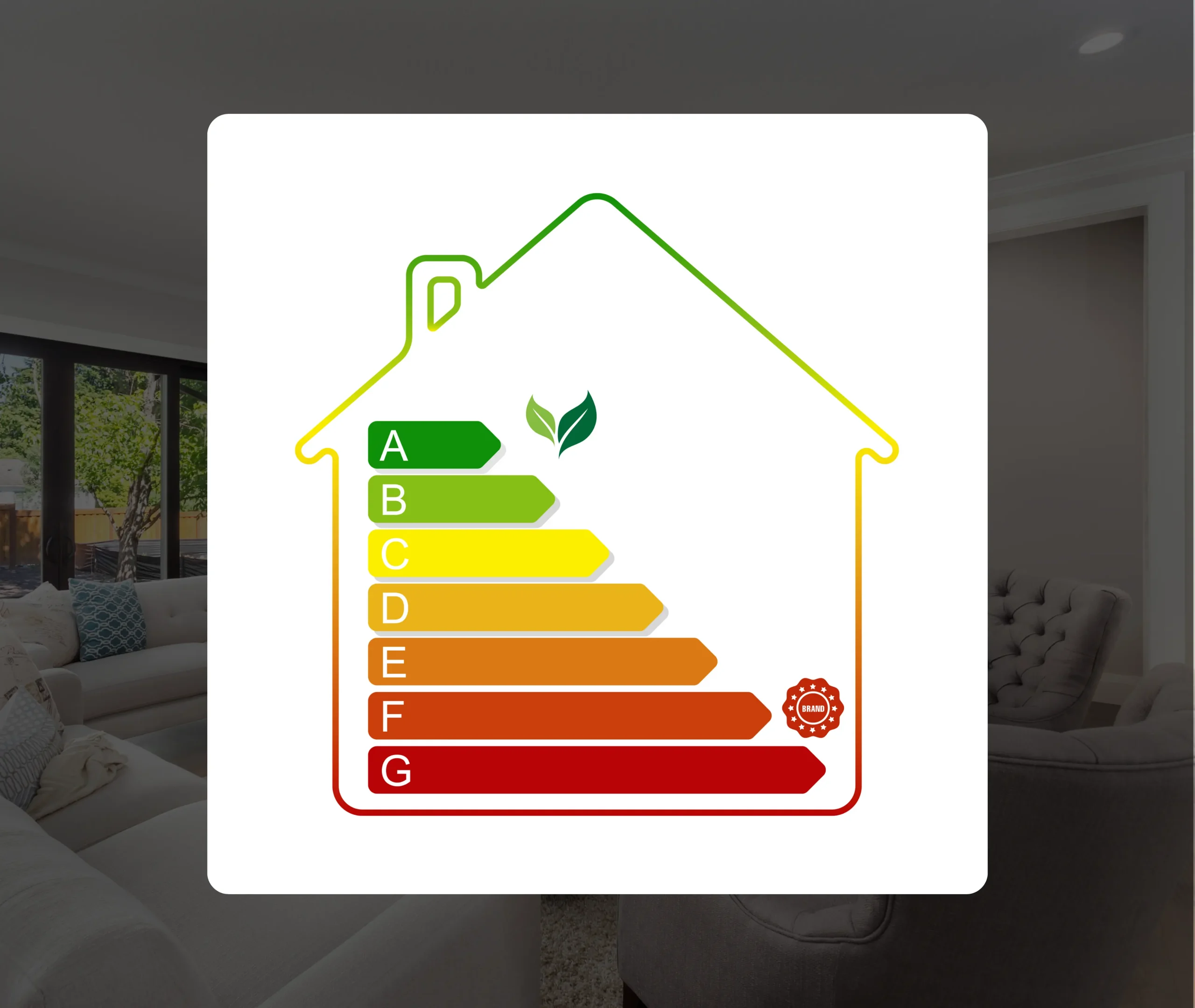
An EPC rates a home from A, the most efficient, to G, the least efficient, and is generally valid for ten years. However, the retrofit team will still assess the property because alterations, defects or outdated certificate assumptions can affect the design.
Why a qualifying EPC does not guarantee solar panels
Solar PV can be included under ECO4, but it is not automatically available to every D-to-G home.
Ofgem says solar PV is an eligible heating measure where the property’s heating system, either before the project or installed as part of it, is:
- A hydronic heat pump.
- High-heat-retention electric storage heating.
- Another electric heating system meeting the required SAP responsiveness threshold.
The work must also comply with MCS requirements and PAS 2035.
Solar must help reduce domestic heating costs and is subject to minimum insulation preconditions. Ofgem caps eligible solar generation at 10kWp per home, including any existing array. Battery storage may be installed during a retrofit, but it does not itself improve the SAP rating or earn an ECO score.
| Assessment point | What is checked | Why it matters |
|---|---|---|
| EPC/SAP band | Eligible starting band for the tenure and route | A C-rated home is normally excluded |
| Heating system | Existing and proposed main heat source | Solar must support qualifying electric heating |
| Insulation | Relevant loft, roof, wall and fabric measures | Heating measures may require insulation first |
| Roof and electrics | Space, shading, structure and connection | An eligible household may still have an unsuitable home |
| Project uplift | Predicted finishing EPC/SAP band | The package must deliver enough improvement |
| Funding | Supplier budget and delivery availability | Eligibility is not an automatic entitlement |
Who else qualifies besides the property?
A poor EPC rating alone is not enough. In private housing, the household will generally need an eligible means-tested benefit, including:
- Universal Credit
- Pension Credit
- Income Support
- Income-based Jobseeker’s Allowance
- Income-related Employment and Support Allowance
- Housing Benefit
- Qualifying Child Benefit
Households not receiving a listed benefit may be referred through ECO4 Flex. Approved routes can cover low income, vulnerability to cold, certain health circumstances and other local targeting methods.
Under Flex, owner-occupied properties can be D to G on several routes, while private rented properties are generally E to G.
You do not normally have to use your own energy supplier, but the funding supplier or delivery partner must accept the project. Availability can vary by area, property and measure.
How to check your EPC and apply
- Find the certificate. Search the official EPC register by address. England and Wales use the GOV.UK service; Scotland has a separate register.
- Check the band and date. Note the score, recommendations and any improvements completed since the assessment.
- Complete an eligibility check. Give accurate benefit, income, tenure and occupancy details. Secure landlord consent where required.
- Arrange a whole-house survey. The assessment should cover insulation, ventilation, heating, roof condition, electrics and predicted SAP uplift.
- Review the proposal. Ask why each measure is required, the expected finishing band, whether solar is included and whether you must contribute.
- Verify the delivery chain. Confirm the funder, TrustMark registration, MCS certification, warranties, aftercare and complaints process.
Be cautious about unsolicited “guaranteed grant” offers. GOV.UK advises checking an offer with the council or the energy supplier the installer claims to represent.
ECO4 solar costs and contributions
There is no fixed ECO4 solar grant amount. Funding depends on the complete retrofit, calculated savings, supplier decisions and work needed to meet the rules.
Some projects may be fully funded; others may require a customer contribution. Ofgem requires contributions to be recorded and may request evidence of payment.
Before agreeing, ask for written confirmation of:
- The measures being funded.
- Your contribution and payment stages.
- Work excluded from the funding.
- Who will own the panels.
- Product and workmanship warranties.
- Expected solar generation.
- Roof, scaffolding or electrical costs you must pay.
An accurate quotation requires a survey because every property and improvement pathway is different.
Why the installer and retrofit team matter
Installation quality affects performance, safety, moisture risk, warranties and lifespan.
The team should explain the improvement pathway, coordinate the Retrofit Assessor and Retrofit Coordinator, use MCS-certified solar installers, provide commissioning documents and set out aftercare. MCS standards cover the design, installation and commissioning of small-scale renewable systems.
Visual suggestion: Add a flowchart showing EPC check → household eligibility → retrofit survey → funding decision → installation.
Common buyer questions
Is EPC D good enough?
It can be for an owner-occupier using an eligible route. It is generally not enough for a standard private-rented application, where the home is usually required to be E, F or G.
Is an E, F or G rating more likely to qualify?
These bands are prioritised, but a lower rating may require a larger package to reach the finishing target. It still does not guarantee solar.
Can solar improve an EPC?
Yes. Solar can improve the calculated rating, but the uplift depends on system size, orientation, heating fuel and other property data.
Can I apply with an expired EPC?
You can make an enquiry, but a fresh EPC or retrofit assessment may be needed where the certificate is expired or no longer reflects the property.
Frequently asked questions (FAQs)
Clear answers about ECO4 EPC requirements for owner-occupiers, private tenants, landlords and social housing, EPC validity, stand-alone solar, gas heating and insulation preconditions. Speak to Simple Green Energy .
Unsure whether your EPC qualifies for ECO4 solar?
Speak with Simple Green Energy about your current EPC rating, property tenure, household eligibility, heating system, existing insulation and the measures that may form part of a compliant project.
Check my EPC eligibilityConclusion:
For an ECO4 solar project, remember: owner-occupiers normally need EPC D to G; private rented and most social-housing cases normally need EPC E to G; EPC C or above is usually excluded.
The decision then depends on household eligibility, electric heating, insulation, roof suitability and whether the complete package reaches the required finishing band.
The right next step is to verify the EPC and arrange a whole-house assessment, not simply order panels.
Book a free eligibility check and home survey with Simple Green Energy to understand your EPC position, suitable measures and likely funding before committing to work.