
How Many Solar Panels Do I Need in the UK?
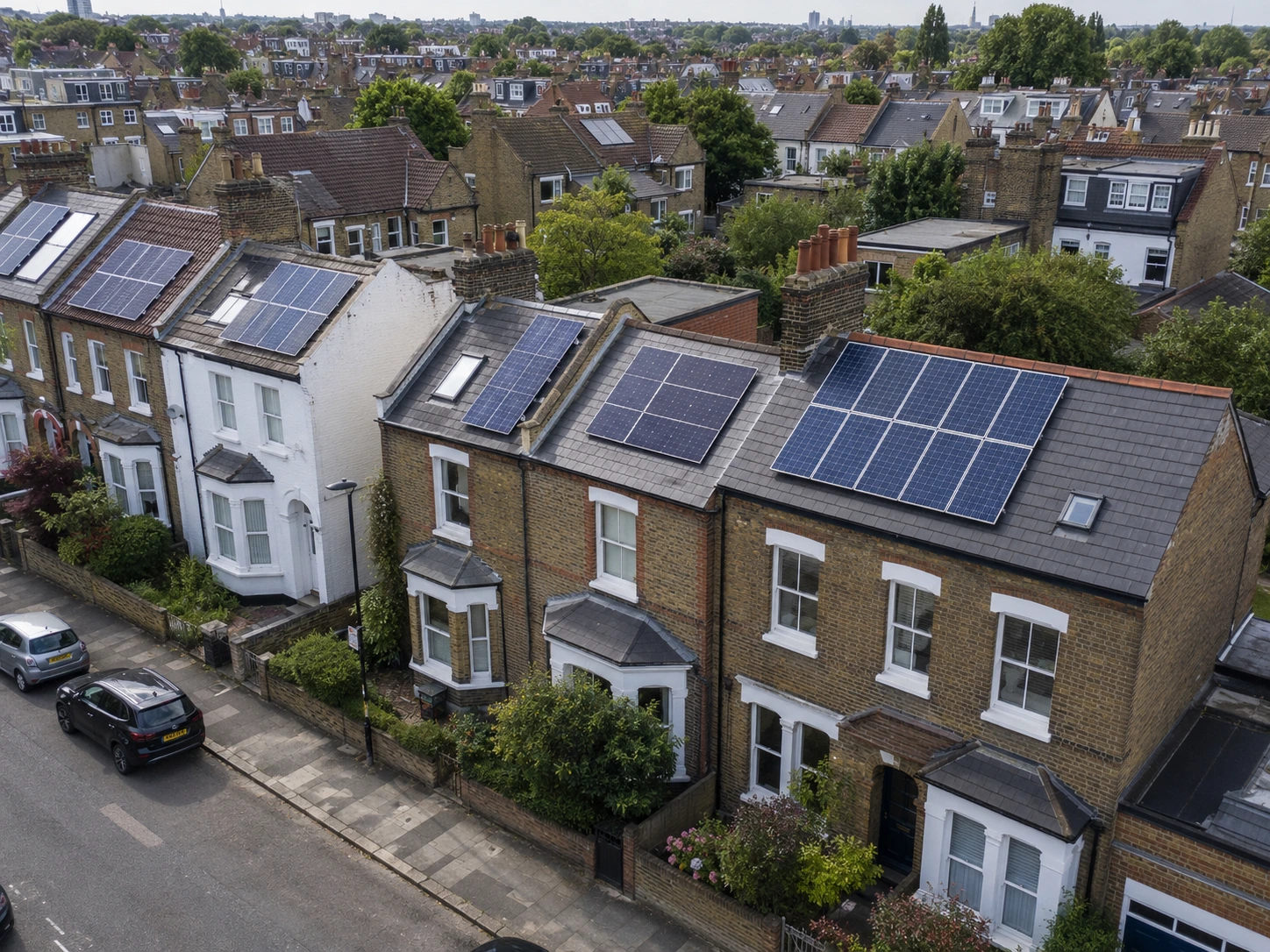
Most UK homes need 6–14 solar panels, with 8–12 panels a sensible starting point for many two- to four-bedroom properties. The right number is not decided by bedroom count alone. It depends on annual electricity use, panel wattage, roof orientation, shading, usable roof area and whether you plan to add an electric vehicle, heat pump or battery.
Ofgem’s 2026 medium-use benchmark is 2,500kWh of electricity a year. A modern residential panel is commonly around 440–470W and a well-positioned 450W panel might generate roughly 380–430kWh annually in much of the UK. A household using 2,500kWh may therefore need around 7–9 panels on paper. In practice, a larger array may offer better long-term value where the roof, grid connection and budget allow.
This guide explains how to calculate your requirement, how much roof space and budget you may need, and when fitting more panels is—or is not—worthwhile.
Get a free home survey: Simple Green Energy can assess your roof, usage and future plans, then provide a property-specific design and generation estimate.
Get Your Solar Panel Quote
Start with your address so we can check the best solar options for your home.
Quick answer
For a typical UK home, divide your annual electricity consumption by the estimated annual output of one panel. With a 450W panel producing approximately 380–430kWh per year, a home using 2,500kWh may need around 7–9 panels to generate a similar amount annually. Homes using 3,500kWh may need 9–11 panels, while properties with an EV, heat pump or high daytime demand may benefit from 12–20 or more. Roof orientation, shading and local sunlight can change the result significantly, so a certified installer should model the system before you buy.
Table of Contents
ToggleTypical solar panel numbers by household
These planning ranges use 450W panels and assume a broadly suitable, mostly unshaded roof. A site survey is required for an accurate design.
| Household or requirement | Annual electricity use | Indicative array | Likely panel count | Best approach |
|---|---|---|---|---|
| Low-use small home | 1,500–2,000kWh | 2.25–3.15kWp | 5–7 | Prioritise the best roof section |
| Typical medium-use home | Around 2,500kWh | 3.15–4.05kWp | 7–9 | Balance self-use and export |
| Family home | 3,000–4,000kWh | 4.05–5.4kWp | 9–12 | Consider evening demand |
| Larger or all-electric home | 4,000–6,000kWh | 5.4–7.2kWp | 12–16 | Model winter demand and grid limits |
| EV and/or heat-pump home | 5,000–8,000kWh+ | 6.3–9kWp+ | 14–20+ | Size for future electrification |
These ranges are broadly consistent with current UK guidance placing many domestic installations between approximately 8 and 14 panels, although the correct figure remains property-specific.
How to calculate how many solar panels you need
1. Find your annual electricity use
Check 12 months of bills or your supplier’s app. Use the kWh figure, not the amount paid. Actual consumption is more useful than a national average because similar houses can have very different occupancy, appliances and working-from-home patterns.
2. Define what “enough” means
Your aim might be to:
- Generate the same number of kWh as you use over a year.
- Reduce daytime grid imports.
- Maximise returns from self-use and export.
- Prepare for an EV or heat pump.
- Fit the largest sensible array while scaffolding is in place.
Solar does not make most homes permanently off-grid. Generation changes by hour and season, so the grid normally supplies night-time and winter shortfalls.
3. Estimate output per panel
Use this first calculation:
Panel count = annual household electricity use ÷ estimated annual generation per panel
Example:
3,200kWh ÷ 400kWh = 8 panels
Then adjust for orientation, shading, pitch, postcode and system losses. The European Commission’s PVGIS tool models solar performance by location, while the Energy Saving Trust calculator estimates suitability, system size, costs and savings.
4. Check usable roof area
A current high-output residential panel can be about 1.75m by 1.13m—close to 2m²—before allowing for roof edges, mounting, chimneys, vents and awkward shapes. Ten panels need approximately 20m² of panel area and usually more gross roof area.
Higher-wattage panels help where space is restricted, but compare dimensions, warranties, shading behaviour, inverter compatibility and installed cost per expected kWh—not efficiency alone.
5. Match generation to your routine
A household occupied during the day can directly use more solar. Someone out until evening may export more and buy electricity back later.
A battery can move surplus generation into the evening, but it adds cost and normally has a shorter lifespan than the panels. Energy Saving Trust estimates a typical 5kWh battery system at around £4,600 and cautions that savings do not always justify the battery cost alone.
What changes the number of panels?
Direction and pitch: South-facing roofs normally maximise annual output. East-west arrays can perform well and spread generation across the morning and afternoon. North-facing sections need careful modelling.
Shading: Trees, chimneys, dormers and buildings can reduce output. The design may need separate strings, optimisers or microinverters.
Location: Southern areas generally receive more solar energy, but panels work throughout the UK and generate in cloudy conditions.
Panel wattage: Ten 450W panels create a 4.5kWp array; ten 350W panels create 3.5kWp. Compare capacity, not panel count alone.
Grid connection: Array capacity and inverter export capacity are different. Larger systems may need advance Distribution Network Operator approval. Correctly designed export limitation can sometimes support a larger array.
Should you install as many panels as possible?
Often—but not automatically. Scaffolding, labour, electrical work and certification create fixed costs, so adding panels during the original installation can be cheaper than returning later.
A larger array is especially sensible if you expect an EV, heat pump, extension or more home working. Surplus electricity may also earn Smart Export Guarantee payments.
Extra panels may offer poor value if they need separate scaffolding for a weak roof face, suffer heavy shading, exceed practical inverter or grid limits, or create large surpluses on a poor export tariff.
Ask installers to compare at least two designs and show:
- Annual generation.
- Solar electricity used in the home.
- Electricity exported.
- Estimated bill savings.
- Export-tariff assumptions.
- Simple payback period.
Do solar panels work in winter?
Yes, but output is much lower because days are shorter and the sun is lower. A system sized to match annual use will usually overproduce on bright summer days and underproduce in winter.
Sizing rooftop solar to cover the worst winter week generally creates an oversized, uneconomic domestic system. Optimise annual value instead. Use smart controls, run flexible appliances during sunny periods and consider a battery or time-of-use tariff where the figures support it.
How much do solar panel systems cost?
Energy Saving Trust estimates a typical 4.5kWp domestic system at around £7,600; MCS reported an average certified home installation of just over £7,000 in 2025. These are budgeting ranges for straightforward installations without a battery.
| System example | Panels at 450W | Indicative installed cost | Suitable for |
|---|---|---|---|
| 2.7kWp | 6 | £5,000–£6,500 | Low-use or roof-restricted homes |
| 3.6kWp | 8 | £6,000–£7,500 | Medium-use households |
| 4.5kWp | 10 | £7,000–£8,500 | Family homes and future flexibility |
| 5.4kWp | 12 | £8,000–£10,000 | Higher users or EV preparation |
| 7.2kWp | 16 | £10,000–£13,000 | Large or highly electrified homes |
Complex roofs, premium equipment, roof repairs and multiple scaffold elevations cost more. Compare panel and inverter models, scaffolding, bird protection, monitoring, grid applications, warranties and projected generation.
Qualifying residential installations currently benefit from 0% VAT until 31 March 2027.
Payback is property-specific. Published estimates often sit around 10–15 years for suitable homes, but can be shorter or materially longer depending on location, price, electricity use and export rate. Treat guaranteed savings claims cautiously.
Why the installer matters
A poor 12-panel installation can underperform a well-designed 10-panel system. The installer should check roof condition and structure, map shading, manage different orientations, select compatible equipment, use realistic generation assumptions and complete grid and building-regulation requirements.
Obtain at least three itemised quotations from MCS-certified contractors. An MCS certificate shows that the system was designed, installed and commissioned to recognised standards. Check consumer-code membership, deposit protection, workmanship warranty insurance, equipment warranties and who provides aftercare.
Frequently asked questions (FAQs)
Clear answers about solar-panel numbers, annual electricity use, system capacity, battery storage, electric vehicles and heat-pump demand. Speak to Simple Green Energy .
Need help sizing your solar system?
Speak with Simple Green Energy about annual consumption, roof space, panel wattage, battery plans, EV charging and future heat-pump demand.
Size my solar systemFinal recommendation
For most UK homeowners, 8–12 modern panels is the best initial benchmark, but usage and roof suitability must decide the final number. Start with 12 months of consumption, include planned EV or heat-pump demand, and ask for both a needs-based design and the largest financially sensible option.
The best proposal will show expected generation, self-use, export, winter performance and payback assumptions—not simply promise the highest output.
Book a free solar survey with Simple Green Energy for a tailored roof layout, system-size recommendation and evidence-based savings estimate.