


The Pros and Cons of Air Conditioning in the UK
More UK homeowners are asking whether air conditioning is worth it as summers become hotter, bedrooms feel stuffier, loft rooms overheat and home working makes daytime comfort more important. Many UK homes are designed to hold warmth in, which is useful in winter but uncomfortable during heatwaves. Air conditioning can improve comfort, sleep and temperature control, but it also comes with installation costs, running costs, maintenance, energy use and permission considerations.

Get your free air conditioning quote
Secure, GDPR-protected enquiry.
Find your property
No spam. No third-party sharing.
Choose a brand
Contact details
Your details stay private and protected.
Thank you
Your request has been received. Our team will contact you shortly.
Quick Answer Box: Is Air Conditioning Worth It in the UK?
Quick Answer Box: Is Air Conditioning Worth It in the UK?
Table of Contents
ToggleTable: Pros and Cons of Air Conditioning in the UK
| Pros | Cons |
|---|---|
| Better comfort during hot weather | Upfront installation cost |
| Improved sleep in warm bedrooms | Electricity running costs |
| Useful for bedrooms, lofts and home offices | Annual maintenance required |
| Can help reduce humidity | Outdoor unit placement needs care |
| Air filtration may help reduce dust and pollen | Noise considerations for occupants and neighbours |
| Many systems can also provide heating | Planning, leasehold or landlord permissions may apply |
| Better temperature control than fans | Not always needed in cooler or shaded homes |
| Can improve comfort in flats and south-facing rooms | Environmental and energy-use concerns |
| Can be useful in extensions, garden rooms and conservatories | Poor sizing can reduce efficiency and comfort |
1. Why Air Conditioning Is Becoming More Popular in the UK
Air conditioning is becoming a more common consideration for UK homes and flats because overheating is no longer limited to a few unusually warm days. The Met Office says extreme heat events such as heatwaves and record-breaking high temperatures are becoming more frequent, longer lasting and more intense, and that the UK is expected to see more days of 25°C or above as the climate warms.
Many UK properties were built to retain heat rather than release it. That helps reduce heating demand in winter, but it can make summer overheating worse in certain rooms. Top-floor flats, homes with one-sided ventilation, south-facing rooms, large windows, urban homes with little green space and highly insulated homes can be more likely to overheat, according to UKHSA guidance.
The demand is also practical. More people work from home, children may spend more time indoors during hot weather, and homeowners are converting lofts, garages and garden rooms into usable living spaces. These rooms often heat up quickly and cool down slowly.
Modern split air conditioning systems are usually quieter, smarter and more controllable than older or portable units. Many can cool in summer and provide heating in cooler months, making them more useful beyond the hottest weeks of the year. However, they still need correct sizing, professional installation and sensible use.
2. The Main Pros of Air Conditioning
1. Better Comfort During Hot Weather
The biggest benefit of home air conditioning is controlled cooling. Unlike a fan, which moves air around and helps you feel cooler, air conditioning actively removes heat from the room.
This can make a major difference in bedrooms, home offices, loft conversions and flats that stay warm late into the evening. Fixed split air conditioning UK systems are usually more effective than opening windows, especially when outside air is still warm, humid or noisy.
2. Improved Sleep in Warm Bedrooms
Bedrooms are one of the most common rooms for air conditioning installation in the UK. A room that feels manageable during the day can become uncomfortable at night, especially if heat has built up in the walls, roof space or glazing.
Air conditioning for bedrooms allows you to cool the room before sleeping and maintain a more comfortable temperature overnight. This can be especially useful for top-floor bedrooms, loft rooms, south-facing bedrooms and homes near busy roads where windows cannot easily be left open.
3. Better Home Working Conditions
A hot home office can quickly become distracting. Laptops, screens and poor ventilation can add to the heat, while south-facing windows or garden rooms may become uncomfortable by lunchtime.
Air conditioning for home offices can help create a steadier working temperature. This is particularly useful for people working full-time from home, small business owners, landlords improving rental spaces, and homeowners who have converted spare rooms, garages or garden buildings into work areas.
4. Humidity Control
Many air conditioning systems also remove moisture from the air as part of the cooling process. This can make a room feel less sticky and uncomfortable, even when the temperature reduction is modest.
Humidity control can be useful in conservatories, bedrooms, kitchens near living spaces and poorly ventilated flats. However, air conditioning should not be treated as a cure for damp, mould or structural ventilation problems. If a home has persistent condensation or mould, the underlying cause should be investigated.
5. Air Filtration
Most fixed air conditioning systems include filters that capture some dust and airborne particles as air passes through the indoor unit. This can help keep indoor air feeling fresher and may reduce visible dust and pollen entering the room.
It is important not to overstate this benefit. Air conditioning filters are not a medical treatment and do not replace proper ventilation, cleaning or specialist air purification where needed. Filters also need regular cleaning to remain effective.
6. Heating as Well as Cooling
Many modern split systems are air-to-air heat pumps, meaning they can provide both cooling and heating. This makes them useful beyond summer, particularly in garden rooms, home offices, extensions and occasional-use spaces.
For example, a wall-mounted split system may cool a loft room in August and provide quick heating in spring or autumn. This can be more practical than relying on portable heaters, although the right solution depends on the property and how often the room is used.
7. Suitable for Problem Rooms
Air conditioning is often most valuable where one or two rooms are consistently uncomfortable rather than where the whole house is slightly warm.
Good candidates include loft conversions, garden rooms, flats, south-facing bedrooms, extensions, conservatories and rooms with large glazing. In these spaces, fans and open windows may not provide enough control during heatwaves.
3. The Main Cons of Air Conditioning
1. Upfront Installation Cost
Professionally installed air conditioning costs more than fans, blinds or portable cooling units. The final price depends on the system type, number of rooms, indoor unit positions, outdoor unit location, pipe runs, electrical work, wall construction and access.
As a 2026 indication, one UK installation cost guide lists single split systems at around £1,500–£2,500, multi-split systems for two to four rooms at around £3,500–£6,500, larger multi-split systems at around £6,000–£10,000 and ducted systems at around £8,000–£15,000. These figures include supply and installation but not separate electrical upgrade work.
A proper air conditioning survey is important because two homes with the same room size can still need different solutions.
2. Running Costs
Air conditioning uses electricity, so running costs should be considered before installation. Costs depend on the power input of the unit, electricity tariff, room size, outside temperature, insulation, glazing, system efficiency and how long the unit runs.
A simple estimate is:
Energy used in kW × electricity price per kWh × hours used = running cost
British Gas explains that air conditioning running costs vary by electricity tariff, usage, room size, insulation, system type and efficiency rating. It also notes that cooling individual rooms is usually more cost-effective than cooling a whole property.
For most UK homes, sensible use matters. Cooling a bedroom before sleep or a home office during working hours will usually cost less than trying to cool every room all day.
3. Maintenance Requirements
Fixed air conditioning systems need basic ongoing care. Filters should be cleaned regularly, and the system should be serviced periodically to check performance, refrigerant circuit condition, drainage, electrical safety and general operation.
Maintenance is not just about avoiding breakdowns. A poorly maintained system can become less efficient, noisier and less effective. Checkatrade’s 2026 cost guide gives a one-off service guide price of around £70–£120 per unit, although actual prices vary by area, system and provider.
4. Outdoor Unit Placement
Most fixed systems require an outdoor unit. Its position must be chosen carefully. A good installer will consider airflow, pipe routes, drainage, maintenance access, appearance, vibration, noise and the effect on neighbours.
Outdoor unit placement is especially important in terraces, flats, maisonettes, conservation areas, commercial premises and properties with limited external wall space. Poor placement can affect efficiency, create avoidable noise issues or make future servicing difficult.
5. Planning, Leasehold or Landlord Permission
Some installations are straightforward, but permission should never be assumed. Houses may be simpler than flats, but leasehold properties, rented homes, listed buildings, conservation areas, visible outdoor units and commercial premises can require extra checks.
In England, Planning Portal guidance says qualifying domestic air source heat pumps can be permitted development if all limits and conditions are met. However, the rules include conditions on outdoor unit size, siting, listed buildings, conservation areas and the requirement that the system is not used solely for cooling.
This means a heating-and-cooling split system may be treated differently from a cooling-only air conditioning unit. Rules can also differ in Wales, Scotland and Northern Ireland, so it is sensible to check with the local planning authority, freeholder, landlord or managing agent before installation.
6. Environmental Impact
Air conditioning has an environmental impact because it uses electricity and contains refrigerant. The impact can be reduced by choosing an efficient system, sizing it correctly, maintaining it properly and using it sensibly.
The wrong approach is to oversize a system, run it continuously at very low temperatures or install it before dealing with simple overheating causes such as direct solar gain, poor shading or poor ventilation.
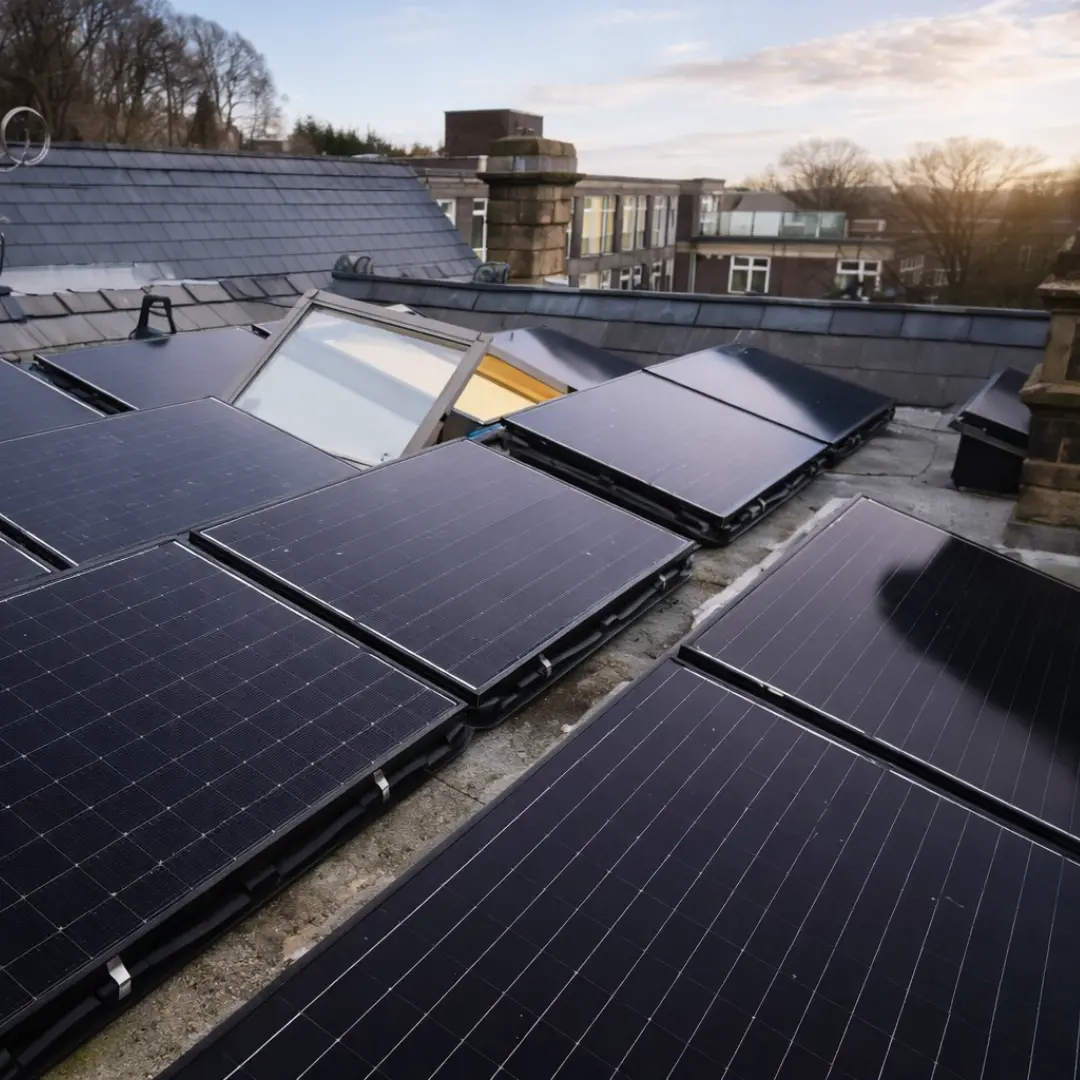
For some homes, solar PV and battery storage may help offset daytime electricity use, particularly where cooling demand is highest during sunny hours. However, solar should be assessed separately based on roof space, orientation, usage and budget.
7. It May Be Underused in Some Homes
Air conditioning is not always necessary. A shaded, well-ventilated property may only feel uncomfortable for a few days each year. In those cases, lower-cost improvements may provide enough comfort.
Before choosing home air conditioning installation, it is worth asking how often the room overheats, whether the issue affects sleep or work, and whether passive measures could solve most of the problem.
4. Portable AC vs Fixed Split Air Conditioning
| Option | Best For | Pros | Cons |
|---|---|---|---|
| Portable air conditioner | Renters, occasional use, temporary cooling, smaller rooms | Lower upfront cost, no fixed installation, can be moved between rooms | Noisier, less efficient, needs window hose, takes floor space, less effective for larger rooms |
| Wall-mounted split system | Bedrooms, home offices, lounges, loft rooms, garden rooms | Strong cooling, quieter indoor operation, better efficiency, can heat and cool, good temperature control | Higher upfront cost, requires outdoor unit, professional installation and permissions check |
| Multi-split system | Several bedrooms, flats, larger homes, small offices | Multiple indoor units connected to one outdoor unit, room-by-room control, neater than several separate outdoor units | More expensive, more design work, longer pipe runs, failure may affect multiple rooms |
| Ducted air conditioning | New builds, major renovations, premium homes, commercial spaces | Discreet appearance, can serve several areas, quieter room finish, good for planned refurbishments | Highest installation cost, needs ceiling voids or design integration, less suitable for simple retrofits |
Portable AC can be useful if you rent, need short-term cooling or cannot install a fixed system. However, fixed split air conditioning is usually better for regular use because it is quieter, more effective and normally more efficient. Uswitch notes that portable units are suited to temporary use or smaller spaces, but are usually less effective, noisier and more limited than fixed systems.
5. Which UK Homes Benefit Most from Air Conditioning?
Air conditioning for UK homes is most useful where overheating is regular, disruptive and difficult to solve with simpler measures.
Properties and rooms that often benefit include:
South-facing homes that receive strong afternoon sun.
Flats and apartments, especially upper-floor flats.
Loft conversions where roof heat builds up.
Bedrooms that stay warm at night.
Home offices used during the hottest part of the day.
Conservatories and garden rooms.
New-build homes with large glazing.
Urban homes with limited ventilation.
Homes near busy roads where windows cannot easily be left open.
Extensions with large rooflights or bifold doors.
Small commercial spaces such as salons, clinics, offices and retail units.
Demand can vary by location. London and dense urban areas may experience more overheating due to limited green space, traffic noise and restricted ventilation. Rural homes may stay cooler if they have shade, airflow and lower surrounding heat build-up.
Costs depend on the brand, cooling capacity, room size, pipe runs, electrical work, access, outdoor unit position, condensate drainage, wall type, controls, scaffolding, landlord permission and whether planning checks are needed. A professional survey is the safest way to compare portable AC, single split, multi-split and ducted options.
6. When Air Conditioning May Not Be the Best First Step
Air conditioning may not be the best first option if the room is only uncomfortable for a few days a year. In that case, fans, shading and ventilation changes may be more cost-effective.
It may also be worth improving the property first if overheating is caused by unshaded glazing, poor ventilation, missing loft ventilation or a lack of blinds. UKHSA recommends measures such as shading windows, using ventilation when cooler outside and asking installers about reducing overheating when insulating or refurbishing a home.
AC may also be difficult where permissions are complex. Leasehold flats, listed buildings and conservation areas should be checked carefully before spending money on equipment.
If the home needs wider energy efficiency improvements, it may be better to look at ventilation, insulation, solar control, solar PV, heating upgrades or an air source heat pump strategy before installing dedicated cooling.
7. Alternatives to Air Conditioning
Air conditioning provides controlled cooling, but it is not the only option. Some homes can become more comfortable with lower-cost or lower-energy measures.
Useful alternatives include:
Fans for personal cooling and air movement.
Ceiling fans for bedrooms and living areas.
Dehumidifiers where humidity is the main issue.
External shading such as awnings, shutters or brise soleil.
Thermal blinds or shutters to reduce solar gain.
Reflective window film for rooms with large glazing.
Better ventilation, especially night-time ventilation where safe.
Loft ventilation to reduce trapped roof-space heat.
Insulation improvements, carefully designed to avoid summer overheating.
Solar PV to offset daytime electricity use.
Air source heat pumps where heating, cooling and whole-home energy upgrades are being considered together.
These alternatives can help, but they may not provide the same controlled cooling as a fixed air conditioning system. The right answer depends on whether the problem is mild discomfort, humidity, direct solar gain, poor airflow or serious overheating.
8. How to Use Air Conditioning Efficiently
The efficiency of air conditioning depends on the system and how it is used. A good system used badly can still waste energy.
Practical tips include:
Choose the right size system for the room.
Do not set the temperature unnecessarily low.
Close windows and doors while cooling.
Use timers and smart controls.
Clean filters regularly.
Use blinds, shutters or curtains during the day.
Cool only the rooms being used.
Avoid cooling empty rooms.
Maintain the system annually.
Consider solar PV if daytime cooling demand is high.
Ask the installer about the best location for indoor and outdoor units.
Correct sizing is especially important. An undersized unit may run for too long and struggle to cool the room. An oversized unit may cool too quickly without giving steady comfort or humidity control.
9. Is Air Conditioning Worth It in the UK?
Air conditioning is worth it in the UK for homes that regularly overheat and where heat affects sleep, work, comfort or property usability. It is especially useful for bedrooms, loft rooms, flats, home offices, south-facing rooms, extensions and urban homes with limited ventilation.
It may not be necessary for every property. Cooler homes, shaded homes and properties with good cross-ventilation may only need fans, blinds, shutters, reflective film or improved ventilation.
The best approach is to start with the room problem. Which room overheats? When does it happen? How often does it affect comfort? Can shading or ventilation solve it? Is there a suitable outdoor unit location? Are permissions straightforward?
A professional air conditioning survey can answer these questions and help you choose the right system size, location and specification. Correct installation quality, proper sizing and sensible usage habits all affect comfort, cost and efficiency.
10. Why Choose Simple Green Energy?
Simple Green Energy Ltd supports homeowners, landlords, flat owners and small commercial property owners with practical advice on air conditioning installation in the UK.
The team can help you understand whether air conditioning is suitable for your property, which rooms are worth cooling and what type of system may work best. Recommendations are survey-led, so the advice is based on the property layout, room use, outdoor unit location, pipe routes, electrical requirements and customer priorities.
Simple Green Energy can support home and commercial property advice, local air conditioning installation enquiries, air conditioning surveys and no-obligation quotations. Where relevant, the team can also advise on wider low-carbon upgrades such as solar PV, battery storage, EV chargers and energy efficiency improvements.
The aim is simple: honest guidance, suitable system choices and friendly, professional support without pushing air conditioning where a simpler solution may be better.
Frequently asked questions (FAQs)
Simple answers to common questions about the pros and cons of air conditioning in the UK, including running costs, heating, humidity, planning checks, portable units and fixed split systems. Speak to Simple Green Energy.
Need help choosing AC?
Speak with Simple Green Energy for survey-led air conditioning advice, suitable system options, indoor and outdoor unit placement, running cost guidance and no-obligation quotations.
Get AC advice