





EV Charger Installation in London: Cost, Grants & Home Setup
Electric vehicles are becoming a normal part of London life, but charging them is not always simple. Public chargers can be busy, prices can vary, and many London homes come with extra installation challenges, from Victorian terraces and basement flats to apartment blocks, allocated bays and narrow driveways. For EV owners in Central London, East London, West London, North London, South London and Greater London, a safe home charging setup can make everyday driving easier, especially if you commute, drive for work or want to charge overnight. This guide explains EV charger installation in London, typical costs, grants, electrical checks, flats, rented homes, smart chargers and what to ask before booking a survey.
Get your free EV charger quote
Secure, GDPR-protected EV charger enquiry.
Find your property
No spam. No third-party sharing.
Choose your EV charger brand
Contact details
Your details stay private and protected.
Thank you
Your request has been received. Our team will contact you shortly.
Quick Answer: How Much Does EV Charger Installation Cost in London?
EV charger installation in London often costs around £850–£1,500 for a straightforward 7kW home charger, but the final price depends on the charger model, cable route, consumer unit condition, parking setup, property type and any extra electrical work. Flats, older electrics, long cable runs and permissions can increase the cost, so a proper survey is the best way to confirm the quote. UK cost guides commonly place standard 7kW installations around the £800–£1,200 to £1,000 range, before site-specific extras.
Table of Contents
Toggle1. Why Install a Home EV Charger in London?
A home EV charger gives you more control over when, where and how your car charges. For many London drivers, that matters because public charging can involve queues, different apps, changing tariffs and limited charger availability near home.
A dedicated smart EV charger can help you:
- Charge overnight while the car is parked.
- Use cheaper off-peak electricity tariffs where available.
- Reduce reliance on busy public charging points.
- Track charging through an app.
- Set charging schedules around your routine.
- Support regular commuting across Greater London.
- Prepare a rental property or small business for EV drivers.
- Work alongside solar PV and battery storage where suitable.
Home charging is usually most practical where there is safe off-street parking, such as a driveway, private bay, garage, allocated space or landlord-controlled car park. Energy Saving Trust guidance also notes that if you have a driveway or garage, a dedicated chargepoint can be installed and is usually the cheapest way to charge an EV.
2. EV Charger Installation Cost in London
There is no single fixed price for EV charger installation in London because properties vary so much. A semi-detached house in Harrow with a modern consumer unit and short cable route is very different from a converted flat in Islington, a terraced house in Walthamstow or a landlord car park in Croydon.
| Installation Type | Typical Situation | Possible Cost Range | What Can Increase the Price |
|---|---|---|---|
| Standard driveway installation | 7kW smart charger near consumer unit, short cable route, modern electrics | £850–£1,500 | Premium charger model, difficult access, extra protective devices |
| Longer cable run | Charger is far from fuse board or supply point | £1,100–£1,900 | Longer armoured cable, walls, clipped routes, outdoor routing, containment |
| Older consumer unit | Older fuse board or limited protection | £1,200–£2,500+ | Consumer unit upgrade, RCBOs, surge protection, earthing improvements |
| Flat or rented property | Allocated bay, landlord/freeholder permission needed | £1,100–£3,000+ | Management company approval, shared supplies, complex cable routes, fire strategy |
| Landlord multi-property setup | Rental house, block of flats or multiple tenant bays | Survey-based | Number of sockets, metering, billing, load management, permissions |
| Commercial or workplace charging | Staff, fleet or small business parking | £1,200–£2,500+ per socket | Multiple chargers, DNO capacity, groundworks, payment access, car park layout |
| Solar-compatible EV charger setup | Smart charger designed to work with solar PV or battery storage | £950–£1,900+ | CT clamps, inverter compatibility, cable routing, battery integration |
London installations can cost more when access is tight, parking is controlled, cable routes are longer, electrics are older, or approvals are needed from landlords, freeholders, councils or managing agents. A survey should confirm the route, electrical capacity, charger type and whether the installation is standard or non-standard.
3. What Is Included in a Standard Installation?
A standard EV charger installation usually covers the basic work needed to fit a safe, compliant home charging point. Exact inclusions vary by installer, so the quote should clearly explain what is included and what would be extra.
A typical standard installation may include:
- Mounting the EV charger on an external wall.
- Running cable from the consumer unit or suitable supply point.
- Installing required protective devices.
- Electrical testing.
- Smart charger setup.
- App connection and basic user guidance.
- Safety checks.
- Certification.
- DNO notification where required.
- Customer handover.
For OZEV grant work, authorised installers have responsibilities including testing installed chargepoints, ensuring equipment meets scheme requirements, issuing a BS 7671 Electrical Installation Certificate, and notifying the Distribution Network Operator in writing.
4. What Makes an EV Charger Installation More Expensive?
The charger itself is only one part of the cost. The bigger cost difference is often how the power reaches the charger safely.
Common price-increasing factors include:
- Long cable routes from the consumer unit to the parking space.
- Trenching, underground cabling or armoured cable.
- Detached garages with separate supplies.
- Flats with shared risers, car parks or communal areas.
- Older consumer units.
- Main fuse limitations.
- Load balancing requirements.
- Earthing issues.
- Lack of off-street parking.
- Listed buildings or conservation areas.
- Landlord, freeholder or managing agent permissions.
- Multiple chargers for rental or commercial sites.
- DNO upgrades or connection checks.
- Need for separate metering or usage monitoring.
This is why a photo-based quote can be helpful for simple jobs, but London flats, terraces, converted buildings and multi-charger sites usually need a more detailed survey.
5. EV Charger Grants in London
EV charger grants in London are generally national OZEV grant routes rather than London-only schemes. Eligibility depends on your property, parking, vehicle, installer and whether the charger is installed before or after approval.
As of the latest GOV.UK guidance, five chargepoint grant schemes are available until 31 March 2027, with updated grant rates from 1 April 2026.
Main Grant Routes to Check
| Grant Route | Who It May Help | Current Support Summary |
|---|---|---|
| EV chargepoint grant for renters and flat owners | Tenants and flat owner-occupiers with private off-street parking | Up to 75% of purchase and installation cost, capped at £500 per socket. |
| Households with on-street parking grant | Eligible households installing an approved cross-pavement solution | Up to £500 where the household only has on-street parking and is installing a cross-pavement solution. |
| Residential landlord chargepoint grant | Eligible landlords, RTM companies, RMCs, freeholders and property managers | Up to 75% of cost, capped at £500 per socket, with grants for up to 200 sockets per year. |
| Workplace Charging Scheme | Eligible businesses, charities, public sector organisations and small accommodation businesses | Up to 75% of cost, capped at £500 per socket, up to 40 sockets across sites. |
| State-funded education institutions | Eligible state-funded schools and education institutions | Up to £2,000 per socket, up to 40 sockets across sites. |
Important Grant Notes
Homeowners who own and live in a house with a private driveway do not always qualify for the renters and flat owners route. GOV.UK states that the renters and flat owners grant is for people who own and live in a flat or rent a residential property, and the home must have its own private off-street parking space.
Grant eligibility should always be checked before installation. For the 2026 grant platform, GOV.UK says customers must not have the chargepoint installed until receiving notification from OZEV that they are eligible.
You must also use the correct authorised installer and eligible chargepoint where grant funding is involved.
6. EV Chargers for Flats, Renters and Leaseholders in London
London flats can have EV chargers, but they need more planning than a straightforward driveway installation. This applies to purpose-built apartments, converted Victorian houses, mansion blocks, new-build flats and mixed-use buildings with basement or rear parking.
Key points to check:
- Do you own the flat or rent the property?
- Is the parking space private, off-street and clearly defined?
- Is the bay allocated to you?
- Do you have the legal right to use the parking space?
- Do you need landlord, freeholder or management company permission?
- Can cables be routed safely through private or communal areas?
- Is there enough electrical capacity?
- Is the supply private, landlord-owned or communal?
- Are fire safety rules or building insurance conditions relevant?
- Can the charger be metered or monitored correctly?
- Does the charger qualify for an OZEV grant?
GOV.UK guidance for the renters and flat owners grant says the parking space must be off-street, private, clearly defined, accessible at all times and one the applicant owns or has the legal right to use. It also states that proof of legal rights and permissions may be needed, such as from the freeholder of a block of flats.
For landlords, each parking space must be off-street, private and clearly defined, accessible to the tenant, and owned by the landlord or one they have the legal right to use.
A survey is especially important before promising installation in London apartment blocks because the installer may need to check risers, meter cupboards, cable containment, fire stopping, load capacity and permission routes.
7. EV Chargers for Terraced Houses and Homes Without Driveways
Many London homes do not have a driveway. This is common in Victorian terraces, townhouses, maisonettes and streets with controlled parking zones.
Trailing a cable across a public pavement is unsafe and is usually not an acceptable home charging solution. It can create trip hazards, insurance issues and local authority problems.
Possible alternatives include:
- Council-approved on-street charging.
- Lamp-post chargers where available.
- Local rapid or fast charging hubs.
- Workplace charging.
- Shared home charging schemes.
- Cross-pavement charging solutions, such as approved gullies, where the council allows them.
- Applying for relevant grant support if eligible.
GOV.UK’s current grant overview includes a household route for on-street parking where the person lives in a property they own or rent, only has on-street parking, and is installing a cross-pavement solution such as a charging gully.
Off-street parking still makes installation simpler because the charger can usually be mounted within the property boundary and the cable does not need to cross public land.
8. Choosing the Right Charger for Your Home
Most London homes use a 7kW smart charger because standard single-phase domestic supplies are usually better suited to 7kW than higher-powered 22kW charging. The right choice depends on your car, parking, usage, aesthetics, budget, solar plans and whether more than one EV may need charging.
Popular UK charger brands include Ohme, Zappi, Hypervolt, Pod Point, Easee, Wallbox and Andersen. These are examples only; the right charger should be chosen based on compatibility, safety features, warranty, app usability, solar integration and installer recommendation.
| Charger Type | Best For | Pros | Things to Consider |
|---|---|---|---|
| 7kW smart charger | Most London homes with single-phase supply | Good overnight charging speed, widely compatible, app control | Actual speed depends on the vehicle’s onboard charger and supply capacity |
| Tethered charger | Drivers who want convenience | Cable attached, quick to plug in, good for daily use | Cable is visible and must match the car connector type, usually Type 2 |
| Untethered charger | Cleaner look or multiple EV types | No fixed cable, flexible for future cars | You need to use and store your own cable |
| Solar-compatible charger | Homes with solar PV or plans to add solar | Can prioritise surplus solar charging where suitable | Needs correct setup and compatibility checks |
| Load-balancing charger | Homes with limited electrical capacity | Helps manage household demand | Requires correct monitoring and setup |
| App-controlled charger | Drivers using tariffs or schedules | Can set timed charging and track usage | Needs reliable Wi-Fi, mobile signal or data connection |
| Company car charger | Employees or directors charging at home | Usage tracking may support reimbursement | Check employer policy and tariff requirements |
| Multi-EV household charger setup | Families with two EVs | Can plan charging around both cars | May require load management or a second charger |
The Electric Vehicles Smart Charge Points Regulations require private domestic and workplace chargepoints sold in Great Britain to have smart functionality, including the ability to send and receive information and support charging at lower-demand times.
9. Home Setup Checklist Before Installation
Before booking EV charger installation in London, check the following:
- Do you have off-street parking?
- Is the parking space private and clearly defined?
- Where is the consumer unit?
- How far is the charger location from the fuse board?
- Is your parking space allocated to you?
- Are you the homeowner, tenant, landlord or leaseholder?
- Do you need landlord, freeholder or management company permission?
- Is the property a flat, terrace, semi-detached or detached home?
- Is the consumer unit modern and in good condition?
- Is the main fuse rating known?
- Are there signs of old wiring or previous electrical issues?
- Do you already have solar panels?
- Are you planning solar PV or battery storage later?
- Do you want a tethered or untethered charger?
- Do you need grant support?
- Do you need charger usage records for a company car?
- Is the Wi-Fi signal strong where the charger will be installed?
Photos that often help at quote stage include the consumer unit, electricity meter, main fuse, proposed charger location, parking space and the route between them.
10. Electrical Checks and Safety
An EV charger is a high-demand electrical appliance, so it must be installed safely. The aim is not to make the process complicated, but to make sure the charger works properly without overloading the property or creating avoidable risk.
A professional installer should consider:
Main fuse capacity
The installer needs to understand how much electrical capacity is available and whether the charger can operate safely alongside the rest of the home.
Consumer unit suitability
Older fuse boards may need upgrades or additional protection before a charger can be added.
Earthing arrangement
The earthing system affects how the charger should be protected and whether additional safety features are needed.
RCD or RCBO protection
Correct fault protection is important for EV charging circuits.
Surge protection
This may be recommended or required depending on the installation design and electrical regulations.
PEN fault protection
Many modern chargers include open PEN protection, but the installer should confirm the correct approach for the property.
Load management
Load balancing can reduce the risk of the property exceeding available supply by lowering charger output when other appliances are using power.
DNO notification
Installers must notify the local Distribution Network Operator of chargepoint installations so the network operator can evaluate potential grid load and any reinforcement needs.
For smaller installations, GOV.UK says the chargepoint installer can assess whether the DNO needs to be informed before or after installation, following Energy Networks Association processes.
11. How Long Does Installation Take?
A straightforward home EV charger installation can often be completed in a few hours, especially where the charger is close to the consumer unit, the electrics are modern and the parking space is simple.
More complex projects take longer. Examples include:
- Flats and apartment blocks.
- Landlord approval or freeholder permission.
- Long cable routes.
- Trenching or underground cabling.
- Consumer unit upgrades.
- DNO checks or supply upgrades.
- Multiple chargers at rental or commercial sites.
- Load management and metering requirements.
A good installer should explain both the installation time and the preparation timeline. In London, permissions and property layout can take longer than the physical installation.
12. Can You Combine an EV Charger with Solar Panels?
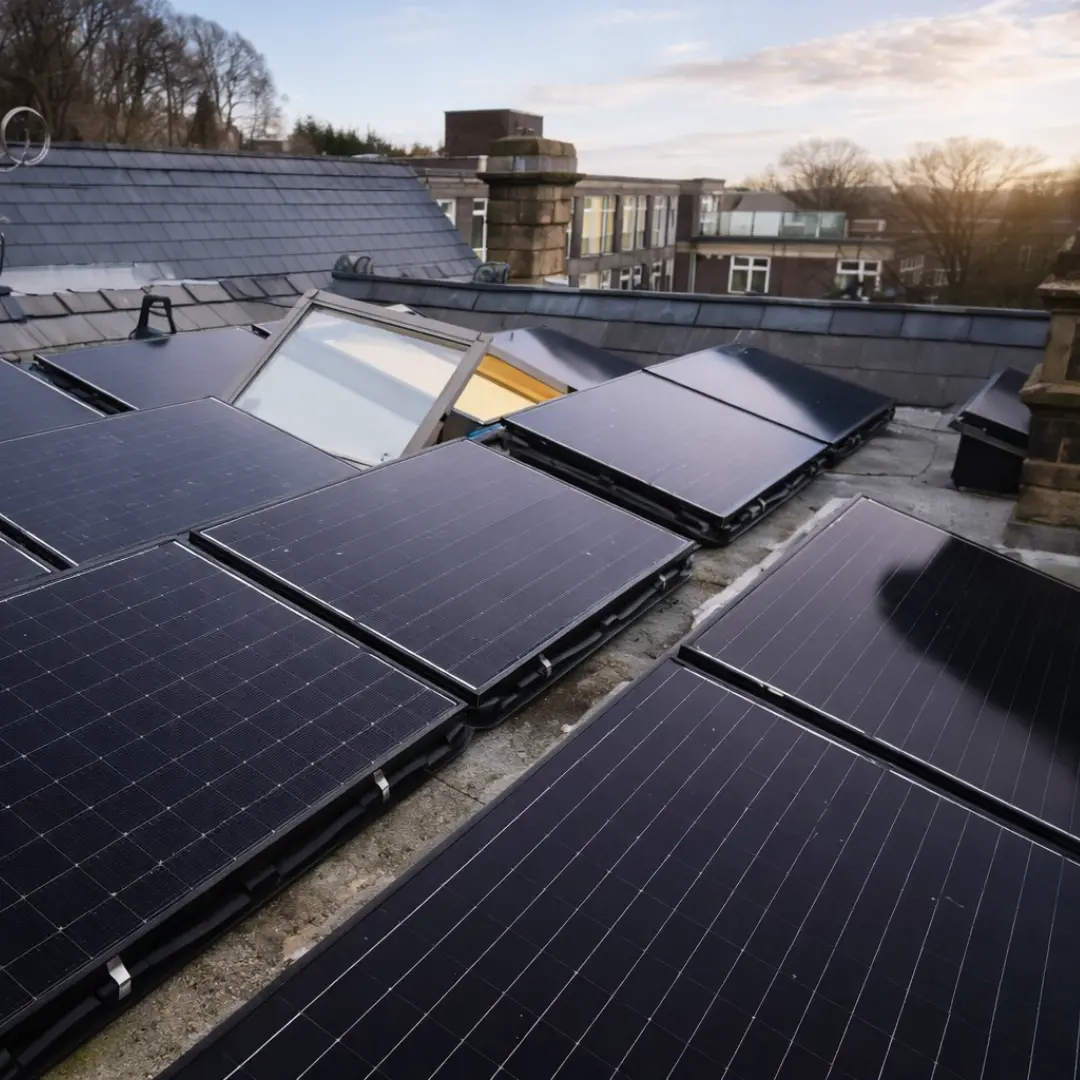
Yes. EV charging can work very well with solar PV and battery storage when the system is designed correctly.
A solar-compatible EV charger may allow your home to prioritise surplus solar electricity for charging, depending on your generation, usage and charger settings. A battery can also help store solar electricity for later use, although the best setup depends on how often the car is at home during the day and how much energy the household uses.
Benefits can include:
- Less reliance on grid electricity.
- Better use of surplus solar generation.
- More control over charging times.
- Potentially lower long-term running costs.
- A more joined-up home energy system.
For London homes with limited roof space, shading, dormers or flat roofs, solar and EV charging should ideally be designed together. Simple Green Energy Ltd can advise on EV chargers, solar PV and battery storage as part of a wider renewable energy setup.
13. How to Choose an EV Charger Installer in London
Choosing the right EV charger installer matters as much as choosing the charger itself. London properties can be complex, so look beyond the lowest headline price.
Installer checklist:
- Qualified electrician.
- OZEV-authorised where grant work is involved.
- Experience with London property types.
- Clear survey process.
- Transparent written quotation.
- Public liability insurance.
- Electrical testing and certification.
- DNO notification handling.
- Smart charger setup support.
- Knowledge of load management.
- Clear warranty information.
- Manufacturer warranty and workmanship warranty.
- Good reviews and local installation experience.
- Ability to explain grant eligibility before installation.
For OZEV grant work, GOV.UK says authorised installers must help customers understand whether they meet grant criteria, install approved chargepoint models, test installations and provide required documentation.
14. Why Consider Simple Green Energy Ltd?
Simple Green Energy Ltd can support London customers who want practical, survey-led advice before installing an EV charger. The team can help homeowners, EV owners, tenants, landlords, property managers and small businesses understand what type of charger may suit the property, what electrical checks are needed and whether grant support may apply.
Simple Green Energy Ltd can support with:
- Home EV charger installation.
- Smart EV chargers.
- Landlord and rental property EV charging.
- Flats and allocated parking bays.
- Solar PV and battery integration.
- Load management advice.
- Site surveys.
- Grant guidance where eligible.
- Domestic and commercial renewable energy solutions.
The approach is designed to be clear and practical: assess the property, explain the options, confirm the likely installation route and provide a quotation based on the actual setup rather than a generic price.
A proper installation assessment is the safest way to avoid surprises and get the right charger for your home.
Frequently asked questions (FAQs)
Simple answers to common questions about EV charger installation in London, including costs, grants, flats, rented homes, 7kW chargers, fuse boards and solar charging. Speak to Simple Green Energy.
Need an EV charger quote?
Speak with Simple Green Energy about EV charger installation in London, including charger choice, survey checks, grants, DNO notification, solar PV and battery storage.
Get EV charger advice15. Final Summary
EV Charger Installation in London can be straightforward for homes with a driveway, modern electrics and a short cable route, but costs vary when properties involve flats, terraces, older consumer units, shared parking, long cable runs or permissions.
Grants may help renters, flat owners, landlords, workplaces and eligible on-street parking households, but eligibility must be checked before installation. Smart chargers can help drivers control charging times, use off-peak tariffs and reduce reliance on public charging. Flats and terraced homes often need extra planning, especially where freeholder, council or management company permission is involved.
Simple Green Energy Ltd can help London customers assess EV charger, solar PV and battery options through a survey-led process and a clear quote.
CTA
Thinking about installing an EV charger in London? Simple Green Energy Ltd can assess your property, explain your options and provide a clear quote for a safe, smart home charging setup.