




Portable EV Chargers UK 2026: Usage & Benefits
If you have just bought an EV, you may be wondering whether a portable charger is enough or whether you need a proper home EV charger installed. It is a common question for UK drivers, especially if you are still waiting for a wallbox, travelling often, or want a backup option for emergencies. Portable EV chargers can be useful because many plug into a standard UK 3-pin socket, but they are usually much slower than dedicated home chargers and need to be used carefully.
In this guide, we will explain how portable EV chargers work, when they are worth using, their main benefits, safety checks to consider, rough costs in the UK, and how they compare with installed home EV chargers — so you can choose the right charging option for your home, travel needs and daily driving routine.
Get your free EV charger quote
Secure, GDPR-protected EV charger enquiry.
Find your property
No spam. No third-party sharing.
Choose your EV charger brand
Contact details
Your details stay private and protected.
Thank you
Your request has been received. Our team will contact you shortly.
Quick Answer: Are portable EV chargers worth it in the UK?
Yes, portable EV chargers are useful for travel, backup charging and temporary home charging, but they are slower than installed wallbox chargers and should only be used with safe, suitable sockets..
Table of Contents
ToggleWhat Is a Portable EV Charger?
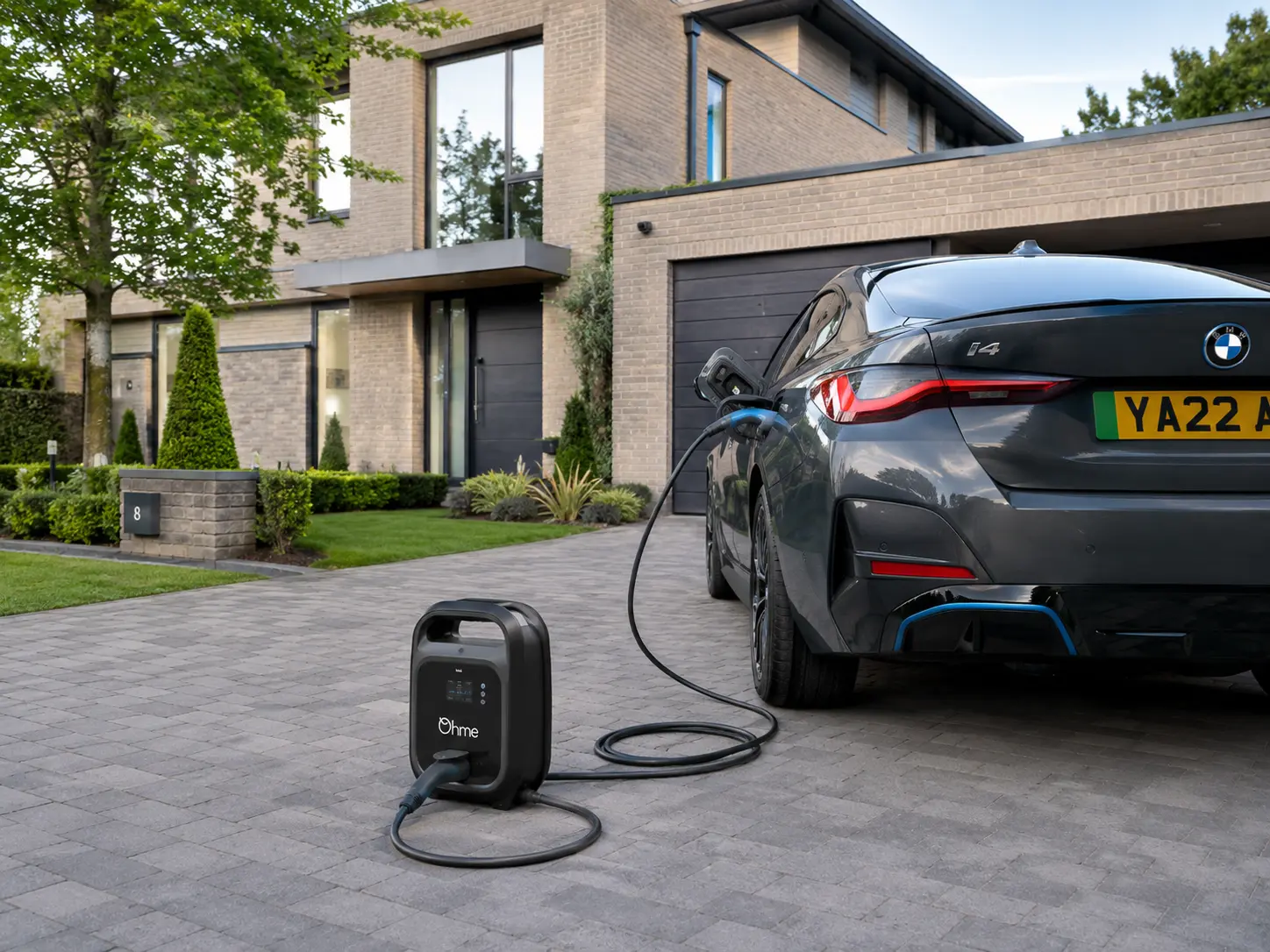
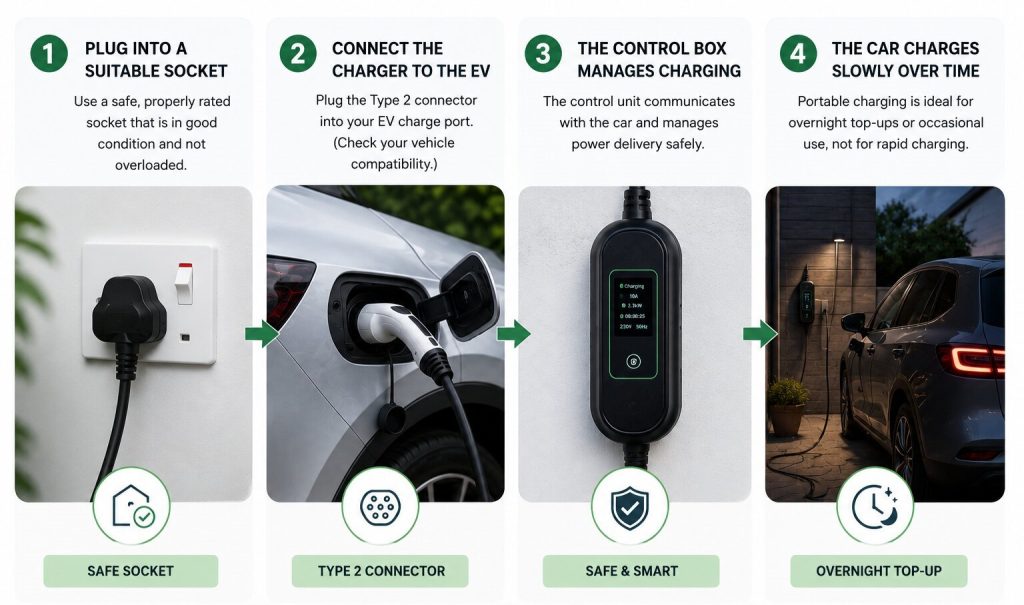
A portable EV charger is a compact charging cable and control unit that lets you charge an EV or plug-in hybrid from a suitable socket. In the UK, many are designed for a standard 3-pin socket, making them useful for travel, backup charging or temporary use.
Quick answer: A portable EV charger is a carryable EV charging unit used when a fixed wallbox is not available.
Is a Portable EV Charger the Same as a Normal EV Cable?
No. A portable charger includes the plug, control box and vehicle connector. A normal Type 2 cable is usually used with a charger that is already installed at home or in public.
What Does Mode 2 Charging Mean?
Mode 2 means the cable has built-in safety and control electronics. It helps the car charge safely from a suitable socket without needing a fixed wall charger.
How Do Portable EV Chargers Work?
Online solar prices are useful for a rough idea, but they cannot fully price your home without a proper survey. Your roof size, shading, scaffolding needs, inverter type, battery choice, electrical upgrades, installer quality, warranty and aftercare can all change the final figure. A realistic quote should be based on your actual roof, usage and installation requirements — not just a generic online average.
What Are the Main Benefits of Portable EV Chargers?
Portable EV chargers are useful because they give EV drivers a flexible backup option when a fixed charger or public charger is not available. They are not designed to replace a proper home chargepoint, but they can be helpful in everyday situations where slow, occasional charging is enough.
Useful as a Backup Charger
A portable EV charger can be a handy fallback if public chargers are busy, out of service, or not nearby. It can also help when visiting family, friends, holiday homes, or accommodation with safe and suitable socket access.
Helpful Before a Home Charger Is Installed
Some drivers use a portable charger temporarily while waiting for their home wallbox to be fitted. It allows them to keep the car topped up at a slower pace until a dedicated EV charger is installed.
Good for Travel, Rentals and Occasional Charging
Portable EV chargers are useful for travel, rental homes, second homes, and occasional top-ups. They are especially helpful for drivers who do not need fast charging every day but want a practical option when needed.
Easy to Store and Carry
The biggest advantage is portability. A portable EV charger can be kept in the boot, garage, or utility area, giving drivers extra peace of mind when they need a charging backup.
Is a Portable EV Charger Right for You?
A portable EV charger can be a practical option, but it depends on how you drive, where you park, and how often you need to charge. It works best as a backup or short-term solution, not as a full replacement for a dedicated home charger.
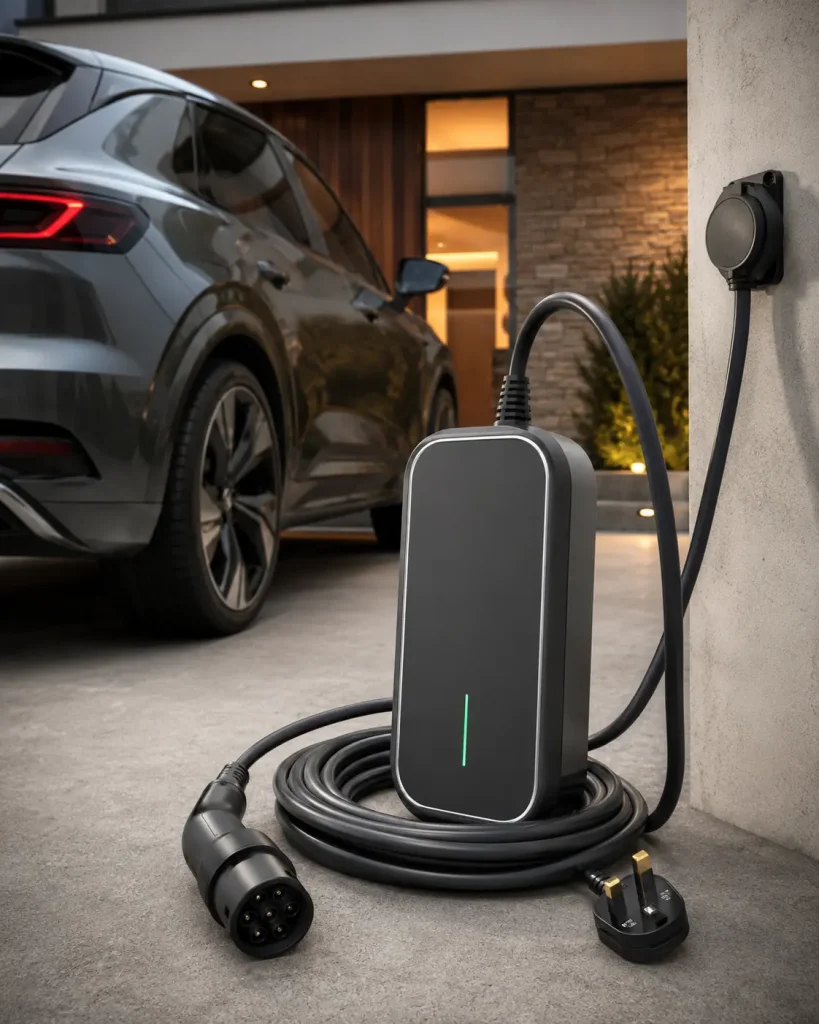
A Portable EV Charger May Suit You If…
✔ You drive low mileage and only need small top-ups.
✔ You want an emergency backup for unexpected situations.
✔ You have access to a safe, suitable private socket.
✔ You are waiting for a home wallbox to be installed.
✔ You travel often and want a charging fallback option.
A Portable EV Charger May Not Suit You If…
✗ You need fast charging every day.
✗ You park on the street without an approved cable solution.
✗ Your home socket or wiring is old or unsuitable.
✗ You regularly drive long distances.
✗ You want smart charging features or EV tariff integration.
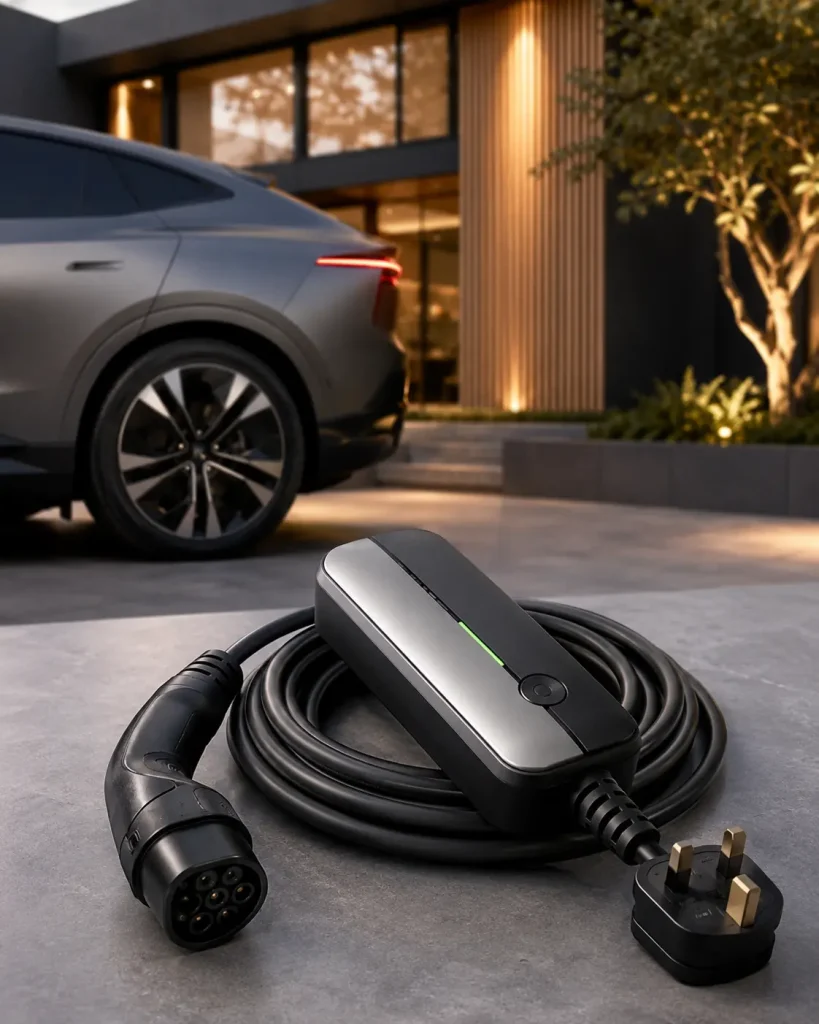
Portable EV charger checklist:
| What to Check | Why It Matters | What to Look For |
|---|---|---|
| Socket compatibility | Not every socket is suitable for regular EV charging. | A charger that matches your available UK socket and vehicle requirements. |
| Power rating | It affects charging speed and safety. | A suitable output for occasional or backup charging, usually slower than a wallbox. |
| Connector type | The charger must fit your EV. | Most UK EVs use Type 2, but always check your vehicle manual. |
| Cable length | A short cable can make charging awkward. | Enough length to reach your car without stretching or creating a trip hazard. |
| Safety features | Poor-quality chargers can overheat or trip electrics. | Built-in protection, temperature monitoring, overload protection and CE/UKCA marking. |
| Weather protection | Outdoor use needs extra care. | A durable charger with a suitable IP rating for outdoor conditions. |
| Build quality | Cheap units may not last or perform safely. | Strong casing, quality cables, clear display and reliable plug fittings. |
| Warranty and support | Good backup matters if anything goes wrong. | A clear warranty, UK-based support and trusted supplier reviews. |
| Installation setup | Your home electrics must be suitable. | A safe private socket checked by a qualified electrician where needed. |
| Daily charging needs | Portable chargers are not always ideal for frequent use. | Choose a wallbox if you need faster, regular or smart home charging. |
Frequently asked questions (FAQs)
Simple answers to common questions about portable EV chargers, 3-pin plug charging, charging times, safety, extension leads, waterproofing, renters, and street parking. Speak to Simple Green Energy.
Need safer home EV charging?
Speak with Simple Green Energy to compare portable EV charging with a dedicated home wallbox, including safety, speed, socket suitability, installation options, and daily charging convenience.
Check EV charger optionsFinal Thoughts: Portable EV Chargers Are Useful, But Not for Everyone
Portable EV chargers can be a smart backup for UK EV drivers, especially if you need occasional charging at home, while travelling, or while waiting for a wallbox installation. They are flexible, easy to store, and useful in the right situation.
But they are not the best choice for everyone. If you charge daily, drive long distances, or want faster, smarter charging, a dedicated EV home charger is usually the better long-term option.
Need help choosing the right EV charging setup? Speak to Simple Green Energy for practical advice and a solution that fits your home, car, and driving habits.