



Home EV Charging Station in the UK: 2026 Guide
Home EV Charging Station in the UK: 2026 Guide explains how home charging works, what smart chargers can do, and how they may help you charge more conveniently and cost-effectively.
This guide covers installation checks, costs, grants, off-peak charging, solar compatibility, and what to consider before choosing the right EV charger for your home.
Get your free EV charger quote
Secure, GDPR-protected EV charger enquiry.
Find your property
No spam. No third-party sharing.
Choose your EV charger brand
Contact details
Your details stay private and protected.
Thank you
Your request has been received. Our team will contact you shortly.
Quick answer: What is a home EV charging station and how can it help UK drivers in 2026?
A home EV charging station lets you charge your electric car safely and conveniently at home. In 2026, smart chargers can help UK drivers schedule charging, use cheaper electricity periods, reduce reliance on public chargers and manage daily EV charging more easily.
Table of Contents
ToggleWhat Is a Home EV Charging Station?
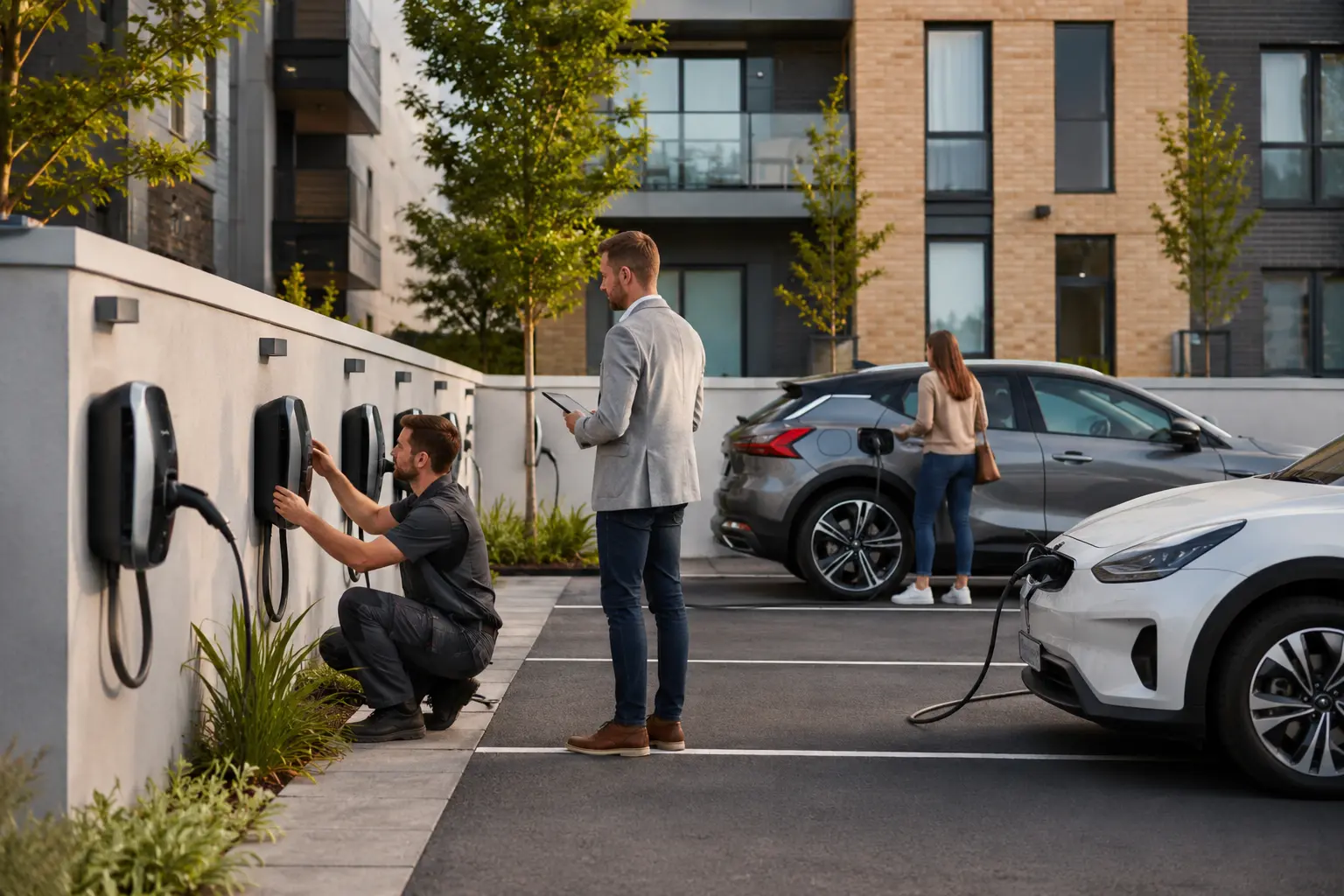
A home EV charging station is a dedicated charger installed at your property so you can charge your electric car from home instead of relying on public chargers. It is usually fitted near a driveway, garage, or private parking space.
Unlike a normal plug socket, a home charger is designed for regular EV charging. Many modern chargers are also smart, meaning you can schedule charging, track usage, and charge during cheaper electricity periods where your tariff allows.
How Does a Home EV Charging Station Work?
A home EV charging station connects to your property’s electrical supply and charges your electric car through a dedicated charging cable. Once installed, you simply plug in your vehicle, set your charging preferences, and let the charger do the work safely and efficiently.
What Is Smart EV Charging?
Smart EV charging lets you control when and how your car charges. Using an app or built-in settings, you can schedule charging times, monitor energy use, and avoid charging when electricity demand or prices may be higher.
Can a Smart Charger Save You Money?
Yes, it can help reduce charging costs if you use it with a suitable off-peak electricity tariff. Smarter home EV charging that saves you money works by charging your car at cheaper times instead of whenever you plug it in.
Why Install a Home EV Charging Station in 2026?
Installing a home EV charging station gives you more control, convenience and confidence with everyday charging. Instead of planning around public chargers, you can plug in at home and have your car ready when you need it.
Convenience for Everyday Driving
Home charging fits around your routine. Plug in after work, overnight, or whenever your car is parked, without making extra trips just to charge.
Better Control Over Charging Costs
A smart charger lets you schedule charging for cheaper electricity periods where your tariff allows. This can help you manage running costs more easily.
More Practical Than Relying Only on Public Chargers
Public chargers are useful for long journeys, but daily charging is often easier at home. You avoid queues, availability issues and last-minute charging stress.
Home EV Charging Station Cost in the UK
The cost of a home EV charging station in the UK depends on the charger you choose and how simple the installation is. A straightforward driveway installation usually costs less than a setup needing extra cabling, electrical upgrades, or groundwork.
What Affects the Installation Cost?
The main cost factors are the charger model, cable length, consumer unit condition, distance from the parking space, and any extra electrical work needed. Smart features, solar compatibility, and load management can also affect the final price.
Are Home EV Charger Grants Available in 2026?
Yes, some EV charger grants may be available in 2026, but not for everyone. Eligibility often depends on whether you rent, own a flat, have off-street parking, or are a landlord. Always check the latest grant rules before booking installation.
Who Can Have a Home EV Charging Station Installed?
A home EV charging station can usually be installed if you have a suitable parking space, safe cable route and electrical supply that can support the charger. The final decision depends on your property type, permissions and installation checks.
Do You Need Off-Street Parking?
Off-street parking makes installation much easier because the charger can be fitted close to where your car is parked. If you only park on the street, you may need a different charging solution and extra checks.
Can Renters Install a Home EV Charger?
Yes, renters may be able to install a home EV charger, but they usually need landlord permission first. The property must also have suitable parking and a safe place for the charger.
Can Flat Owners Install a Home EV Charger?
Flat owners may be able to install one if they have a private parking bay and the correct permissions. Shared parking, building rules and cable routes can make the process more detailed.
What Should You Check Before Installing a Home EV Charger?
Before installing a home EV charger, it is worth checking more than just the charger model. Your parking space, electrics, cable route and smart connection all affect how simple, safe and practical the installation will be.
Electrical Supply and Consumer Unit
Your installer should check whether your home’s electrical supply and consumer unit can safely support an EV charger. Older electrics, limited capacity or missing protection may need extra work before installation.
Charger Location and Cable Route
The charger should be fitted where it is easy and safe to use. A shorter, cleaner cable route from the consumer unit to the parking space can make installation simpler and neater.
Wi-Fi Signal and Smart App Access
Many smart chargers need a stable Wi-Fi or mobile signal to schedule charging, track usage and connect with the app. Poor signal near the charger location may affect smart features.
Smart Home EV Charging That Saves You Money
Smart home EV charging helps you charge at the right time, not just the first time you plug in. With smart scheduling, tariff settings and app control, you can reduce wasted energy and make your charging routine more cost-effective.
How Off-Peak Charging Works
Off-peak charging means setting your EV charger to run during cheaper electricity periods, often overnight. Instead of charging straight away, your smart charger waits for the lower-rate window and charges automatically.
Can You Use Solar Panels With a Home EV Charger?
Yes, some home EV chargers can work with solar panels, depending on your system setup. This can help you use more of your own generated electricity, especially when your car is parked during daylight hours.
What Is Load Management?
Load management helps balance your EV charging with the rest of your home’s electricity use. If your home is using more power, the charger can reduce its output to help avoid overloading the supply.
Tethered vs Untethered Home EV Chargers
Choosing between a tethered and untethered charger mostly comes down to convenience, appearance and how you prefer to charge every day.
Which One Is Better for Most Homes?
For everyday home charging, a tethered charger is often more convenient because the cable is always ready to use. An untethered charger may suit you better if you want a tidier look or use different EV cables.
Home EV Charger Installation Process
A home EV charger installation usually starts with a few checks before any fitting begins. The installer will review your parking space, consumer unit, cable route and charger location, then provide a clear quote before arranging the installation.
Do You Need a Survey?
Yes, a survey or photo check is usually needed to confirm if your home is suitable. It helps the installer spot any electrical upgrades, cable route issues or access concerns before the job starts.
How Long Does Installation Take?
A simple installation can often be completed quickly, but more complex jobs may take longer. Extra cabling, consumer unit work, groundwork or poor access can all affect the installation time.
Common Mistakes to Avoid When Choosing a Home EV Charging Station
Choosing a home EV charging station is not just about picking the cheapest unit. The right charger should suit your car, home electrics, parking space and daily charging routine.
Is a Home EV Charging Station Right for You?
A home EV charging station is a good choice if you have regular access to private parking and want easier, more reliable charging at home. It suits drivers who prefer charging overnight, using smart schedules, and avoiding frequent public charger trips.
It may need extra checks if you rent, live in a flat, only have on-street parking, or have older electrics. A quick survey can confirm the best option for your home.
Home EV Charging Station and Solar Panels
A home EV charging station can work well with solar panels if the system is designed correctly. Instead of sending all unused solar energy back to the grid, some smart chargers can help direct available solar power into your EV.
This does not mean your car will always charge for free. Solar output depends on roof size, daylight, weather, time of day and how much energy your home is using. For the best result, the charger, inverter and solar system should be checked together before installation.
Final Thoughts: Make Home Charging Simple, Smart and Cost-Effective
A home EV charging station can make EV ownership much easier when it is chosen and installed properly. The right setup should suit your parking space, electrical supply, driving routine and energy tariff.
Smart charging gives you more control over when you charge, how much energy you use and how convenient daily charging feels. Before choosing a charger, get your home checked and make sure the installation is planned around your real needs.
FAQs
Frequently asked questions (FAQs)
Simple answers to common questions about air source heat pump cost in the UK, including installation prices, grant support, running costs, radiator upgrades, hot water cylinders, and whether the system is worth the investment. Speak to Simple Green Energy.
Want an accurate cost?
Speak with Simple Green Energy to check your property, heat pump size, grant eligibility, radiator setup, hot water needs, and expected installation cost.
Get heat pump quoteFinal Thoughts
Commercial EV charging is becoming an important consideration for many UK businesses. While installation costs vary depending on the site and charger type, the right solution can support employees, attract customers, and prepare your business for the growing shift towards electric vehicles. Careful planning today can deliver long-term value for years to come.