
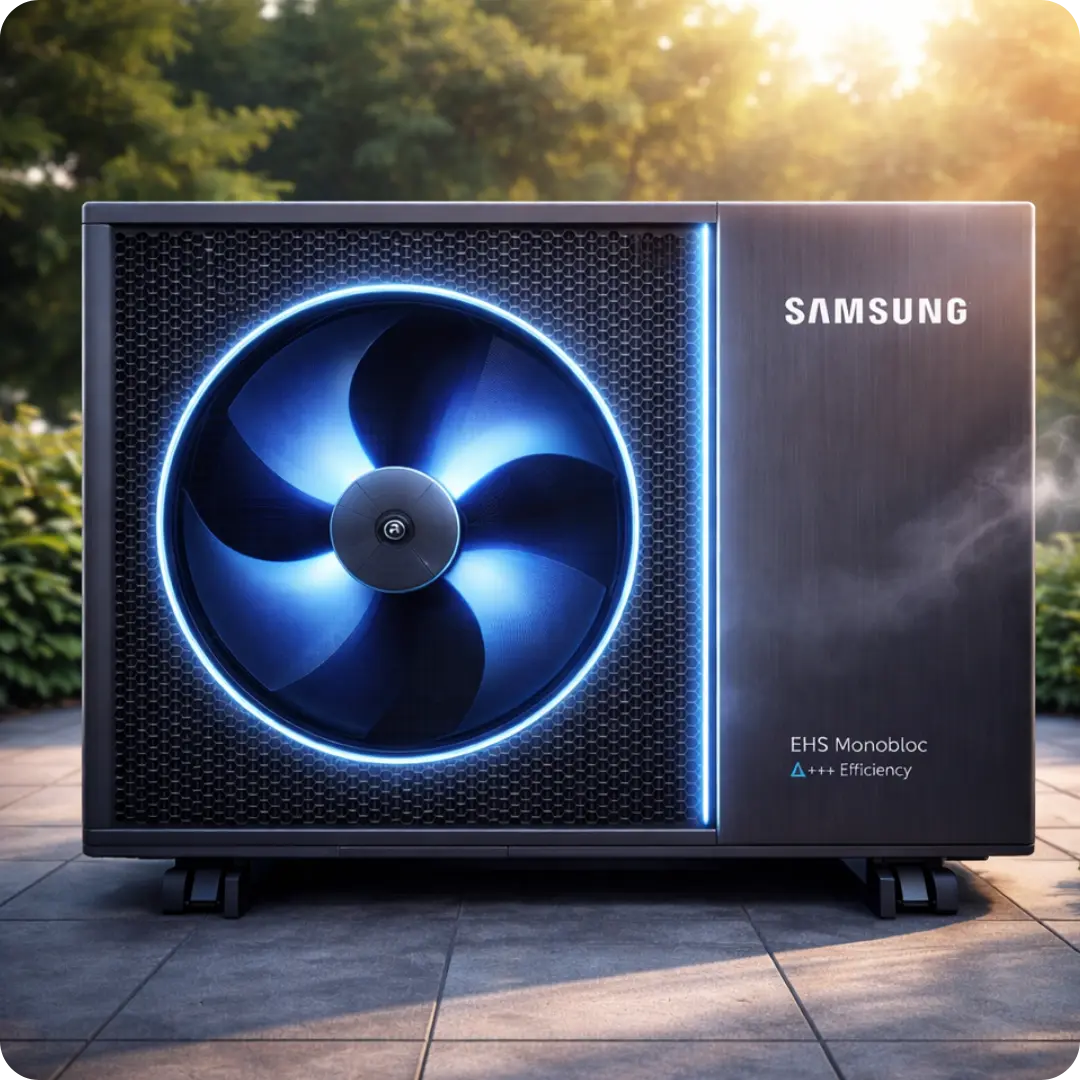




Air Source Heat Pump Efficiency in the UK (2026)
Air Source Heat Pump Efficiency in the UK is one of the most common questions homeowners ask when considering a switch from traditional heating systems.
In this blog, we’ll explain what heat pump efficiency actually means, how it is measured, what affects real-world performance, and whether modern heat pumps can provide efficient heating and hot water throughout the UK’s changing seasons.
Get your free heat pump quote
Secure, GDPR-protected enquiry.
Find your property
No spam. No third-party sharing.
Choose a brand
Contact details
Your details stay private and protected.
Thank you
Your request has been received. Our team will contact you shortly.
Quick Answer: How much is the Air source heat pumps efficiency in UK?
Air source heat pumps in the UK are typically 300%–500% efficient, producing 3–5 kWh of heat for every 1 kWh of electricity used. Most modern systems achieve a SCOP of 3.0–4.5 when properly designed and installed.
Table of Contents
ToggleWhat Is Air Source Heat Pump Efficiency?
Air source heat pump efficiency is a measure of how effectively a heat pump converts electricity into heating and hot water for your home. Rather than generating heat from fuel, it transfers heat from the outdoor air, allowing it to deliver a high level of comfort while using relatively little electricity. Understanding efficiency helps homeowners compare performance, running costs, and long-term value.
How Is Heat Pump Efficiency Measured?
Heat pump efficiency is usually measured using COP and SCOP ratings:
- COP (Coefficient of Performance) measures efficiency under specific test conditions.
- SCOP (Seasonal Coefficient of Performance) measures efficiency across an entire heating season and gives a more realistic indication of year-round performance.
Higher ratings generally indicate lower energy consumption and better overall efficiency.
Why SCOP Matters More Than COP
While COP measures efficiency under specific test conditions, SCOP reflects performance across an entire heating season. It takes changing weather and real-world usage into account, giving homeowners a more accurate picture of how efficiently a heat pump is likely to operate throughout the year.
How Efficient Are Air Source Heat Pumps in the UK?
Modern air source heat pumps are designed to perform efficiently in the UK’s climate, providing reliable heating and hot water throughout the year. While efficiency varies between properties, a well-designed system can deliver impressive performance, especially when paired with good insulation and appropriate heating controls.
Typical Efficiency Levels in UK Homes
Most modern heat pumps can produce several units of heat for every unit of electricity they use. Real-world efficiency depends on factors such as insulation, system design, and heating demand, but many UK homeowners achieve strong year-round performance when the system is correctly specified.
Do Heat Pumps Stay Efficient in Winter?
Yes. Although efficiency naturally reduces as outdoor temperatures fall, modern heat pumps are built to operate effectively in cold weather. Many systems continue providing comfortable indoor temperatures even during frosty winter conditions.
How UK Weather Affects Performance
The UK’s relatively mild climate is well suited to heat pump technology. Cooler temperatures can slightly reduce efficiency, but modern systems automatically adjust to changing conditions. Proper sizing, insulation, and controls often have a greater impact on performance than the weather itself.
How Do Air Source Heat Pumps Work So Efficiently?
Heat pumps are highly efficient because they transfer existing heat rather than generate it through combustion.
Heat Transfer vs Heat Generation
A gas boiler creates heat by burning fuel. An air source heat pump extracts heat from outdoor air and transfers it indoors.This process requires far less energy, allowing heat pumps to deliver more usable heat from the electricity they consume.
Why Heat Pumps Use Less Energy Than Traditional Heating System
Heat pumps work smarter rather than harder. By capturing renewable heat from the air and moving it indoors, they require less energy input than systems that rely on burning fuel, helping many households improve efficiency and reduce energy waste.
What Factors Affect Air Source Heat Pump Efficiency?
Air source heat pump efficiency depends on more than the unit itself. Factors such as insulation, system design, heating controls, radiator sizing, and installation quality all play a role in overall performance. A well-designed system matched to the property’s needs will typically deliver better comfort, lower energy use, and more consistent efficiency throughout the year.
Property Insulation
Good insulation helps keep heat inside the home, allowing the heat pump to work more efficiently and maintain comfortable temperatures with less energy.
Radiator and Underfloor Heating Design
Heating systems that operate effectively at lower temperatures, such as underfloor heating and appropriately sized radiators, can help maximise heat pump performance.
Flow Temperature Settings
Lower flow temperatures generally improve efficiency. A well-optimised system delivers steady warmth without needing excessively high water temperatures.
Heat Pump Sizing
A correctly sized heat pump is essential. Systems that are too large or too small may struggle to achieve optimal efficiency and comfort.
Installation Quality
Even the best heat pump can underperform if poorly installed. Proper design, commissioning, and setup play a major role in long-term efficiency.
Homeowner Usage Habits
Consistent thermostat settings and sensible heating schedules often help heat pumps perform more efficiently than frequent temperature adjustments.
Heat Pump Efficiency vs Gas Boiler Efficiency
Both heat pumps and gas boilers can effectively heat a home, but they work in very different ways. Boilers generate heat by burning fuel, while heat pumps transfer heat from the outside air. This difference means a heat pump can often deliver more usable heat energy for the energy it consumes, making it a highly efficient heating option for many UK households.
Why the Comparison Can Be Misleading
Comparing efficiency figures alone does not tell the whole story. Running costs, energy prices, property insulation, and heating habits all influence real-world performance, so the most efficient system on paper may not always deliver the lowest bills.
Which System Uses Energy More Effectively?
Heat pumps are generally more effective at making use of their energy input because they move heat rather than create it. However, achieving the best results depends on proper system design, installation quality, and the suitability of the property.
Does Higher Efficiency Mean Lower Heating Bills?
Higher efficiency can often help reduce energy consumption, but lower heating bills are not guaranteed. Factors such as electricity and gas prices, insulation levels, heating demand, and system design all influence the final cost of keeping a home warm.
Real-Life Example of Heating Cost Differences
A well-insulated home with a properly designed heat pump may use less energy to achieve the same level of comfort as a traditional heating system. However, the actual savings will depend on how much energy the property needs and the cost of that energy.
When Savings May Be Higher or Lower
Savings are often greater in well-insulated homes with efficient heating controls and lower flow temperatures. Conversely, poor insulation, incorrect system sizing, or higher energy usage can reduce potential savings, regardless of the heat pump’s efficiency rating.
Most Efficient Air Source Heat Pump Brands in 2026
Air Source Heat Pump Efficiency Pros and Cons
Like any heating system, air source heat pumps have both advantages and considerations. Understanding the pros and cons can help homeowners decide whether a heat pump is the right fit for their property, heating needs, and long-term energy goals.
Final Thoughts: Understanding Air Source Heat Pump Efficiency
Air source heat pump efficiency is about more than impressive performance figures—it’s about how effectively the system works in your home, day after day. When properly sized, installed, and matched to the property’s needs, a heat pump can deliver efficient heating and hot water throughout the year.
The key is focusing on the whole system rather than the unit alone. A well-designed heat pump setup often provides the best balance of comfort, efficiency, and long-term value for UK homeowners.
Frequently asked questions (FAQs)
Simple answers to common questions about air source heat pumps, winter performance, running costs, older homes, radiators, solar panels, noise levels, and long-term efficiency. Speak to Simple Green Energy.
Want to check suitability?
Speak with Simple Green Energy to check your property, heat pump suitability, system design, insulation needs, and expected installation options.
Check suitability