
Solar Panels for High Electricity Usage Homes: A Complete UK Guide
If your home uses significantly more electricity than average, solar panels can be particularly valuable. The reason is simple: the more electricity your household consumes, the more opportunity there is for solar generation to replace electricity you would otherwise have to buy from the grid.
High electricity usage can come from electric vehicle charging, heat pumps, electric heating, hot tubs, swimming pools, home offices, large families, multiple appliances or simply spending a lot of time at home. In these situations, a correctly sized solar PV system can reduce reliance on grid electricity and, when combined with a battery, allow more of your solar generation to be used later in the day.
However, installing the biggest possible solar system is not automatically the best solution. Roof space, orientation, shading, inverter capacity, DNO requirements, battery storage and your electricity consumption profile all need to be considered.
This guide explains how solar panels work for high-usage homes, how many panels you may need, whether a battery is worthwhile, what you could save and how to choose the right system.
Quick Answer: Are Solar Panels Worth It for High Electricity Usage Homes?
Yes. Solar panels can be especially worthwhile for homes with high electricity consumption because more of the electricity generated can potentially be used within the property rather than exported. This can increase the value of each unit of solar electricity produced.
The ideal system depends on your annual electricity consumption, available roof space, roof orientation, shading and when you use electricity. High-demand homes may benefit from a larger solar PV system and battery storage, particularly where electricity is used in the morning, evening or overnight.
Energy Saving Trust specifically notes that homes with high-demand appliances such as EV chargers, electric heating, hot tubs and home workshop equipment can achieve higher savings because solar can replace more grid electricity.
Table of Contents
ToggleSolar Panels for High-Usage Homes at a Glance
| Home electricity usage | Typical solar approach | Battery potential | Best suited to |
|---|---|---|---|
| 4,000–6,000 kWh/year | Medium-sized PV system | Useful | Larger households |
| 6,000–10,000 kWh/year | Larger PV system | Highly beneficial | EVs, heat pumps and large families |
| 10,000+ kWh/year | Bespoke high-capacity design | Often highly beneficial | Electrically intensive homes |
These are indicative categories rather than fixed system recommendations. Your roof and electricity consumption profile ultimately determine the appropriate design.
What Counts as a High Electricity Usage Home?
There is no single official threshold defining a “high electricity usage home”.
Instead, it is better to consider your annual consumption and what is driving it.
A household may use substantially more electricity because it has:
- One or more electric vehicles
- An air source heat pump
- Electric underfloor heating
- A swimming pool
- A hot tub or sauna
- Several freezers or refrigerators
- A large family
- Multiple people working from home
- High-power cooking appliances
- A home workshop
- Electric water heating
- Battery charging
- Large entertainment or computer equipment
Energy Saving Trust highlights EV chargers, saunas, hot tubs and commercial or workshop equipment as examples of high-demand electrical loads. It also explains that higher electricity usage can increase potential solar savings because more generated electricity can replace electricity purchased from the grid.
Why High Electricity Users Can Benefit More From Solar
Solar panels generate electricity during daylight hours. If you can use that electricity directly, you avoid buying the equivalent electricity from your supplier.
For example, imagine a home with a high daytime electricity demand from an EV charger, heat pump and appliances.
Solar generation could help power those loads directly.
This is important because electricity exported to the grid normally receives a different payment from the value of electricity avoided from the grid. The Smart Export Guarantee allows eligible generators to receive payments for electricity exported to the grid, but suppliers set their own tariffs.
Therefore, high electricity consumption is not necessarily a disadvantage. In the right circumstances, it can actually make solar more financially attractive.
How Many Solar Panels Does a High-Usage Home Need?
The correct number depends on your electricity consumption and available roof area.
A modern solar panel might have a power rating of around 400–500W, although panels vary considerably. A 10-panel system could therefore have a nominal capacity of roughly 4–5kWp.
For comparison, Energy Saving Trust describes the average domestic solar installation as around 4.5kWp, occupying approximately 20–30m² and typically using around 12 panels.
A high-usage home may therefore need considerably more than an average installation.
However, consumption alone should never be used to determine system size.
Your installer should consider:
- Annual electricity consumption.
- Monthly and seasonal usage.
- Daytime electricity demand.
- Roof size.
- Roof orientation.
- Roof pitch.
- Shading.
- Local solar resource.
- DNO requirements.
- Battery capacity.
- Inverter specification.
A larger system can produce more electricity, but only if the property has sufficient suitable roof space and the electrical design permits it.
Solar Panels and Battery Storage
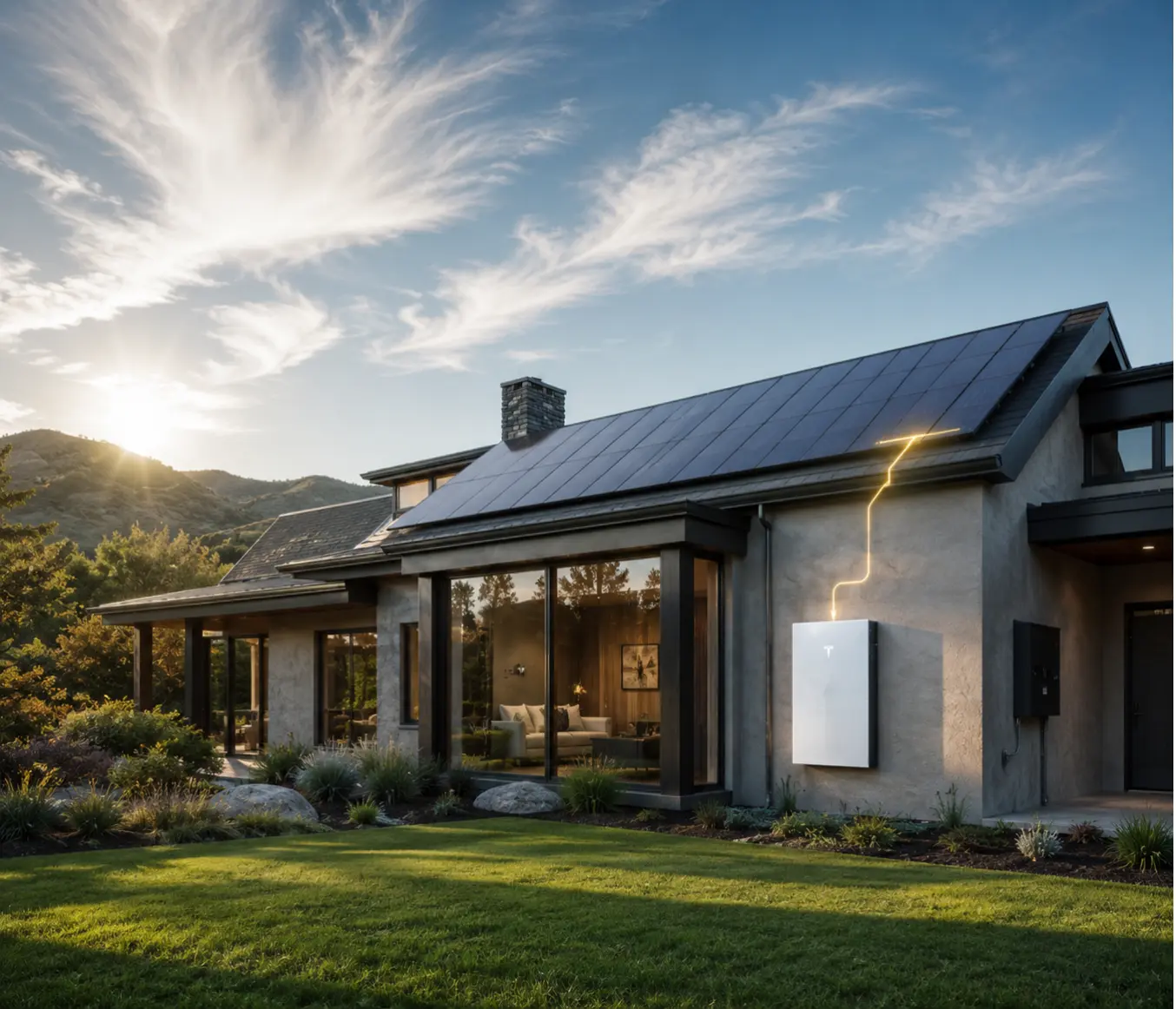
For many high-electricity-use homes, solar panels and battery storage make a strong combination.
Without a battery, solar generation that you do not immediately use may be exported to the grid.
With a battery, surplus electricity can instead be stored and used later.
This can be particularly useful if your household uses a lot of electricity in the evening.
For example:
Daytime: Solar generates electricity → home uses what it needs → surplus charges the battery.
Evening: Solar generation falls → battery supplies stored electricity.
Night: Battery may continue supplying the home before grid electricity is required.
A battery can therefore increase the proportion of your solar generation that is consumed within the property.
However, battery size should be based on your consumption pattern rather than simply buying the largest battery available.
A household with an EV, heat pump and high evening demand may have a very different storage requirement from a household with high daytime consumption.
How to Compare Solar Systems
When comparing quotations, don’t focus exclusively on the number of panels or headline system price.
Consider:
- Total system capacity in kWp
- Expected annual generation
- Panel efficiency
- Inverter specification
- Battery capacity
- Usable battery capacity
- Product warranties
- Installation warranty
- Monitoring system
- Expected degradation
- Shading
- Roof layout
- DNO requirements
- Installer credentials
- After-sales support
A cheaper system is not necessarily better value if it generates less electricity or uses lower-quality components.
Cost of Solar Panels for High-Usage Homes
High-usage homes often require larger installations than the average property, meaning installation costs can increase.
Energy Saving Trust currently gives an average domestic solar installation cost of around £6,100, although actual prices vary significantly according to system size, property characteristics and specification.
A high-usage home may cost more because it could require:
- More panels
- Additional roof mounting equipment
- A larger inverter
- Battery storage
- Additional electrical work
- Scaffolding
- Complex roof access
- Multiple roof orientations
- Export-limiting equipment
- DNO-related requirements
A quotation should therefore be based on the property rather than a standard package price.
Solar Savings and Payback
Your savings depend heavily on how much solar electricity you use yourself.
For a high-consumption property, this can be advantageous because there may be greater demand for solar electricity during generation hours.
Energy Saving Trust’s current guidance shows that solar payback varies according to location and household occupancy, with illustrative payback periods ranging from around nine to 15 years depending on circumstances.
These figures should not be treated as a guarantee for an individual property.
Your actual payback depends on:
- Installation price
- Annual solar generation
- Electricity tariff
- Self-consumption
- Export tariff
- Battery performance
- Energy consumption
- Future electricity prices
- Maintenance or component replacement
DNO Export Limits and Larger Solar Systems
One important consideration for high-usage homes is the electricity network connection.
A larger solar system can potentially export more electricity to the grid. In some locations, the Distribution Network Operator may impose an export limitation because of local network capacity.
Energy Saving Trust explains that a DNO may require a smaller inverter or export limiter where restrictions apply. This can affect the amount of electricity exported and therefore potential export income.
Your installer should investigate this as part of the design process.
How to Choose Solar Panels for a High-Usage Home
1. Start With Your Electricity Bills
Look at at least 12 months of electricity consumption.
Don’t rely solely on your monthly direct debit.
Your actual annual kWh consumption is far more useful when designing a solar system.
2. Identify Your Biggest Loads
Work out what is responsible for your high consumption.
For example:
- EV charging
- Heating
- Hot water
- Cooking
- Swimming pool
- Hot tub
- Home office
This helps determine when electricity is being consumed.
3. Assess the Roof
A south-facing, unshaded roof is generally ideal, although east- and west-facing roofs can also work effectively. Energy Saving Trust notes that east- or west-facing systems can produce around 15–20% less energy than a directly south-facing system.
4. Consider Battery Storage
If substantial electricity is consumed after sunset, investigate battery storage.
If most electricity is consumed during the day, a battery may be less important.
5. Compare Annual Generation
Ask installers for estimated annual generation in kWh.
This is often more useful than simply comparing panel numbers.
6. Check Warranties
Review:
- Panel product warranty
- Panel performance warranty
- Inverter warranty
- Battery warranty
- Installation warranty
7. Use a Professional Survey
A desktop estimate cannot identify every issue.
A survey can assess the roof, electrical system, shading, consumer unit, cable routes and installation requirements.
Why the Installer Matters
The quality of installation can affect how well your system performs for decades.
Solar PV involves electrical equipment, roof penetrations, mounting systems, cables, inverters and potentially batteries.
A competent installer should correctly design and install the system rather than simply maximise the number of panels.
For homeowners seeking SEG payments, GOV.UK guidance states that the installation and installer need to meet the relevant certification requirements, including MCS or an equivalent scheme.
The installer should also explain:
- Expected generation
- System limitations
- Export arrangements
- Battery operation
- Monitoring
- Maintenance
- Warranties
- DNO requirements
Frequently asked questions (FAQs)
Clear answers about solar panels for homes with high electricity usage, including system sizing, batteries, electricity bills and charging an electric vehicle. Speak to Simple Green Energy .
Could solar panels work for your home?
Speak with Simple Green Energy about your electricity usage, roof space, expected solar generation and whether a battery could improve your energy savings.
Get a solar quoteConclusion:
Solar panels do lose some efficiency in hot weather—but this is not a major concern in the UK. In fact, the combination of moderate temperatures and long summer days makes the UK a strong environment for solar energy generation.
The key takeaway:
- Heat slightly reduces efficiency
- Sunlight increases total output
- Proper installation maximises performance
If you’re considering solar, the best next step is to get a professional assessment of your property.
👉 Speak with Simple Green Energy today and discover how much you could save.