Combi vs Conventional Boiler: Which Is Best for Your Home?
Choosing between a combi and conventional boiler affects far more than the space in your airing cupboard. The right system determines how reliably your home can supply showers, baths and taps, how much disruption installation creates, and whether your heating system suits your household over the next decade.
For many smaller UK homes, a combi boiler is the simplest and most economical choice because it provides heating and hot water from one compact appliance. A conventional boiler can be better for a larger property with several bathrooms, particularly when multiple people regularly need hot water at the same time.
This guide explains how both systems work, their advantages and limitations, typical UK installation costs, and the questions an engineer should answer before recommending either option.
Check your ECO4 eligibility
Answer a few quick questions to see whether your household may qualify for ECO4 support.
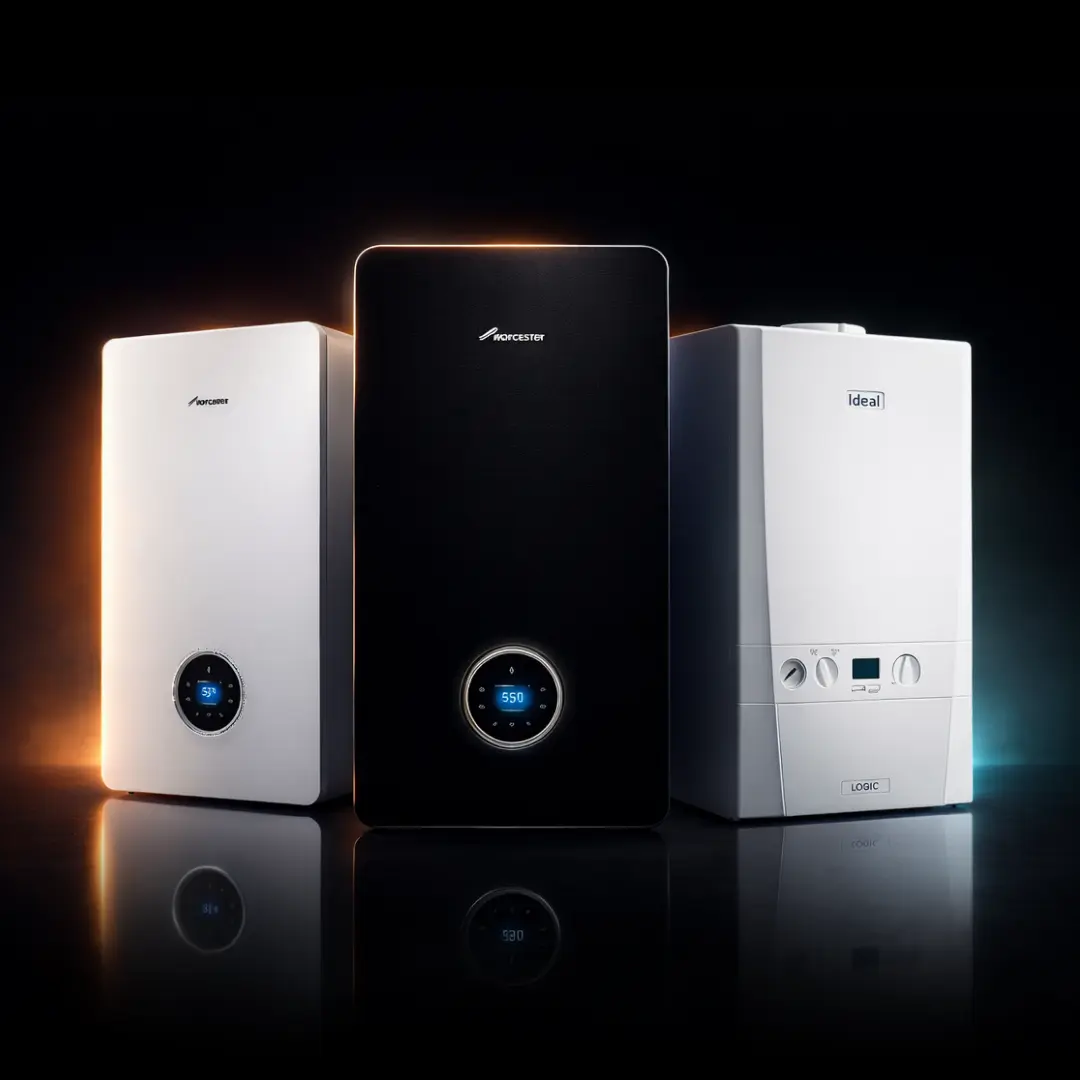
A combi boiler is generally best for a flat or smaller house with one bathroom, limited storage space and reliable mains water pressure. It heats hot water as you use it, so there is no cylinder or loft tank.
A conventional boiler, also called a regular, heat-only or open-vent boiler, works with a hot-water cylinder and usually a cold-water tank in the loft. It is often more suitable for larger or older properties where several showers and taps may be used simultaneously.
Neither option is universally better. The decision should be based on your peak hot-water demand, incoming mains flow rate, existing pipework, available space and future plans—not simply the number of bedrooms.
Quick answer: combi or conventional boiler?
Table of Contents
ToggleCombi vs conventional boiler at a glance
| Comparison point | Combi boiler | Conventional boiler |
|---|---|---|
| Hot-water delivery | Heated directly from the mains on demand | Heated and stored in a cylinder |
| Additional equipment | No cylinder or loft tank | Cylinder and usually a loft tank |
| Space required | Low | High |
| Multiple showers and taps | Can struggle when demand is high | Better suited to simultaneous use |
| Water pressure | Depends on incoming mains supply | Depends on system design; stored-water arrangements may be pump-compatible |
| Hot-water availability | Continuous while the boiler and mains supply can meet demand | Limited by cylinder capacity, then requires reheating |
| Installation | Usually simpler for a like-for-like replacement | More components and pipework |
| Best suited to | Flats and smaller homes with one bathroom | Larger or traditional properties with higher hot-water demand |
| Main drawback | Limited peak hot-water flow | Requires storage space and may have cylinder heat losses |
Combi boilers heat water directly from the mains and do not require a storage cylinder or cold-water tank. Conventional systems use a boiler, hot-water cylinder and cold-water storage arrangement, allowing stored hot water to serve several outlets.
How does a combi boiler work?
A combination boiler provides central heating and domestic hot water from one appliance. When a hot tap or shower is opened, the boiler heats incoming mains water as it passes through the unit.
Best for
Combi boilers usually work best in:
- Flats, terraces and smaller detached or semi-detached homes
- Properties with one main bathroom
- Homes without an airing cupboard or usable loft
- Households that do not frequently use several hot-water outlets together
- Renovations where freeing storage space is important
Manufacturer guidance commonly positions combis as suitable for one-bathroom homes with lower hot-water demand, although the incoming mains flow rate must always be measured before specifying a model.
Key advantages
Compact installation: Removing the need for a hot-water cylinder can release an airing cupboard, while eliminating a loft tank may help with a loft conversion.
Hot water on demand: You do not need to schedule a cylinder to heat before taking a shower or running a bath.
No stored-water limit: A combi can continue producing hot water as long as the boiler, gas supply and incoming mains flow can support it.
Fewer components: A straightforward combi system has less external equipment and pipework than a traditional open-vent arrangement.
Things to consider
A combi cannot create more water flow than the mains supply provides. A powerful boiler will not solve weak incoming pressure, an undersized service pipe or poor flow at peak times.
Performance can also fall when two showers or several taps are used together. The available flow is divided between outlets, which may reduce pressure or water temperature. Unlike some stored-water systems, a pump cannot simply be added to the mains feed serving a combi.
Example UK use case
A couple living in a two-bedroom terrace with one bathroom wants to convert the airing cupboard into storage. Their mains supply delivers a strong, stable flow and they rarely use the shower and kitchen tap simultaneously.
A correctly sized combi would normally be the practical recommendation: compact, straightforward and appropriate for their usage.
How does a conventional boiler work?
A conventional boiler heats water that is stored in a separate cylinder. Traditional open-vent systems also use a cold-water feed-and-expansion tank, usually located in the loft.
A conventional boiler is not identical to a system boiler. Both use a hot-water cylinder, but a system boiler normally contains components such as the pump and expansion vessel within the appliance and does not require the same loft-tank arrangement.
Best for
A conventional boiler may be appropriate for:
- Larger homes with two or more bathrooms
- Families with overlapping shower and bath routines
- Older properties already designed around an open-vent system
- Homes with pipework that may not suit immediate pressurisation
- Properties where retaining an existing cylinder minimises disruption
- Households that value stored hot water or an immersion-heater backup
Key advantages
High peak demand: A suitably sized cylinder can supply several showers, taps or baths within a short period.
Compatibility with traditional systems: Replacing an existing heat-only boiler like for like can be less disruptive than converting old pipework to a pressurised combi system.
Stored hot water: A cylinder provides a reserve that can be useful during periods of heavy demand. Many cylinders can also include an immersion heater, although this should be confirmed during the survey.
Things to consider
The cylinder and loft tank occupy valuable space. Once the stored hot water has been used, the household must wait for the boiler to reheat it.
Cylinders also lose some heat while storing water, although modern insulation reduces this. Controls should be programmed around the household’s routine rather than heating water continuously.
Example UK use case
A family of five lives in a four-bedroom home with two bathrooms. Two showers are regularly used during the morning while someone runs a kitchen tap.
Replacing the existing conventional boiler while retaining or upgrading the cylinder may deliver more dependable peak performance than fitting a standard combi.
Which boiler is best for your household?
Choose a combi when space is limited, demand is moderate and the measured mains flow is strong enough. Choose a conventional boiler when stored hot water and simultaneous outlet performance matter more than freeing cupboard or loft space.
A combi is not automatically unsuitable for every larger house. High-output models and storage combis can serve greater demand, but their performance still depends on the incoming water supply. Equally, retaining a conventional system is not wasteful simply because it uses a cylinder. A well-controlled modern boiler and insulated cylinder can remain an effective solution.
Landlords should prioritise reliability, accessible servicing and straightforward controls. Families should focus on peak morning and evening demand. Renovators should consider whether a future loft conversion makes the cold-water tank impractical. Homeowners considering a later heat-pump installation may benefit from retaining suitable cylinder space, as most air-to-water heat-pump systems require stored hot water.
Are combi boilers cheaper to run?
Both new combi and conventional gas boilers use condensing technology, so boiler type alone does not determine efficiency. Performance also depends on correct sizing, heating controls, flow temperatures, insulation and installation quality.
A combi avoids routine cylinder storage losses because it heats domestic hot water on demand. However, it may use a relatively high output when producing hot water. A conventional system can operate efficiently when its cylinder is well insulated and heated only when required.
Replacing an old, inefficient boiler may reduce gas consumption, but changing from conventional to combi does not guarantee a dramatic bill reduction. Savings depend on the condition and controls of the original system, household behaviour and the new installation.
Modern boilers work more efficiently when return-water temperatures are low enough for condensing operation. Weather compensation, load compensation, sensible heating schedules and balanced radiators may therefore matter more than the label “combi” or “conventional”.
Do both systems work in winter?
Yes. A properly designed combi or conventional boiler should heat a suitable UK home throughout winter.
With a combi, incoming mains water is colder during winter, so the boiler must add more heat to reach the required tap temperature. The achievable hot-water flow may therefore be lower than in summer.
A conventional system reheats a fixed volume in its cylinder, so seasonal changes are less noticeable at the outlet. However, cylinder recovery can take longer if demand is high.
How to choose the right boiler
- Measure the mains flow and pressure. Test them at relevant times, not only during a quiet daytime survey.
- Calculate peak hot-water demand. Consider how many showers, baths and taps may run together.
- Inspect the existing system. Older radiators, narrow pipework and tanks may affect whether conversion is sensible.
- Assess available space. Decide whether keeping a cylinder or loft tank conflicts with renovation plans.
- Size the boiler correctly. More kilowatts do not automatically mean better heating. Combi sizing is often driven by hot-water demand, while heat-only boiler sizing should reflect the property’s heat loss.
- Compare controls and modulation. A boiler that can reduce its output during mild weather may cycle less and operate more efficiently.
- Check the complete warranty. Confirm the required controls, filters, flushing, commissioning and annual servicing conditions.
- Consider future heating plans. Insulation improvements, extensions, additional bathrooms, solar thermal or a heat pump may change the best long-term design.
Typical UK costs
| Installation scenario | Indicative installed cost | Main cost factors |
|---|---|---|
| Like-for-like combi replacement | £1,800–£3,500 | Boiler brand, output, flue, controls and system condition |
| Like-for-like conventional replacement | £1,800–£3,500 | Boiler specification, controls, access and retained components |
| Conventional-to-combi conversion | £2,500–£4,500+ | Tank and cylinder removal, new pipework, gas supply and boiler relocation |
| Major system alteration or premium installation | £4,000–£6,000+ | Cylinder work, extensive pipework, scaffolding, upgrades and remedial work |
These are broad 2026 market estimates rather than quotations. Published prices vary significantly, with straightforward replacements starting below £2,000 and complex conversions or premium installations costing considerably more. A site survey is essential because flue access, condensate drainage, gas-pipe sizing, controls and system cleaning can materially change the price.
Why the installer matters
An excellent boiler fitted badly can perform worse than a modest boiler installed correctly.
Your installer should assess heat loss, water flow, gas-pipe capacity, radiator output, controls, system cleanliness, flue positioning and condensate disposal. The system should then be flushed where necessary, balanced and commissioned according to the manufacturer’s instructions.
Gas boiler work must be completed by an appropriately qualified Gas Safe registered engineer. Following installation, the work should be notified under the applicable Building Regulations process; Gas Safe guidance states that new gas heat-producing appliances must generally be notified to the local authority within 30 calendar days.
Annual servicing is recommended for safety, reliability and warranty compliance. Landlords also have statutory gas-safety responsibilities for rented properties.
Frequently asked questions (FAQs)
Clear answers about combi and conventional boilers, simultaneous showers, cylinders and loft tanks, conversion times, energy use, hot-water recovery, two-bathroom homes and future heat-pump plans. Speak to Simple Green Energy .
Choosing between a combi and conventional boiler?
Speak with Simple Green Energy about mains water performance, hot-water demand, cylinders, pipework, conversion work, system suitability and the best boiler type for your property.
Compare my boiler optionsConclusion
For a smaller home with one bathroom, good mains pressure and limited storage, a combi boiler will usually be the strongest option.
For a larger property with several bathrooms or regular simultaneous hot-water use, a conventional boiler and correctly sized cylinder may provide better comfort and consistency. Retaining a traditional system can also reduce disruption where the existing pipework is working well.
The best decision cannot be made from bedroom count alone. It requires measurements, an inspection of the heating system and an honest discussion about how the household actually uses hot water.
Important links:
Solar panels: https://www.simplegreenenergy.org/solar-panels/
Air source heat pump: https://www.simplegreenenergy.org/air-source-heat-pump/
EV charger: https://www.simplegreenenergy.org/ev-charger/
Air conditioning: https://www.simplegreenenergy.org/air-conditioning/