Boiler Replacement Birmingham: Costs, Boiler Types and How to Choose
A boiler replacement in Birmingham typically costs around £1,800 to £3,500 for a straightforward domestic installation, although conversions and relocations cost more. The right choice depends on your property, hot-water demand and existing system—not simply the highest output or longest warranty.
This guide helps Birmingham homeowners, landlords and renovators decide whether to repair or replace an ageing boiler. It covers boiler types, realistic costs, installation times and installer checks. Modern condensing boilers recover heat that older appliances lose through the flue. Heating and hot water account for more than half of typical household energy spending, so correct specification matters.
Check your ECO4 eligibility
Answer a few quick questions to see whether your household may qualify for ECO4 support.
Quick answer
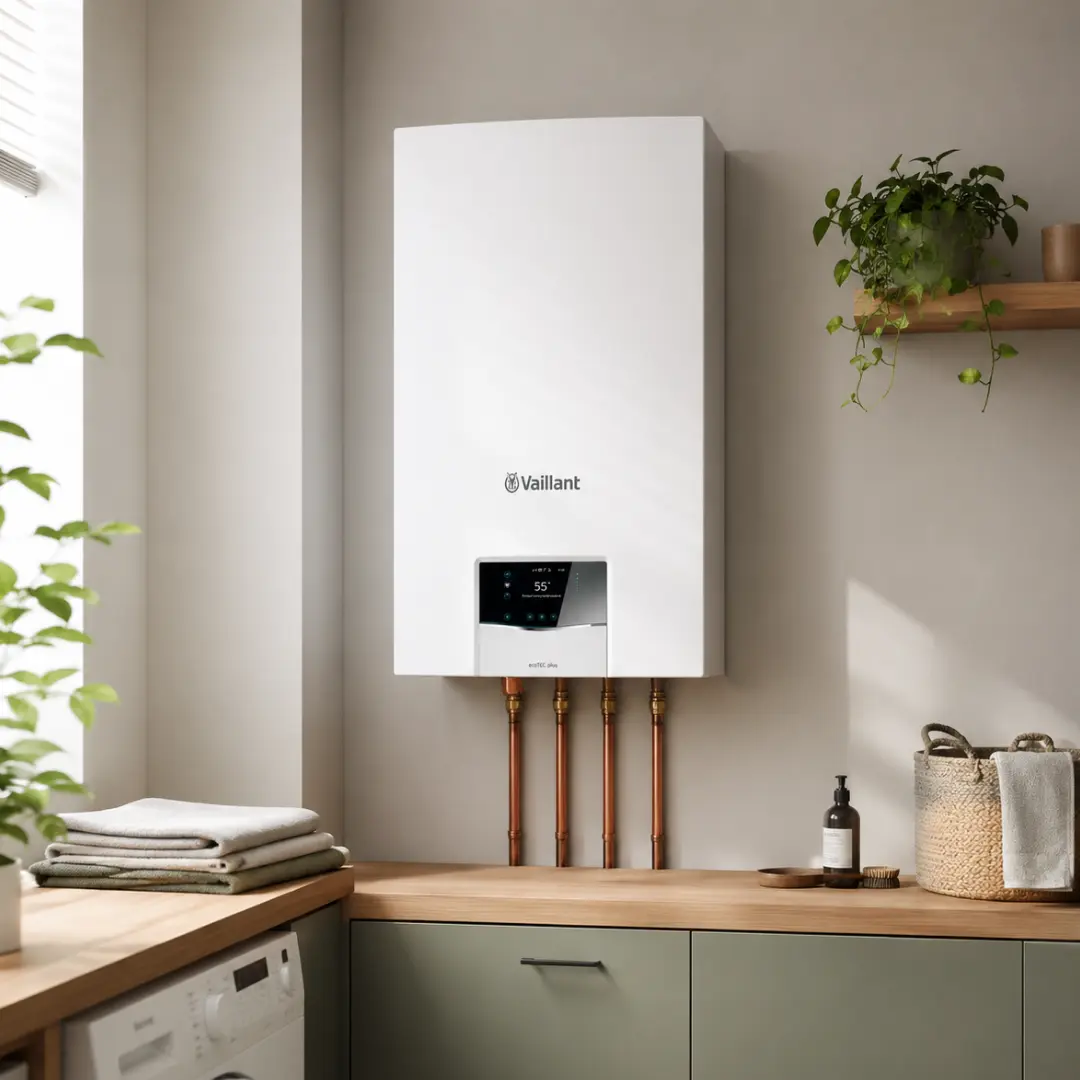
For most one- to three-bedroom Birmingham homes with one bathroom, a correctly sized combi is usually the simplest replacement. Larger homes or households using several hot-water outlets together may be better served by a system boiler and cylinder.
Expect a straightforward like-for-like replacement to take about one day and cost roughly £1,800–£3,500. A conversion, relocation, difficult flue route or extensive pipework can increase the price and installation time.
Always obtain a written, survey-based quote and use a suitably qualified Gas Safe registered engineer.
Table of Contents
ToggleQuick boiler comparison
| Boiler type | Best for | Main strength | Main limitation |
|---|---|---|---|
| Combi | Flats and small-to-medium homes | Compact; hot water on demand | May struggle with simultaneous outlets |
| System | Medium-to-large homes | Stored water for multiple outlets | Requires cylinder space |
| Heat-only | Homes retaining traditional tanks and cylinder | Often suits an existing older layout | Uses more space |
| Heat pump | Suitable homes seeking lower-carbon heating | Efficient low-carbon technology | Higher upfront cost and detailed design |
Which boiler is right for your Birmingham home?
Combi boiler
A combination boiler heats mains water directly and needs no cylinder, making it practical for Birmingham flats, terraces and smaller semi-detached homes.
Best for: smaller households with one bathroom and adequate mains water pressure.
Benefits: compact installation and hot water on demand.
Things to consider: a higher kilowatt rating does not automatically improve shower performance. Incoming water pressure and flow must be tested. A combi may disappoint when two showers or taps run together.
Example UK use case: a three-bedroom Acocks Green semi with one bathroom and an existing combi may suit a like-for-like modern model, subject to heat-loss and water-flow checks.
System boiler
A system boiler works with a hot-water cylinder and often suits larger households.
Best for: homes with two bathrooms, larger families and properties already using a suitable cylinder.
Benefits: stronger simultaneous hot-water provision and compatibility with modern cylinders.
Things to consider: the cylinder needs space, stored water can run out, and installation may be more involved.
Example UK use case: a four-bedroom Sutton Coldfield home with two showers frequently used together may receive better service from a system boiler than an oversized combi.
Heat-only boiler
A heat-only boiler normally works with a cylinder and cold-water tank. It can suit an older Birmingham property where changing the whole system would add cost and disruption.
Best for: traditional heating layouts, larger properties and homes with lower mains water pressure.
Expert recommendation: do not remove a sound cylinder-and-tank system merely because combis are popular. Match the replacement to how the household uses heat and water.
Should you repair or replace?
Age alone does not condemn a boiler. Replacement becomes reasonable when breakdowns are frequent, parts are obsolete, repair costs rise or the appliance cannot meet demand. Uneven radiators or poor controls may indicate a wider system problem.
Ask for a diagnosis before agreeing to replacement. UK homeowner discussions show recurring concern about being advised to replace working appliances without a clear technical explanation, so a second opinion can be valuable.
Consider replacement when:
- The boiler breaks down repeatedly.
- Replacement parts are unavailable or unusually expensive.
- Repair costs are approaching the cost of replacement.
- Heating or hot-water performance no longer meets your needs.
- The appliance has visible corrosion or serious safety faults.
- You are renovating and want to redesign the heating system.
A repair may remain sensible when the boiler is otherwise reliable, parts are readily available and the fault can be resolved economically.
How to compare new boilers
Compare the complete installed system, not only the badge.
- Correct sizing: heating output should reflect calculated demand; hot-water performance should reflect actual use.
- Modulation: a boiler that reduces its output effectively may cycle less in mild weather.
- Controls: compatible load or weather compensation can improve operation.
- Warranty: check servicing conditions, labour coverage and claim handling.
- Parts and support: good UK availability may shorten future repairs.
- Noise: compare operating sound if the boiler will be near a bedroom or home office.
- System protection: flushing, inhibitor and a suitable magnetic filter help protect the appliance.
- Installer competence: commissioning and control setup matter as much as the model.
For a new gas combi installation in England, Boiler Plus standards require at least 92% ErP efficiency, appropriate time and temperature controls and an additional energy-saving measure.
Best options by buyer type
Budget-conscious homeowner: a like-for-like boiler in the existing position, where the current design remains suitable.
Family: a system boiler with a correctly sized cylinder where simultaneous hot-water demand is high.
Landlord: a reliable, widely supported model with simple controls, clear warranty terms and accessible servicing.
Flat or compact home: a combi boiler, subject to acceptable mains flow and pressure.
Home renovator: consider the boiler, radiators, pipework, insulation and controls as one complete system rather than replacing components separately.
Future-focused homeowner: assess a heat pump before buying another fossil-fuel system, particularly if insulation or radiator work is planned.
Best long-term value: the smallest correctly sized system that meets demand, fitted with good controls and proper protection.
How to choose the right boiler in seven steps
- Survey the property. Record bathrooms, radiators, insulation, current system and planned extensions.
- Measure water flow and pressure. This is essential before selecting a combi boiler.
- Assess heat demand. Do not choose boiler output by bedroom count alone. Oversizing can cause inefficient cycling and unnecessary expense.
- Choose the system type deliberately. A conversion should solve a genuine hot-water, space or performance problem.
- Compare written quotations. Check whether the flue, controls, magnetic filter, system flush, condensate route, old-boiler removal and certification are included.
- Read the warranty conditions. Annual servicing, approved controls or installation by an accredited engineer may be required.
- Plan maintenance. Keep the installation, warranty, service and Building Regulations documents together.
Boiler replacement cost in Birmingham
Local 2026 guides commonly place straightforward Birmingham installations around £1,795–£3,000, with higher prices for system changes or difficult locations.
| Installation scenario | Typical guide price | Main cost factors |
|---|---|---|
| Like-for-like combi | £1,800–£3,000 | Brand, controls, flue and system condition |
| Premium or complex combi swap | £2,500–£3,500+ | Warranty, access and pipework |
| System or heat-only replacement | £2,000–£4,000+ | Cylinder, pumps, valves and controls |
| Conversion or relocation | £3,000–£5,500+ | New pipe routes, flue and making good |
| Annual service | About £80–£120 | Appliance, provider and repair work |
These are planning figures, not quotations. Access, parking, high-rise logistics, condensate drainage and flue positioning can all affect cost. Energy Saving Trust cites a typical one-off service cost of around £80–£120.
A detailed quotation should state whether it includes:
- The boiler and standard manufacturer components
- Labour and commissioning
- New heating controls
- Flue components
- Magnetic system filter
- Cleaning or flushing
- Corrosion inhibitor
- Condensate pipework
- Removal of the old appliance
- Warranty registration
- Building Regulations notification
- VAT and any finance charges
A survey is required for an accurate fixed quotation.
Will a new boiler save money?
A modern boiler can reduce gas use when replacing an inefficient appliance, but savings depend on insulation, controls, occupancy and energy prices. Sensible flow temperatures, balanced radiators and insulation may deliver better results than changing the boiler alone.
A new boiler does not guarantee a short payback. Replacement may be justified by reliability, comfort and avoiding repeated repairs as well as lower energy use.
Treat dramatic savings claims cautiously unless they are based on your actual consumption, the condition of your existing boiler and a transparent calculation.
Does a new boiler work well in winter?
Yes, when correctly sized, commissioned and connected to an effective heating system.
Winter performance problems are more often linked to:
- Blocked or unbalanced radiators
- Inadequate insulation
- Frozen external condensate pipes
- Restricted pipework
- Poorly configured controls
- Incorrect boiler sizing
Oversizing is not a cure. An unnecessarily powerful boiler may cycle on and off frequently, particularly during milder weather.
How long does installation take?
A straightforward same-position replacement is commonly completed in one day. A conversion, relocation, cylinder replacement or extensive pipework may require two or more days.
The quotation should explain expected disruption, water shut-off periods, floor protection, waste removal and how the property will be left overnight.
Before the engineer leaves, you should receive an explanation of the controls, recommended settings, warranty conditions and basic fault-reset procedure.
Why the installer matters
Gas work must be completed by a suitably qualified Gas Safe registered engineer. A new gas heat-producing appliance must be notified to the local authority within 30 days, normally by the engineer, so the homeowner receives a Building Regulations compliance certificate.
A good installer checks the gas supply, flue, condensate route, controls and system cleanliness; commissions the boiler; registers the warranty; explains operation; and supplies certificates.
Poor workmanship can cause faults, affect warranty cover or create safety risks.
Before accepting a quote:
- Check the engineer’s Gas Safe ID card.
- Confirm they are qualified for boiler work.
- Ask for evidence of public liability insurance.
- Read recent independent reviews.
- Request a detailed written scope.
- Clarify deposits and payment stages.
- Confirm who provides aftercare.
- Ask how warranty problems will be handled.
Could you qualify for support?
ECO4 has been extended to 31 December 2026 and may support eligible low-income or vulnerable households with qualifying efficiency and heating measures. Eligibility depends on scheme rules and assessment.
Birmingham’s Warm Homes Local Grant targets eligible households in selected priority areas and focuses on measures including insulation, controls, solar panels and heat pumps rather than a standard open-market gas boiler replacement.
The Boiler Upgrade Scheme supports eligible heat pumps and biomass boilers, not ordinary gas-boiler replacements.
Do not assume that a website advertisement guarantees funding. Your household, property, existing heating system and proposed improvements must be assessed against the relevant scheme rules.
Get a free boiler survey
Simple Green Energy can assess your existing heating system, discuss suitable replacement options and provide a personalised quotation based on your property rather than a generic online estimate.
Frequently asked questions (FAQs)
Clear answers about boiler-replacement costs in Birmingham, installation times, boiler types and sizing, repair-versus-replacement decisions, Gas Safe registration, compliance certificates, system cleaning and magnetic filters. Speak to Simple Green Energy .
Planning a boiler replacement in Birmingham?
Speak with Simple Green Energy about boiler selection, heat loss, hot-water demand, installation costs, system condition, compliance documentation and the best setup for your property.
Review my Birmingham replacement optionsConclusion
The best boiler replacement in Birmingham is not automatically the biggest or most expensive model. It is the correctly sized appliance, matched to real hot-water demand, installed with compatible controls and backed by dependable aftercare.
Simple Green Energy offers an in-house survey, personalised quotation and professional installation process for customers considering boiler replacement and wider heating upgrades.
Book a free home survey to compare suitable options, understand the full installed cost and make a confident decision without pressure.
Important links:
Solar panels: https://www.simplegreenenergy.org/solar-panels/
Air source heat pump: https://www.simplegreenenergy.org/air-source-heat-pump/
EV charger: https://www.simplegreenenergy.org/ev-charger/
Air conditioning: https://www.simplegreenenergy.org/air-conditioning/