AIKO vs LONGi Solar Panels: Which Is Better for UK Homes?
AIKO and LONGi both manufacture high-efficiency solar panels suited to UK homes. There is no automatic “best brand”: the better choice is usually the panel that allows a competent installer to place the greatest sensible capacity on your roof, backed by clear warranties and a competitive whole-system price.
AIKO has a slight edge for homeowners prioritising maximum efficiency from a compact, lightweight, all-black panel. LONGi is strong where a high-output dual-glass panel, robust mechanical specification or keener installed price improves the overall design. This guide compares representative residential models and explains which specifications should decide your purchase.
Get a free home survey: Simple Green Energy can assess your roof dimensions, shading, electricity use and future plans, such as an EV or home battery, before recommending a suitable system.
Get Your Solar Panel Quote
Start with your address so we can check the best solar options for your home.
Quick answer
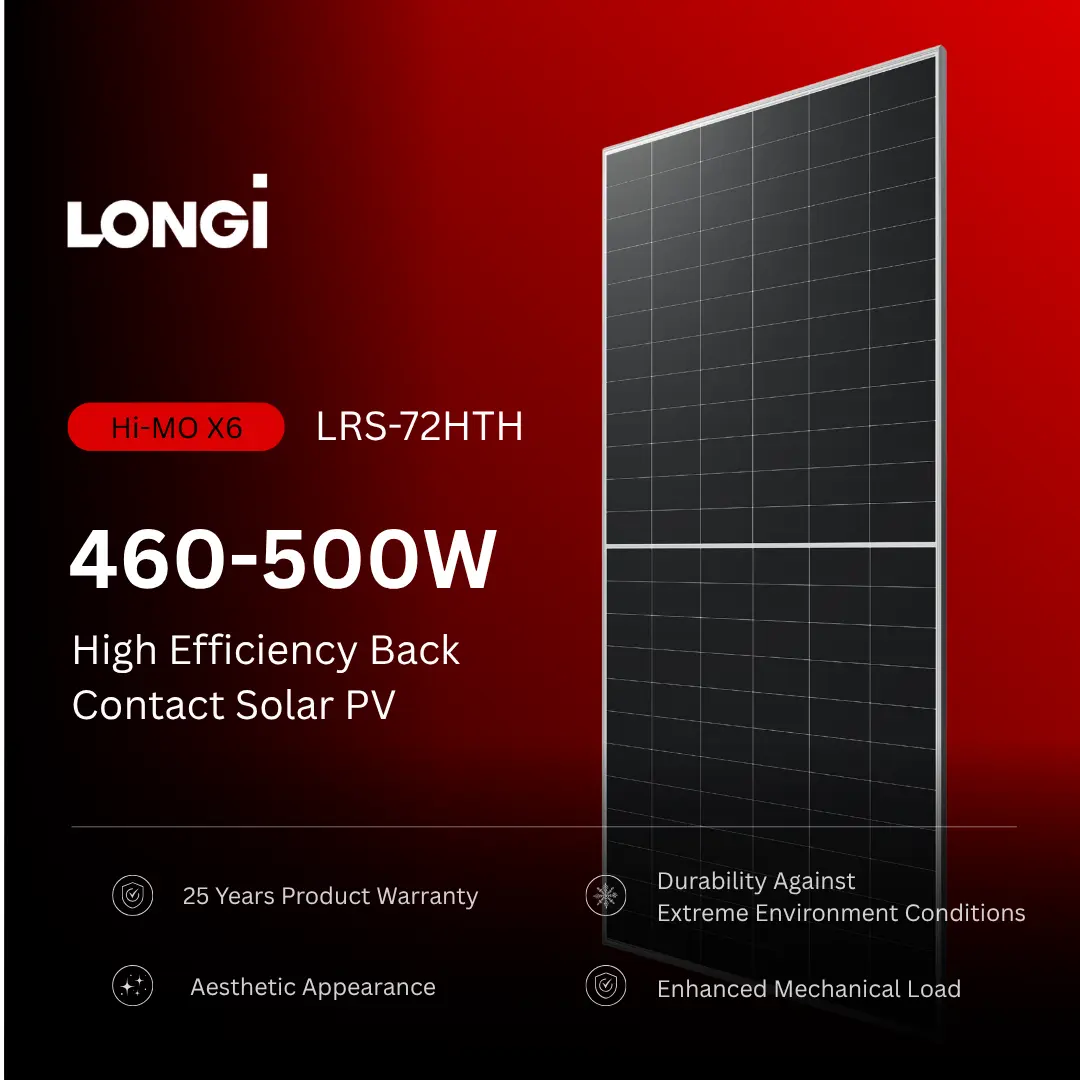
For a typical UK home, AIKO and LONGi are both excellent choices. AIKO’s current Neostar 3S54 reaches 495W and 24.8% efficiency in a compact panel. LONGi’s premium LR7-54HJBB reaches 505W and 24.7%, with dual-glass construction and a strong mechanical-load rating.
Both representative models offer 30-year product and performance warranties, with 88.85% warranted output after 30 years. Choose AIKO when roof space, panel weight and marginally higher efficiency matter most. Choose LONGi when its dimensions fit better, the extra watts increase the total array size or the complete quotation offers stronger value. Installation design matters more than a tiny laboratory-efficiency difference.
Table of Contents
ToggleAIKO vs LONGi at a glance
| Feature | AIKO Neostar 3S54 495W | LONGi LR7-54HJBB 505W | What it means |
|---|---|---|---|
| Cell technology | N-type ABC back contact | HBC back contact | Both remove front-side contacts for a cleaner appearance and greater active area |
| Maximum efficiency | 24.8% | 24.7% | Effectively level in practical buying terms |
| Dimensions | 1,762 × 1,134mm | 1,800 × 1,134mm | AIKO is 38mm shorter; roof layout may decide |
| Weight | 21.1kg | 23.5kg | AIKO reduces roof and handling weight slightly |
| Temperature coefficient | -0.26%/°C | -0.24%/°C | LONGi loses marginally less output as panel temperature rises |
| Product/performance warranty | 30/30 years | 30/30 years | Verify the exact UK model before signing |
| Warranted output at year 30 | 88.85% | 88.85% | Equal on the compared documentation |
These specifications are model-specific. Your quotation should name the exact model code rather than simply stating “AIKO panels” or “LONGi panels”. Warranty terms can also differ between product generations, markets and distribution channels.
How do AIKO and LONGi technologies differ?
AIKO calls its architecture ABC, meaning All Back Contact. LONGi uses back-contact technologies including HPBC and HBC across its residential ranges. Moving the electrical contacts behind the cells reduces front-side obstruction, creates a more uniform appearance and supports high module efficiency.
Both manufacturers promote partial-shading optimisation. This may reduce losses caused by small obstructions such as an aerial shadow, leaves or bird mess, but it does not make a shaded roof equivalent to an unshaded one.
Persistent shade from a chimney, tree or neighbouring building still requires careful modelling, suitable string design and, where justified, module-level power electronics.
AIKO solar panels: overview
Best for
AIKO panels suit small or awkward roofs where every square metre matters, homeowners wanting a uniform all-black appearance and projects where a lighter panel helps installation.
Key features and advantages
The Neostar 3S54 combines 495W output with 24.8% efficiency. Its temperature coefficient of -0.26%/°C is strong, and AIKO’s current global product page lists 30-year product and performance cover. At approximately 21.1kg, it is also lighter than the representative LONGi module.
Things to consider
Availability can vary by wattage and distributor. Confirm that the quoted model has been reserved for your installation and that the applicable UK warranty matches the sales proposal.
Do not pay a large premium merely for a 0.1 percentage-point efficiency advantage. Compare the total capacity that fits on the roof and the installer’s estimated annual generation.
Example UK use case and expert recommendation
Suppose a short roof can accommodate ten AIKO modules but only nine of a slightly taller alternative. The physical fit could produce the larger array and better financial return.
Choose AIKO when its dimensions allow the designer to add another panel, roof loading is sensitive or its high efficiency is available without a disproportionate premium.
LONGi solar panels: overview
Best for
LONGi suits homeowners wanting premium back-contact performance, strong dual-glass construction and high output per panel, particularly where the panel dimensions align well with the roof.
Key features and advantages
The LR7-54HJBB range reaches 505W and 24.7% efficiency. Its temperature coefficient of -0.24%/°C is marginally better than that of the compared AIKO panel.
Its module test ratings include front and rear static loads of 6,000Pa and 3,600Pa respectively. The datasheet also provides 30-year product and power warranties, with 88.85% warranted output at year 30.
Things to consider
LONGi sells several residential product families, and warranty terms vary by model and market. Some panels are monofacial, while others are bifacial, dual-glass or full black.
On a close-mounted pitched roof, the amount of light reaching the rear of a bifacial panel may be limited. Do not assume “bifacial” guarantees a meaningful generation increase without site-specific modelling.
Example UK use case and expert recommendation
A wide roof fits the same number of panels from either brand, but the selected LONGi panel adds 10W per panel and the installer offers it at a lower total price. LONGi may provide the better return if inverter sizing, workmanship cover and aftercare are equivalent.
Choose LONGi when it creates the larger designed array, stronger module-load ratings are valuable or the complete package offers better value.
Which solar panel is best for your home?
The following recommendations are starting points based on the compared specifications. A roof survey and generation model should determine the final choice.
| Buyer or requirement | Better starting point | Why |
|---|---|---|
| Small or constrained roof | AIKO | Shorter, lighter representative module with fractionally higher efficiency |
| Maximum watts from the same panel count | LONGi | The compared range reaches 505W |
| Best temperature performance | LONGi, narrowly | -0.24%/°C compared with -0.26%/°C |
| All-black appearance | Either | Both offer clean back-contact designs |
| Mild, localised shading | Either | Both promote shading optimisation, but system design remains essential |
| Strongest overall value | Winner of a like-for-like quote | Installation quality and array design outweigh tiny specification differences |
| EV or future heat-pump owner | Highest sensible roof capacity | Higher future demand favours maximum generation and battery-ready design |
| Landlord | Best-supported package | Prioritise warranties, monitoring, installer continuity and handover documents |
Will AIKO or LONGi save more money?
Possibly, but the brand name alone cannot answer this question.
Solar savings depend on:
- Total system capacity
- Roof orientation and pitch
- Shading throughout the year
- Property location
- Inverter efficiency and design
- Daytime electricity use
- Battery capacity
- Export tariff
Solar panels continue generating electricity in cloudy conditions, although UK winter production is substantially lower than summer production.
For two equal-sized arrays, the generation difference between these premium panels may be small. Fitting one additional panel, avoiding shade or improving inverter matching can matter more than a fraction of a percentage point in panel efficiency.
Cost, payback and running costs
Energy Saving Trust currently places the average home solar installation at around £7,600, although property-specific quotations vary. Roof access, scaffolding, system capacity, inverter choice, bird protection, electrical upgrades and battery storage can all affect the price.
Qualifying professionally installed residential solar equipment currently benefits from zero-rate VAT. Under the present rules, this temporary zero rate applies until 31 March 2027.
Eligible households can also receive payments for exported electricity through a Smart Export Guarantee tariff. Suppliers set their own rates and contract terms.
A typical system may repay its cost in around nine years in favourable circumstances, but payback can be longer. Use a tailored generation forecast and test several electricity-price, self-consumption and export-rate assumptions.
Running costs are generally low, although homeowners should allow for possible inverter replacement, inspections and occasional cleaning where dirt does not wash away naturally.
Compare complete quotations rather than panel prices alone. Ask each installer to show:
- Estimated annual generation
- Assumptions used in the calculation
- Inverter and monitoring specifications
- Warranty responsibility
- Workmanship cover
- Optional battery costs
- Expected export arrangements
A property survey is required for an accurate quotation and savings forecast.
How to choose the right panel in seven steps
- Measure the usable roof area, including clearances and obstructions.
- Model shading across the year rather than judging the roof at one time of day.
- Compare total array capacity and annual generation, not panel efficiency alone.
- Check the exact model code, datasheet and UK-applicable warranty.
- Confirm inverter compatibility, string voltages and future battery options.
- Compare installed prices, workmanship cover and aftercare.
- Choose the best long-term value for your consumption rather than the largest headline number.
Why the installer matters more than the logo
A premium solar panel cannot compensate for poor surveying, weak mounting design, unsuitable inverter sizing, careless cable routing or unrealistic savings claims.
MCS standards establish benchmarks for how certified renewable installations should be designed and installed. MCS certification also provides additional consumer protections, including access to warranty and complaints processes.
A good installer should:
- Inspect the roof structure and electrical installation
- Explain the impact of shading
- Provide a model-specific system design
- Confirm the manufacturer warranty route
- Supply realistic generation estimates
- Provide commissioning and handover documents
- Explain monitoring and aftercare
- Avoid guaranteeing savings that depend on future tariffs or behaviour
Check the installer’s workmanship guarantee and any insurance-backed protection separately from the panel manufacturer’s warranty.
Frequently asked questions (FAQs)
Clear answers about AIKO and LONGi panel efficiency, warranties, shading, winter performance, roof space, bifacial modules, pricing and future battery compatibility. Speak to Simple Green Energy .
Comparing AIKO and LONGi panels?
Speak with Simple Green Energy about roof layout, panel dimensions, system capacity, shading, warranties, installed cost and future battery plans.
Compare my solar optionsConclusion
AIKO is the marginal winner for compactness, low weight and peak efficiency in the models compared. LONGi is the marginal winner for maximum wattage, temperature coefficient and mechanical-load ratings.
Neither advantage is large enough to justify choosing a brand without seeing the roof design and complete quotation.
For most UK homes, the correct approach is to select the exact AIKO or LONGi panel that creates the highest sensible system output, carries clear UK warranty support and comes with the strongest installation package at a fair price.
Book a free home survey with Simple Green Energy to compare roof layouts, expected generation, battery options and long-term savings before deciding.