
Can You Put Solar Panels on a Flat Roof? Costs, Angles and Planning Rules
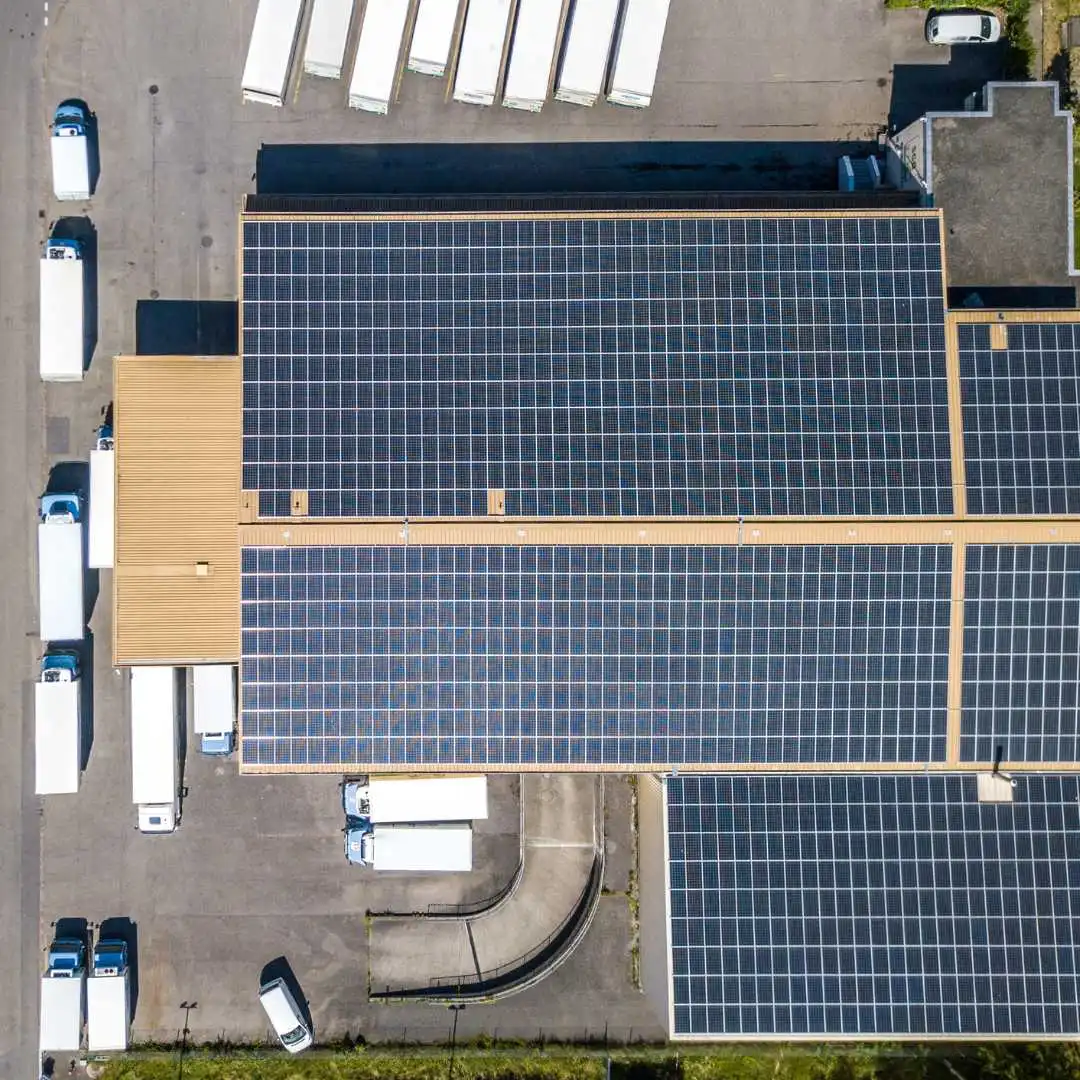
Yes. Solar panels can be installed successfully on most suitable flat roofs, including house extensions, garages, dormers, apartment blocks and commercial buildings. The difference is that the panels normally sit on a purpose-designed mounting system rather than following the roof’s existing pitch.
A good design balances electricity generation with wind loading, ballast weight, drainage, row shading, safe access and planning limits. The roof must also have enough remaining life to support a system intended to operate for decades.
This guide explains the best angles, mounting choices, likely UK costs, structural checks and planning rules for homeowners, landlords and property owners.
Get a free home survey: Ask Simple Green Energy to assess roof condition, shading, loading and the most productive array layout.
Get Your Solar Panel Quote
Start with your address so we can check the best solar options for your home.
Quick Answer
Solar panels can usually be fitted to a flat roof if the structure can carry the modules, frame and any ballast. Most installers tilt the panels rather than laying them completely flat. Around 10–15 degrees is common because it supports drainage and useful generation while limiting wind uplift, row spacing and roof loading. In England, domestic flat-roof solar is often permitted development when the equipment stays within the relevant limits, including a maximum of 600mm above the highest roof point. Rules differ across Scotland, Wales and Northern Ireland, while listed and protected properties need extra checks. A professional survey is essential.
Table of Contents
ToggleQuick comparison: flat-roof mounting options
| Mounting approach | Best for | Key strengths | Things to consider |
|---|---|---|---|
| South-facing ballasted frames | Strong roofs with generous space | High output per panel; often avoids roof penetrations | More ballast and wider row spacing |
| East–west ballasted system | Space-constrained roofs and daytime users | Fits more panels; broader daily generation; low profile | Slightly lower output per individual panel |
| Mechanically fixed system | Roofs where ballast is unsuitable | Lower added weight; secure structural connection | Penetrations need careful weather sealing |
Can solar panels work well on a flat roof?
A flat roof gives the designer freedom to choose panel direction and tilt instead of accepting a pitched roof’s orientation. It may also offer easier installation and maintenance access.
The main constraint is usable area. Tilted rows cast shadows, while roof edges, parapets, vents, rooflights, outlets and access routes reduce capacity. A competent designer should model the full roof rather than simply fit the largest number of modules shown on an aerial image.
Energy Saving Trust confirms that flat-roof panels are normally tilted to improve production. It also warns that weighted systems need sufficient roof strength and must not compromise the waterproof covering.
What is the best angle?
A south-facing tilt of roughly 30–40 degrees can favour annual output from an individual UK panel. On a flat roof, however, maximum output per panel is not always the best overall design.
Steeper frames catch more wind, need more ballast and cast longer shadows, so fewer panels fit. Low-profile systems around 10 degrees often provide a better balance of generation, roof capacity and installation cost.
A south-facing array prioritises midday generation. An east–west layout places shallow panels back-to-back, allowing denser use of the roof and spreading output across the morning and afternoon. This can suit families, offices, communal loads and EV owners.
Panels should not normally be laid completely horizontal unless the manufacturer permits it. A small tilt helps water and debris move off the glass.
Is your flat roof suitable?
A survey should answer four questions.
Can the structure carry the load? Building regulations normally apply. The roof must be checked for modules, frames, ballast and wind forces; strengthening may be needed.
Is the covering in good condition? Installing a long-life system above ageing felt, GRP or EPDM can create future removal costs. Energy Saving Trust notes that renewing the covering first can be cheaper long term.
Will drainage remain clear? Frames, cables and ballast must not obstruct outlets or encourage standing water.
Is there shade? Parapets, chimneys, buildings and trees can affect low-mounted modules. The shading assessment should guide row positions and any optimiser recommendation.
Do you need planning permission?
Planning is devolved, so there is no single UK rule.
England: Flat-roof solar on a house or block of flats is commonly permitted development. The equipment cannot be more than 600mm above the highest roof point, excluding the chimney. Prior approval applies on Article 2(3) land, including conservation areas, National Parks, National Landscapes, the Broads and World Heritage Sites. Listed-building settings, scheduled monuments, Article 4 directions and leasehold restrictions need particular care.
Scotland: Solar on a dwelling may be permitted development when it projects no more than one metre, but restrictions apply to listed buildings, World Heritage Sites and prominent elevations in conservation areas.
Wales: Many domestic installations are permitted development, but limits and protected-area rules differ from England. Check Welsh Government and local authority guidance.
Northern Ireland: Official guidance advises checking with the divisional planning office before installation, especially for listed buildings and conservation areas.
Leaseholders should obtain permission from the freeholder or management company even when planning consent is unnecessary.
Flat-roof solar panel costs
For a typical domestic installation, budget roughly £6,000–£8,000 for a 3.5–4.5kWp solar PV system before unusual roofing or structural work. Energy Saving Trust currently quotes about £7,600 for an average 4.5kWp system. Flat-roof frames commonly add several hundred pounds. All figures are indicative and require a site survey.
| Cost item | Indicative UK range | Main price factors |
|---|---|---|
| 3.5–4.5kWp solar PV system | £6,000–£8,000 | Panels, inverter, access, electrics and warranties |
| Flat-roof mounting system | About £300–£1,200 | Array size, tilt, ballast and wind calculations |
| Optional 5–10kWh battery | About £2,500–£6,500 | Capacity, output, chemistry and backup features |
| Roof repairs or strengthening | Survey dependent | Roof age, structure, membrane and ballast |
| Planning or professional reports | Survey dependent | Protected status and project complexity |
A useful quotation separates panels, inverter, mounting, access, electrical upgrades, warranties and structural work.
Payback depends on cost, yield, tariff, export payments and direct use. Energy Saving Trust’s July 2026 examples indicate about nine to twelve years for typical systems in England, Scotland and Wales. Extra flat-roof mounting or roof work may extend this period.
How to choose the right system
- Confirm roof life. Repair a tired membrane before installing long-life equipment.
- Require structural evidence. Check permanent load, ballast and wind forces.
- Compare layouts. Request annual-generation estimates for south-facing and east–west options.
- Review the roof plan. Check shade, tilt, edge distances, drainage and access.
- Size for future demand. Consider an EV, heat pump or later battery.
- Compare warranties. Separate panel, inverter, mounting and workmanship cover.
- Choose relevant experience. Look for MCS certification, flat-roof case studies, insurance and clear handover documents.
High-intent buyer questions
Will it work in winter? Yes. PV uses daylight rather than heat, although shorter days reduce winter generation. A suitable tilt helps exposure and drainage.
Is it less efficient than pitched-roof solar? Not necessarily. Shallow panels may produce less individually than ideally tilted modules, but a denser east–west layout can generate more from the total roof area.
Is it noisy? Panels have no moving parts. Engineered frames, ballast and cable management prevent wind-related movement.
What maintenance is needed? Keep outlets clear, monitor output and inspect mounting and cables. Rain often cleans tilted modules, although trees, birds or pollution may create occasional cleaning needs.
Can a battery be added later? Usually. Tell the designer now so the inverter, electrical layout and equipment space support a straightforward retrofit.
Why the installer matters
Flat-roof solar is an engineering project, not simply a panel purchase. Installer decisions affect wind resistance, waterproofing, drainage, cable safety, system yield and warranty validity.
Before paying a deposit, ask for the roof plan, mounting specification, ballast schedule or fixing detail, structural evidence, generation estimate and warranty documents. A cheap quote becomes expensive if it causes leaks, needs early removal for roof repairs or underperforms.
Book a free home survey: Simple Green Energy can assess the roof, model expected generation and explain the mounting, planning and cost options clearly.
Frequently asked questions (FAQs)
Clear answers about flat-roof suitability, panel angles, planning limits, ballast, wind loading, waterproofing and common roof coverings. Speak to Simple Green Energy .
Considering solar panels on a flat roof?
Speak with Simple Green Energy about structural suitability, mounting options, waterproofing, ballast, wind exposure and the best panel layout for your property.
Discuss my flat-roof systemConclusion
Solar panels can make excellent use of a flat roof when the design protects the covering, maintains drainage and accounts for structure, wind and planning.
The main choice is often between a south-facing layout that maximises output per panel and a low-profile east–west array that fits more capacity and spreads generation across the day. The right answer depends on the building, electricity use and budget.
Start with a proper roof and shading survey. Compare proposals on annual generation, total installed cost, warranty protection and long-term roof access—not panel count alone.