OZEV Grant 2026/27: What Changed from 1 April 2026?
The OZEV grant rules changed on 1 April 2026, but not every scheme changed in the same way. Some EV chargepoint grants were extended into 2026/27, some grant amounts increased, some schemes closed, and the application process changed for certain applicants. That can make it confusing if you are planning to install an EV charger at home, at a rental property, at a workplace or across multiple sites.
This guide explains what changed, which OZEV grants are still available, who can apply, how much support may be available, and what you need to do before starting an installation. choose a local, efficient and reliable solar panel installer for your home or property.
Quick Answer: What changed with the OZEV Grant in 2026/27?
From 1 April 2026, some OZEV grants were extended, some amounts increased, and some schemes closed. The right grant depends on whether you are a homeowner, renter, landlord, business or education provider.
Table of Contents
ToggleWhat is the OZEV Grant 2026/27?
The OZEV Grant 2026/27 is not one single grant. It is a group of UK government EV chargepoint grants designed to help eligible people and organisations reduce the cost of installing electric vehicle chargers.
Depending on the scheme, support may be available for renters, flat owners, landlords, workplaces, businesses, charities, public sector organisations and education institutions. Each grant has its own rules, eligibility criteria, funding amount and application process, so it is important to check which scheme applies before arranging an installation.
Which OZEV Grants Were Extended?
The following OZEV grants were extended into 2026/27:
| Extended OZEV Grant | Who It Supports |
|---|---|
| Flats and Renters Grant | Renters and flat owners installing eligible home EV chargers. |
| Residential Landlord Chargepoint Grant | Landlords installing EV chargers at residential properties. |
| Households with On-Street Parking Grant | Households needing cross-pavement or on-street charging support. |
| Workplace Charging Scheme | Businesses, charities and public sector organisations installing workplace EV chargers. |
| WCS for State-Funded Education Institutions | Eligible schools and education providers installing EV charging points. |
Which OZEV Grants Closed?
The following schemes closed to customer applications on 31 March 2026:
| Closed OZEV Grant | What It Previously Supported |
|---|---|
| Staff and Fleets Grant | EV chargers for staff and fleet use. |
| Commercial Landlord Chargepoint Grant | Chargers at commercial rental properties. |
| Residential Landlord Infrastructure Grant | Wider EV infrastructure work at residential rental properties. |
What Are the New Grant Rates?
From 1 April 2026, several OZEV grant amounts increased. Residents and landlords can now receive up to £500 per socket, increased from £350. The Workplace Charging Scheme also increased to up to £500 per socket.
For state-funded education institutions, the grant is up to £2,000 per socket from 1 April 2026. However, vouchers awarded before 1 April 2026 remain valid for up to £2,500 per socket.
How Does the OZEV Grant 2026/27 Work?
The OZEV Grant 2026/27 works by reducing the cost of eligible EV chargepoint installations. The process depends on the grant scheme, but in most cases, applicants must choose the right grant, check eligibility, wait for approval where required, and use an authorised installer.
| Step | What Happens | Why It Matters |
|---|---|---|
| 1. Choose the correct grant | Select the scheme that matches your situation. | Different grants apply to renters, flat owners, landlords, workplaces and education institutions. |
| 2. Check eligibility before installation | Apply and wait for OZEV confirmation where required. | Customers should not install the charger before receiving eligibility confirmation. |
| 3. Use the right application route | Apply through the correct OZEV platform. | From 1 April 2026, the flats and renters grant and residential landlord chargepoint grant moved to a new application platform. |
| 4. Installer completes the claim | The authorised installer submits the grant claim after approval and installation. | Installers receive a digital claim form and email updates about claim progress. |
Step 1 — Choose the Correct Grant
Start by identifying which grant applies to you. A renter, flat owner, landlord, workplace or education institution may all need to use a different OZEV scheme.
Step 2 — Check Eligibility Before Installation
Do not arrange the chargepoint installation too early. In most cases, you must wait until OZEV confirms that you are eligible for the grant before installation begins.
Step 3 — Use the Right Application Route
Make sure you apply through the correct route. From 1 April 2026, the flats and renters grant and residential landlord chargepoint grant moved to a new application platform.
Step 4 — Installer Completes the Claim
Once the application is successful, the installer is given a digital form to claim the grant. They also receive email updates confirming whether the claim has been accepted, rejected or needs further information.


How to Apply for the OZEV Grant 2026/27
Applying for the OZEV Grant 2026/27 is mainly about choosing the right scheme and following the correct order. The process may vary slightly depending on whether you are a resident, landlord, workplace or education provider.
- Identify which OZEV grant applies to you.
- Check the applicant, property and parking eligibility rules.
- Gather the required details, such as address, parking arrangements and installer information.
- Apply through the relevant official OZEV guidance page.
- Wait for eligibility confirmation where required.
- Arrange the installation with an approved installer.
- Make sure the installer collects and submits the correct evidence for the claim.
Important: Do not book or complete the installation before receiving eligibility confirmation if the grant rules require approval first. Installing too early could mean the grant cannot be claimed.
What Evidence or Photos Are Needed?
From 1 April 2026, installer claims for the flats and renters grant and residential landlord chargepoint grant must include clear photo evidence. This helps prove that the charger has been installed correctly, at the right property, and for an eligible parking space.
Why Photo Evidence Matters
Missing, unclear or incomplete photos can delay the grant claim or put the funding at risk. Good evidence makes the installer’s claim easier to check and helps avoid unnecessary back-and-forth.
What Installers Should Capture
Installers should take clear photos showing:
- The installed EV chargepoint
- The charger model and serial number
- The associated parking space
- A wider view of the building, driveway, car park or relevant outdoor area
- Any details needed to link the charger to the eligible property or parking bay
The best approach is to collect the evidence on the day of installation before leaving site.
Is the OZEV Grant 2026/27 Right for You?
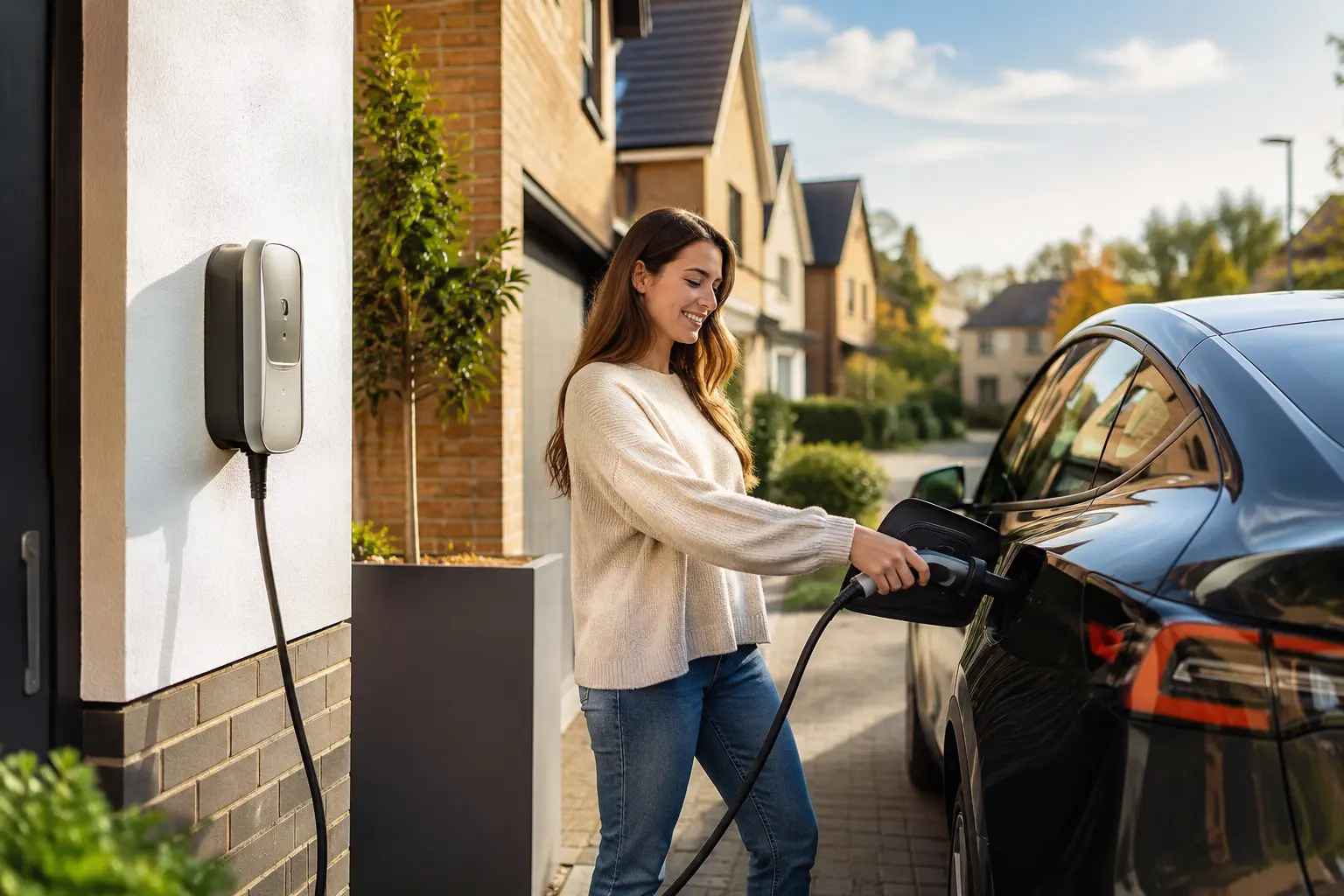
You May Be Eligible If…
- You are a renter or flat owner with suitable off-street parking
- You are a residential landlord installing chargers for tenants
- You are a business, charity or public sector workplace
- You are a state-funded education institution
- You have not installed the charger before grant approval, where approval is required
You May Need Further Advice If…
- Your parking space is shared, unclear or separate from the property
- The property is rented, leasehold or managed by a landlord
- You need multiple sockets across one or more sites
- Electrical upgrades may be required before installation
- You are unsure which OZEV grant applies to your situatio
Frequently asked questions (FAQs)
Simple answers to common questions about the OZEV Grant 2026/27, EV charger funding, application rules, grant rates and evidence requirements. Speak to Simple Green Energy.
Need help with EV chargers?
Speak with Simple Green Energy about EV charger installation, OZEV grant support, eligibility checks, applications and approved installation routes.
Get EV charger adviceFinal Thoughts on the OZEV Grant 2026/27
The OZEV Grant 2026/27 is good news for many people planning an EV charger installation, especially where grant amounts have increased or schemes have been extended. However, the details matter. Some grants closed, some moved to a new process, and some require approval before installation. Before booking any work, check which OZEV grant applies to you, confirm eligibility, and follow the application steps in the correct order to avoid missing out on available support.